













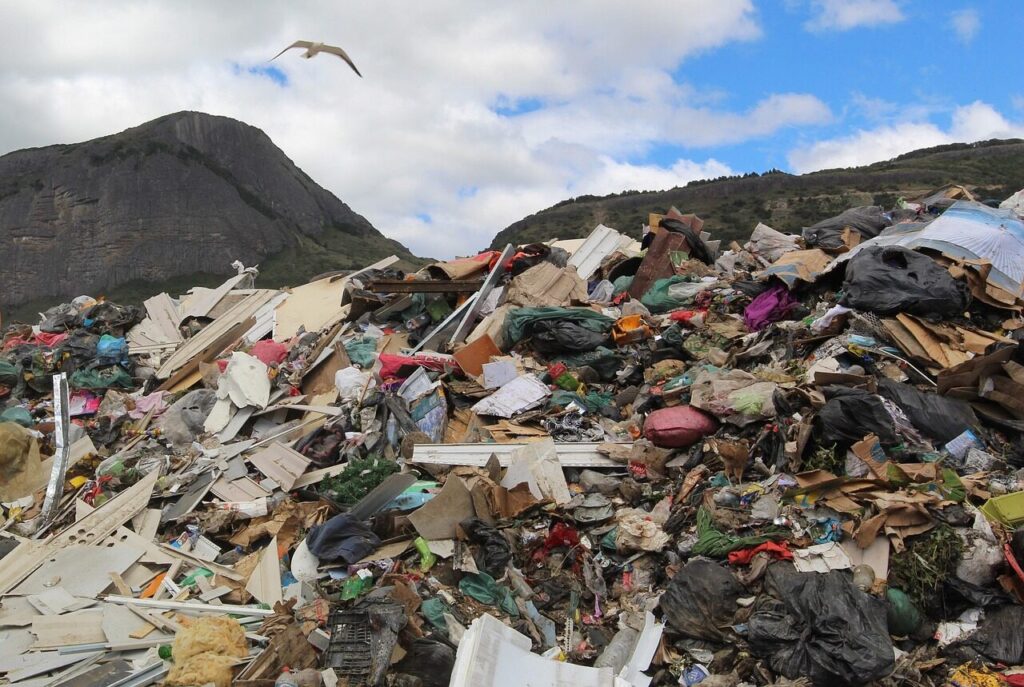

Nature is collapsing at an alarming rate, and we are witnessing the planet’s sixth mass extinction event in real time. But better water management can offer Britain real hope in damning the decline.
As a nation of rain, many don’t associate the UK with water scarcity, yet the UK is ramping up for trials of timed showers and seasonal tariffs this summer to tackle shortages. And with International Day for Biological Diversity on May 22, the need to protect this finite resource is more pressing than ever.
Biological diversity resources are the pillars upon which we build civilizations. Fish provide 20 per cent of animal protein to about 3 billion people. Over 80 per cent of the human diet is provided by plants. As many as 80 per cent of people living in rural areas in developing countries rely on traditional plant‐based medicines for basic healthcare. Unsurprisingly, loss of biodiversity threatens all.
Hotter, drier summers, growing population pressures and increasing regional imbalances in supply are converging into a new reality – drought risk is no longer hypothetical – it is structural.
The policy response has focused on long-term resilience. New reservoirs, inter-regional transfers, desalination and leakage reduction are all coming into play. But these are slow solutions, often taking years – if not decades – to deliver and desalination can have negative impacts on marine ecosystems.
Meanwhile, thousands of smaller, distributed interventions – leakage reduction, smart metering, water reuse, efficiency in buildings and industry – remain under-funded despite delivering faster returns. These measures reduce demand at source, cut energy use and build resilience across the system and are equally worthy of both attention and investment.
And that is where behavioural change steps up as a critical, underutilised lever for immediate impact.
The time gap in water strategy
Sustainability strategies tend to favour large-scale interventions. They are tangible, measurable and politically visible. But they are also inherently slow.
Planning, approvals, funding cycles, along with construction timelines, mean that even the most well-supported infrastructure projects cannot respond quickly to emerging pressures. Climate change, however, is not operating on infrastructure timelines.
Demand, on the other hand, can shift far more rapidly- if the right mechanisms are in place.
Reducing water consumption at the point of use does not require new pipelines or reservoirs. It requires changes in how water is used, particularly in high-frequency, high-volume activities like showering, washing and cleaning.
The untapped power of habit
Water consumption in the UK is largely habitual. Most people do not actively calculate how much water they are using when they shower or leave a tap running, because there is little visibility. In the UK, the average person uses around 150 litres of water a day, more than in many other European countries, and most have no idea how much they use. Waste is not driven by negligence – it is driven by design.
Behavioural science offers a different lens. It shows that small, well-designed interventions -nudges, prompts, feedback loops – can significantly alter how people interact with resources. Crucially, these interventions do not rely on sustained willpower. They work by making the desired behaviour easier, more intuitive, or more salient.
In energy, this approach has already delivered results. Smart meters and real-time usage feedback have helped shift consumption patterns at scale. Water has yet to fully embrace the same behavioural toolkit, but change is happening.
Some purpose-led companies are reversing the trend on heavy water use to deliver cutting-edge technology, using behavioural nudges and minimising water waste.
In a UK pilot study which launched in 2025, smart-technology using behavioural prompts in hotel showers have reduced water use by over half, illustrating how gentle nudges can reshape habits. Developers are also planning to develop this further, using machine learning and past data, the system will pre-set the required shower duration in advance and continue to improve the efficiency of the system.
From awareness to action
Public awareness of environmental issues is higher than ever. Most people understand that water is a finite resource and that climate change is intensifying pressure on supply. Yet awareness alone has not translated into proportional reductions in consumption.
Recent events have made the risks tangible. The water disruption in Tunbridge Wells, England, in December 2025, cost local hospitality businesses up to £8 million, according to the BBC. That is not just a ‘utilities issue’ – it is also an economic shock, felt by employers, workers and supply chains, as well as a social issue – with angry residents confronting water company employees and social cohesion and enjoyment of a town impacted.
At a national level, under-investment, ageing assets and climate volatility are still treated as exceptions, rather than systemic threats. Concurrently, the UK’s future growth sectors are becoming more water-intensive. AI, cloud computing and data centres are now part of the critical economic infrastructure and require reliable water to operate.
The World Economic Forum has already warned that without a circular approach to water – reuse, efficiency and more system-wide planning – digital growth could be hindered by physical limits.
If reducing water use requires individuals to constantly remember, monitor and self-regulate, it will not happen consistently. But if the environment itself provides cues – subtle prompts that shape behaviour in the moment – then change becomes far more achievable.
Most people don’t think about what happens after water goes down the drain, but the journey is long and carbon-intensive. From extraction and pumping to treatment and distribution, every litre of water we use demands significant energy use. Reducing our water use is one of the least talked-about ways we can cut energy consumption and slash carbon emissions. If the UK is serious about meeting its net zero targets, water efficiency must be part of the equation.
For every litre of water that goes down the drain, more pressure is placed on an already strained system, pushing more sewage into our seas and making our beaches unusable and a health hazard. Surfers Against Sewage has extensively tabulated the risk of illness and harm from swimming in rivers and seas; from ecoli to hepatitis.
Similarly, loss of biodiversity has significant knock-on effects, also threatening our health. It has been proven that biodiversity loss could expand zoonoses – diseases transmitted from animals to humans – whilst, if biodiversity remains intact, it offers excellent tools to fight against pandemics, like those caused by coronaviruses.
A resilience strategy that starts at home
National resilience is often framed at macro level – infrastructure, policy and resource management. But resilience is also built from the bottom up.
Every litre saved in a household or commercial setting is a litre that does not need to be abstracted, treated or transported. When multiplied across millions of users, small behavioural shifts can deliver substantial system-wide benefits.
Importantly, these savings are immediate. They do not depend on future assets or long-term projects. They happen now.
This makes behavioural change uniquely suited to addressing short-term drought risk, while longer-term solutions are developed.
Integrating behaviour into sustainability frameworks
For behavioural change to play a meaningful role in drought resilience, it must be embedded into sustainability strategies – not treated as an afterthought.
This means:
-
Designing buildings and spaces that actively support water-efficient behaviour
-
Incorporating behavioural interventions into retrofit and efficiency programmes
-
Expanding water resilience to include user interaction, not just system performance
-
Measuring success not only in terms of infrastructure output, but in demand reduction at the point of use.
The goal is not to replace traditional approaches, but to complement them with faster, more adaptable solutions.
The case for immediate action
The UK does not have the luxury of waiting for perfect solutions. Climate variability is increasing, and with it, the likelihood of more frequent and severe water stress.
Behavioural change is not a silver bullet. But it is one of the few tools available that can deliver meaningful impact at speed, scale and relatively low cost. Academics at the University of Surrey are currently studying behavioural change tools and how they impact water use – they say to be effective they must be accompanied by technological innovation.
If drought-proofing the UK is the objective, then the strategy must extend beyond infrastructure and into the everyday environments where water is used.
Because resilience is not just about how much water we can supply. It is about how wisely we use and value what we already have.
Image: James Armes / Unsplash
Steve Harding is Founder and CEO of climate tech startup Showerkap.
More Case Studies, Features & Industry Insight:
Orimulsion: lessons from Britain’s brief flirtation with Venezuelan oil
How satellite IoT can enhance remote water system monitoring