















A major woodland restoration project in Cheshire has seen more than 5,000 native trees planted on land owned by Chester Zoo, but conservationists say the real breakthrough could lie beneath the soil.
The five-hectare woodland, created in partnership with The Mersey Forest and the Environment Agency, is also serving as a pioneering scientific trial that researchers hope could influence tree-planting projects nationwide.
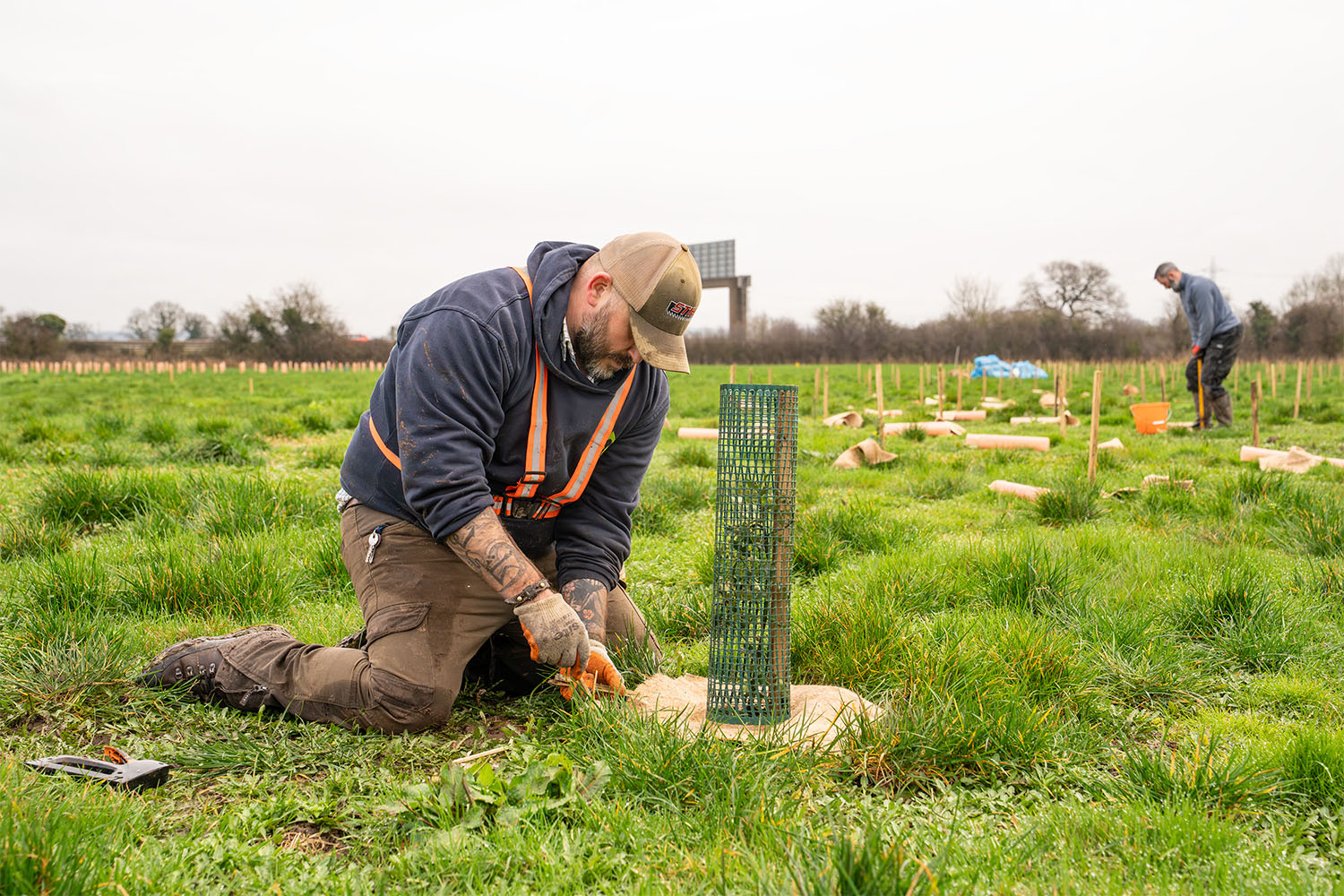
A total of 5,200 native trees and shrubs have been planted on the zoo’s Cheshire estate, on land close to the M53 motorway. Species include pedunculate oak, downy birch, wild cherry and alder, all chosen to help restore local biodiversity and improve habitats for wildlife.
But alongside around a third of the saplings, teams buried special mycorrhizal fungi pellets – tiny soil fungi designed to bond naturally with tree roots and improve survival rates on degraded land.
Researchers hope the fungi could help young trees establish more successfully, while also increasing resilience against disease and poor soil conditions. If successful, the trial could help shape future woodland restoration and climate projects across the UK.
The project was completed ahead of today’s International Day for Biological Diversity (22nd May) and is being described by organisers as another important milestone in wider efforts to tackle climate change and reverse habitat loss in Cheshire.
The newly planted woodland covers an area roughly equivalent to 40 Olympic-sized swimming pools and follows earlier work completed in 2024, when nine hectares of woodland were established on the zoo estate.
The design also includes managed open spaces intended to create a network of connected habitats for pollinators, birds and other wildlife species.
Ruby Merriman, Estate Biodiversity Manager for Chester Zoo, said: ‘The zoo estate is home to iconic woodland species like tawny owls and brown long-eared bats, however with only small pockets of mature woodland currently available their habitat is limited.
‘Creating larger areas of woodland across the estate increases nesting, roosting and feeding opportunities for wildlife, and the woodland glades incorporated into the design will offer even more habitat for butterflies, birds, bats and more.’
The initiative supports several wider environmental strategies, including Cheshire’s Local Nature Recovery Strategy and the Chester Zoo-led Networks for Nature programme.
Funding came through the UK Government’s Trees for Climate Fund, while volunteers from the Environment Agency and local community groups helped plant the trees during the winter season.
Katherine Causer, Environment Programme Manager for the Environment Agency, said: ‘This five-hectare planting project shows what’s possible when partners come together with a shared vision.
‘We have helped create a living legacy: new woodland that will strengthen local biodiversity, store carbon, and protect our communities for generations to come. These trees are an investment in a healthier, more resilient future.’
Organisers say the long-term aim is not only to create new woodland, but also to develop better methods for restoring damaged landscapes as the UK works toward national biodiversity and carbon reduction targets.