


















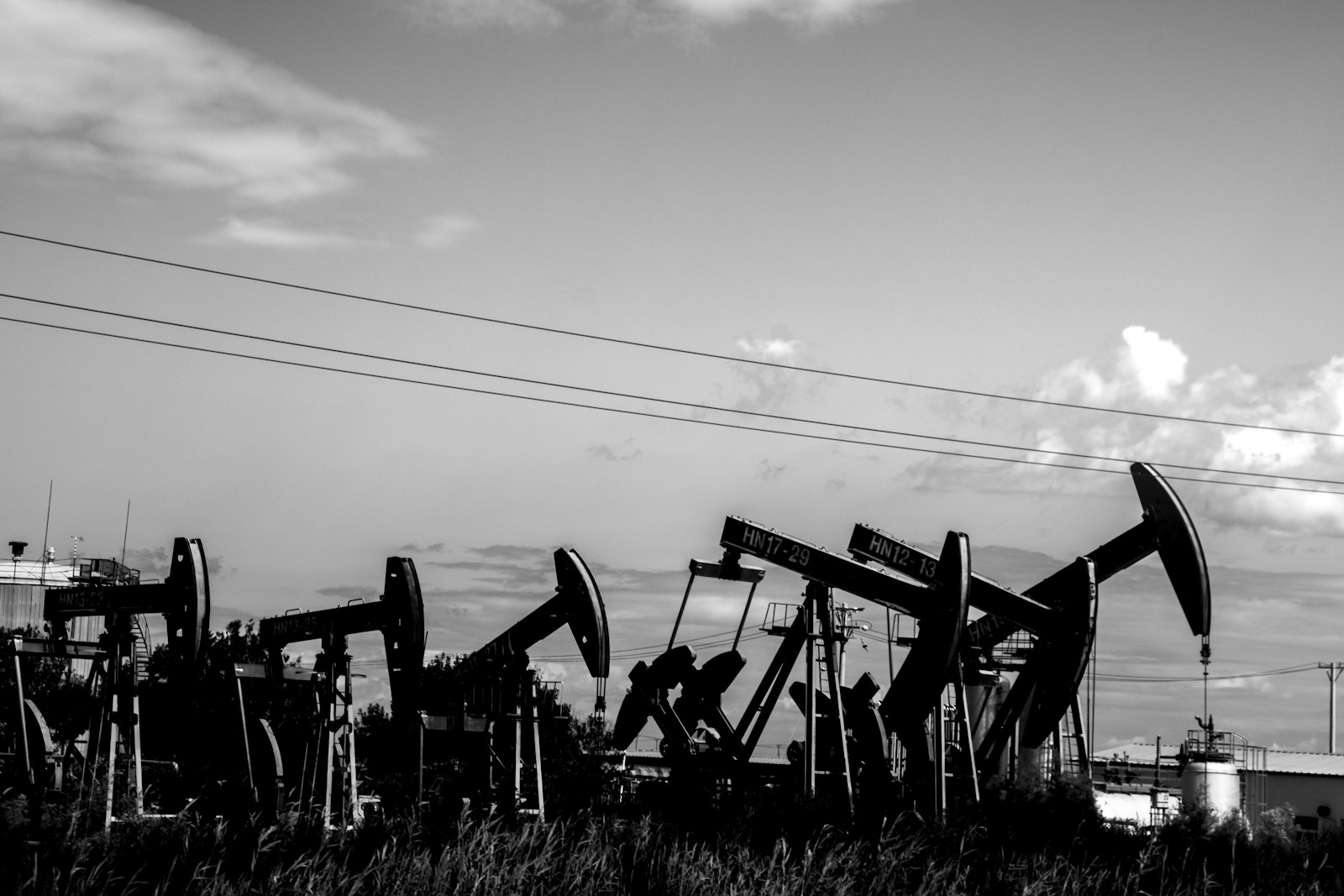
What do Donald Trump, Powergen and National Power have in common? We investigate short-sighted plans to exploit highly polluting South American fossil fuels, and the environmental fallout.
It only took three days for the first energy-related crisis of 2026 to begin. On Saturday 3rd January, the US military launched strikes against a number of targets in Caracas, with members of Delta Force moving to capture Nicolás Maduro and his wife, Cilia Flores, from their militarised compound.
Dubbed Southern Spear, the bold and lightning-fast operation was over in a matter of hours and had one publicised goal: removing Venezuela’s corrupt president, and bringing about the end of an authoritarian regime that posed a direct threat to the United States and wider world order. But as shockwaves spread across the globe, Washington D.C. shared a second aim.
Not only was this about removing the head of a perceived rogue state — and installing a replacement more sympathetic to ‘western ideologies’ — it was hoped that international investment in Venezuela’s beleaguered (and, crucially, nationalised) oil industry would restart. A country with reportedly the largest untapped reserves of black gold on the planet would, according to the White House, reopen for business. Fossil fuel giants would be welcomed with outstretched arms and rubber-stamped drilling licenses. Others were less optimistic.
Many analysts questioned the financial logic of firms like Exxon and Shell spending big on Venezuela. Modernising infrastructure that had been neglected for decades would be incredibly expensive, and potential returns were likely stymied due to the nature of hydrocarbons in South America’s most northerly nation. According to Patrick Heren — a UK-based journalist, founder of the Heren Index of gas prices and an energy procurement advisor to the British government, Venezuela’s energy riches had been significantly exaggerated. And his essay for The Article, published Tuesday 6th January, also laid out what happened last time someone tried to access this resource.
‘Most of the barrels… are found in the Orinoco Belt, an enormous deposit of bitumen lying below the Orinoco river in eastern Venezuela,’ Heren writes. ‘Although technically these barrels are producible, they are not crude oil as usually understood: they are too heavy, too full of trace elements to be refined into petrol, heating oil and kerosene.’
Attempts have been made to commercialise ‘the Orinoco sludge’, he goes on to explain. First by Standard Oil New Jersey (now Exxon), circa 1936. Within two years, the project was abandoned. Decades later, the Petroleos de Venezuela (PdV) programme began emulsifying the reserves with water and surfactant chemicals, before selling that product under the name Orimulsion during the early-1990s. Intended as an affordable option for power stations, the only two buyers were Britain’s National Power and Powergen.
‘I stumbled across [Orimulsion] when I was looking for case studies of communities that had fought back against polluting energy infrastructure, or problematic energy infrastructure. I’m really interested in how energy infrastructure, and in particular controversial energy infrastructure, is often sited in deprived areas,’ says Aimee Ambrose, Professor of Energy Policy at Sheffield Hallam University’s Centre for Regional Economic and Social Research [CRESR].
‘I traced the fuel to three power stations in the UK — two that had actually used this oil type, and a third that was earmarked for conversion to use it,’ she continues. ‘I then stopped looking into the story when it became apparent these locations were chosen because of the type of power station and how easy conversion would be, rather than anything to do with the nature of the communities themselves.’
Nevertheless, in each of the cases — Pembroke, Wales, Richborough in Kent, and Ince, Cheshire — residents mobilised to stop Orimulsion being used because of its environmental and atmospheric impacts, with sulphur dioxide pollution a key factor. The latter two locations did use the fuel between 1990 and 1996, and both recorded localised fallout. In southern England, for example, crops failed and the paintwork was damaged on new cars being stored in the vicinity prior to sale. Court cases brought against Powergen were all settled, damages paid, and the story was committed to the deepest recesses of Britain’s energy history.
‘Yeah, so there was crop damage… heavy metals found in soils… Powergen only had permission to do this as an experiment… and it was such a short period of time in our energy story, comparatively, I think now it’s seen as fairly insignificant,’ Ambrose continues. ‘But there are a couple of important aspects in all this. In the late-1980s and early-1990s, energy policy in the UK was still very much a top-down thing, and was not considered a matter of public interest. That was the decision-making culture. At the time, there were 27 power stations across the country, only four were even suitable for this fuel, so it was seen as very localised.
‘However, the impact was much more widespread than that. In order to bring the emissions from Orimulsion down to what were considered safe levels at the time — as in within legal limits — they had to filter some of the gasses produced through a process called flue gas desulphurisation. This involves putting powdered limestone in the chimneys,’ she tells us. ‘And that material has to come from somewhere.’
Ambrose’s research had dug up a less visible side of the Orimulsion story, and one that is arguably even more relevant today — an age when climate and environment supply chain impacts are as significant as on-site. As Orimulsion was used, limestone demand spiked, with the Parliamentary Office Science and Technology’s POSTnote 84 October 1996 showing one Pembrokeshire facility alone was extracting 600,000 metric tonnes of limestone during this period. This then had to travel to power stations, contributing to transport-related air pollution, whilst vast quantities of waste was also produced in the process.
Sticking in South Wales, plans were made to convert a nearby coal-fired power station to Orimulsion, but wound up shelved when the local community found out cooling water would be discharged directly into the sea, causing coastal temperatures to rise. The result could be devastating to marine life and the livelihoods of those working in local fisheries. According to Ambrose, the fact these objections were upheld, and the third power station never came online, should be seen as a case of legislative success.
‘All this was happening at a time when the framework for environmental law was tightening. So actually it’s a positive story from that perspective. The Environmental Protection Act [in 1990] supported the communities in fighting [against this fuel]. And that meant Orimulsion was only this brief moment in our energy history. And it needed to be brief, if it was going to happen at all, because of the pollution,’ says Ambrose. ‘But the story also isn’t so straightforward, and what is partly to blame is a lack of effort made to encourage us — the public — to consume less energy as a whole.
‘These were the days of peak demand periods, 7.30PM Coronation Street, when kettles went on across the country, alongside the TV and lights. Britain built this massive grid just for those relatively short moments when everyone wanted to use energy at the same time. And there was this desperation to meet that need because everyone was really being encouraged to use more and more electricity. The rise of cheap consumer devices has a lot to answer for. So Orimulsion is really about electricity generation… and specifically how to meet that national demand for power as cheaply as possible.”
Back in the 21st Century, over the two months since the US removed Maduro from power there has been scant reason to celebrate an impending golden era for affordable energy. In fact, the reality is quite the opposite. Not only has Venezuela completely vanished from the news cycle, along with its oil, in February American President Donald Trump began air strikes against Iran, again in the name of regime change. The Strait of Hormuz, a vital shipping lane through which some 21 million barrels of oil and 25% of the planet’s liquified natural gas flowed each day, quickly closed.
The repercussions will be felt globally over the course of this year and beyond. Domestically, analysts expect a hefty rise in Ofgem’s energy price cap come autumn due to rising wholesale prices. Meanwhile, aviation and travel companies are grappling with a 150% leap in jet fuel costs. But while debate is waging in Westminster about how best to support the public once utility bills climb and airlines start adding surcharges to seats, Dan Jørgensen, the European Commissioner for Energy & Housing, has proposed a rethink in attitudes towards fossil fuel use.
‘The more you can do to save oil, especially diesel, especially jet fuel, the better off we are,’ says Jørgensen. ‘Work from home where possible, reduce highway speed limits by 10km [per hour], encourage public transport, alternate private car access… increase car sharing and adopt efficient driving practices.’
It’s a stark contrast to UK Business Secretary Peter Kyle’s ‘keep calm and carry on as normal’ mantra. And people should listen, with the years ahead likely to be defined by ongoing energy crises driven by volatility in oil and gas markets as supplies dwindle and competition for remaining resources grows more fierce.
While a return to Orimulsion is unthinkable, lessons from that grave — and, thankfully, brief — misstep should not be forgotten. On the current trajectory, our world remains focused on trying to make sure energy capacity keeps pace with demand, with little consideration for wider implications. The rapid rollout of data centres — which not only have a huge carbon footprint but also produce dangerous levels of Pfas gases with toxic and warming properties — is just one (highly visible and divisive) example.
‘One of the interesting things that came up in the Hansard debate around Orimulsion is the idea that markets should decide on what the best energy source is. That’s what was suggested by a number of neoliberals. So using the cheapest, most compatible fuel, and putting the markets in charge of policy, was a no brainer to them. Promoting a more responsible attitude didn’t really factor,’ says Ambrose. ‘In the 1990s during that Orimulsion period, there was virtually no emphasis on energy efficiency. Now, do you really feel like we’re actively being encouraged to consume less electricity, or less fuel, today? Other than through the cost of these things. We’re still not doing this. And it’s a serious issue.’
In the middle of ongoing ecological and air pollution emergencies, allowing global energy strategy to be dictated by existing and predicted growth completely fails to take into consideration past errors, when supply has been increased to meet demand at any cost. Instead of trying to dispel the myth that power output can continue to grow indefinitely, and grids and infrastructure must simply expand, policymakers are steadfast in encouraging more consumption without any debate about the short and long-term consequences. Until this changes, the risk of sustained damage to ecosystems and dangerous levels of air pollution will remain.
More Features & Opinion:
How satellite IoT can enhance remote water system monitoring
Newbold Quarry: from depleted mineral void to vital wetland habitat
Image: Michael Myers / Unsplash