
















The UK Government’s first national security assessment on biodiversity loss, published in January, should have been a political watershed that changed how we think about nature policy.
Developed with input from the Joint Intelligence Committee, MI5 and MI6, the assessment was unambiguous in its conclusion that ecosystem collapse is a direct threat to UK food security, economic stability, and international security.
The question on my mind is whether the King’s Speech will reflect this.
Westminster has, for too long, treated nature as a secondary issue. Important, certainly, but somehow separate from the ‘serious’ business of economic growth, defence, and national resilience.
This distinction no longer holds. Nature preservation now belongs on the desks of those responsible for protecting the national interest, in the same category as energy security, cyber resilience and defence readiness. Not at the periphery of environmental policy, but at the centre of how the state evaluates and manages risk.
And rightly so: more than half of global GDP depends on functioning natural systems. When those systems destabilise, the effects show up in inflation, insurance premiums, trade balances and on supermarket shelves. The Bank of England and the European Central Bank have both warned that financial institutions are failing to price these dependencies adequately.
The gap between diagnosis and response remains wide. While the intellectual case has been made, it has yet to translate into the operational machinery of government: into fiscal modelling, infrastructure planning, or national resilience strategies. The policy tools designed to manage these risks remain scattered across departments rather than coordinated at the centre of national risk planning.
In financial markets, the direction of travel is clear. Nature-related risk is being incorporated into credit decisions, supply chain structuring, and long-term capital allocation. Parts of the private sector, including some of the world’s largest global corporates, are already treating nature as a core strategic input. Kering, the luxury fashion house behind brands including Gucci and Yves Saint Laurent, became one of the first companies to publicly adopt science-based targets to mitigate nature loss across its direct operations in October 2024.
The following year, Suntory, one of the largest global beverage players, announced initiatives to strengthen the resilience of its raw-materials sourcing against climate and biodiversity pressures.
The UK state is now lagging behind both science and markets.
The geopolitical context makes this moment particularly consequential. The United States has withdrawn from the Intergovernmental Science-Policy Platform on Biodiversity and Ecosystem Services, while international cooperation on nature is increasingly divided, even as the science becomes clearer than ever about the scale of what is at stake.
That creates a strategic opening that Britain is particularly well placed to seize. The UK already hosts world-leading expertise across nature-related disclosure, conservation science, financial risk, and corporate advisory services. Demand is growing rapidly for the ability to translate ecological instability into economic decision-making, from boardrooms to insurers to sovereign risk analysts. The countries that develop these capabilities first will help shape the standards, markets, and regulatory frameworks that govern nature-related risk globally.
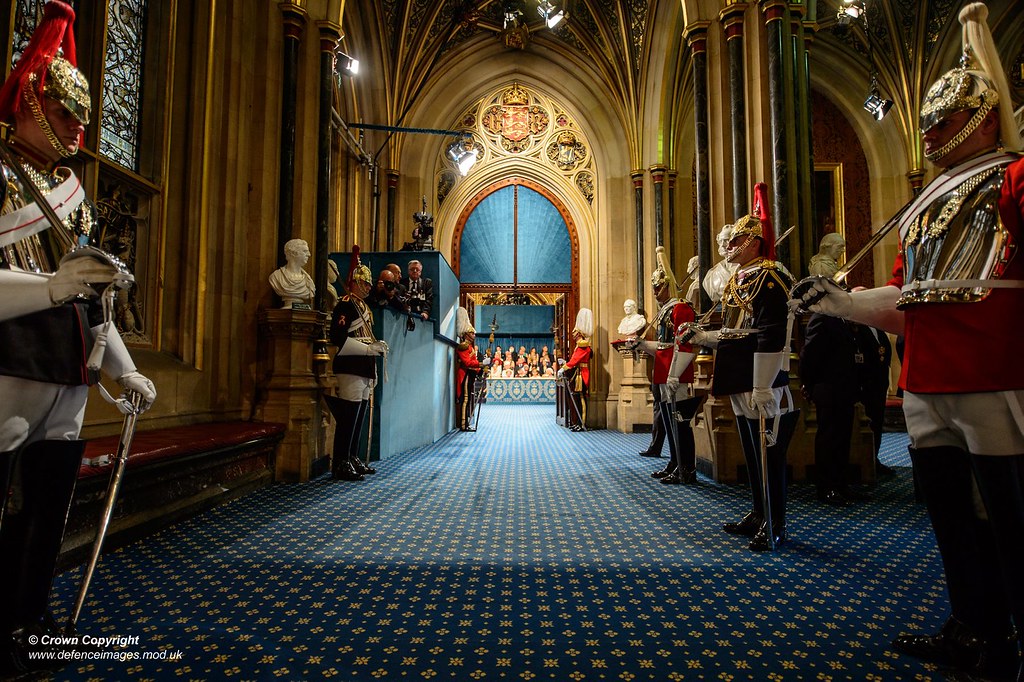
This is where the King’s Speech carries weight. It is one of the few moments in the political calendar when the government is required to articulate a coherent narrative of national direction. Narrative matters because it signals whether a threat is being treated as peripheral or foundational.
King Charles III has spent decades articulating the link between ecological systems and human stability, often well before these ideas entered mainstream policy. That gives him a rare platform to frame nature as a precondition for economic and national security.
That framing would provide political permission to align legislation, regulatory reform, and investment strategy with the reality the intelligence community has already described.
The King’s Speech offers a simple but consequential choice to either treat nature as background context or recognise it as a defining determinant of Britain’s future economic and strategic security.
Dr Samuel Sinclair is Co-Founder and Director of Biodiversify
Photo: Openverse