














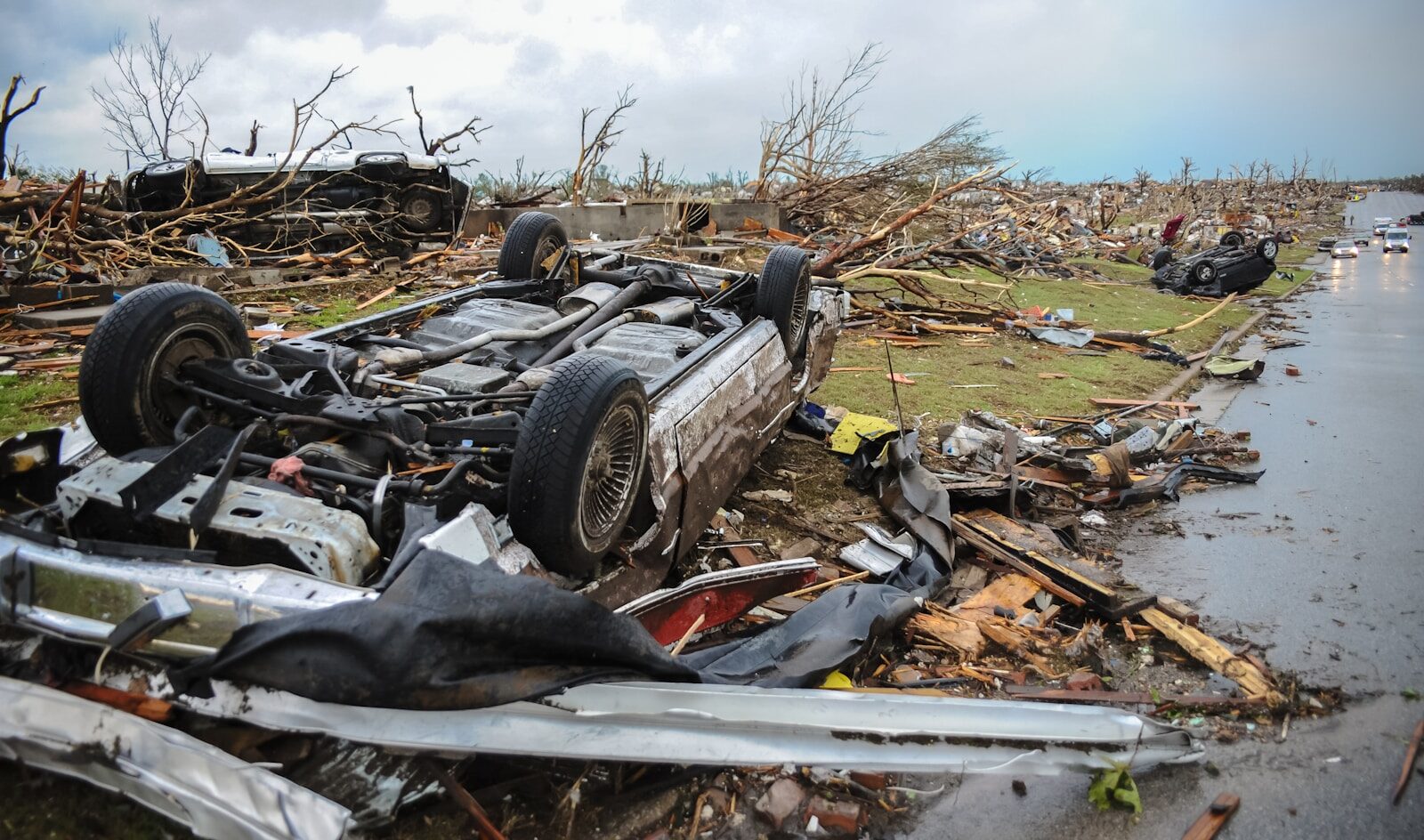
A new report shows how AI can improve mitigation and adaptation. It also makes a very strong case for forgetting about pre-disaster conditions and redeveloping for a volatile future.
Only last week, Environment Journal published a think piece on the worrying nature of a world that values artificial intelligence companies more than the farmland and water networks we rely on for basic survival needs. Talk about a step-change.
Published by the Future Investment Initiative (FII) Institute, Artificial Intelligence for Climate Risk Prediction and Adaptation looks at how AI can help governments, emergency teams, investors and communities prepare for a more volatile future, and build-in resilience.
Launched at the FII PRIORITY Europe 2026 conference, held in Rome, Italy, last week, it’s hard not to get overwhelmed at the scale of challenges laid out in the report. Not least figures from Munich Re showing combined global losses from climate events hit $320 billion US in 2024. Of this, less than 50% was insured.
Among other things, the document explores areas AI is already making significant headway in. These include understanding best practices in preventative maintenance, creating digital twins for modelling, real-time monitoring of disasters and lighting fast damage assessments.
Interestingly, a key takeaway is that our approach should not be focused on rebuilding what has been damaged or lost. Instead, we need to think beyond pre-disaster conditions and look at blueprints that would be more resilient to a future climate event. Because it’s only a matter of time until another hits.
‘AI has the potential to transform how societies predict, prepare for, and respond to climate risk, but technology alone is not enough,’ said Dr. Thomas Chandler, one of the report’s authors. ‘The real test is whether AI can be integrated into institutions, trusted by communities, and used to reduce vulnerability before disasters occur.’
You can read the full report here.
Image: Greg Johnson / Unsplash
More on climate reliance and adaptation:
Drought-proofing the UK: behavioural change is fastest route to resilience
Growth, growth, growth: economic resilience means valuing nature, people and society
From adaptation to resilience: heatwave underscores need to rethink UK’s climate problem