














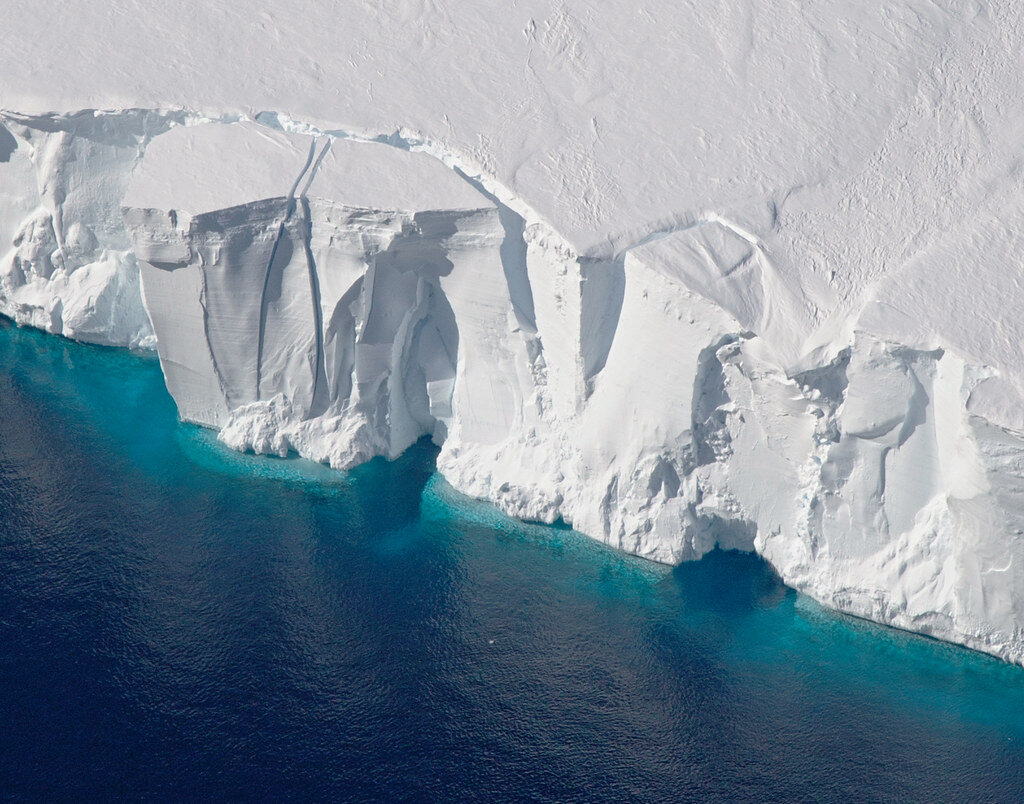
Scientists have identified a critical window over the next 30 to 50 years during which governments and communities can reliably plan for rising sea levels caused by Antarctic ice loss.
The findings, published in the journal Nature and led by researchers from Monash University and the Securing Antarctica’s Environmental Future (SAEF) programme, suggest that while the long-term future of Antarctica remains uncertain, ice loss over the coming decades can be predicted with much greater confidence than previously thought.
Researchers say this presents an important opportunity for countries to prepare for the impacts of climate change before more dramatic changes become harder to forecast.
Antarctica holds enough ice to raise global sea levels by many metres if large parts of the ice sheet were to collapse. According to the Intergovernmental Panel on Climate Change (IPCC), sea levels could rise by more than two metres by the end of the century under high-emissions scenarios, although there is still significant uncertainty over exactly how quickly this could happen.
Such an increase would have far-reaching consequences. Hundreds of millions of people worldwide could be affected by flooding and displacement, while many low-lying Pacific islands would face serious threats to their long-term habitability.
One of the biggest challenges for scientists has been understanding how much Antarctica will contribute to sea level rise in the coming decades. The continent’s vast ice sheet responds slowly to changes in climate, but certain processes can trigger rapid and potentially irreversible ice loss.
The new study found that until around the middle of the century, Antarctic ice loss follows a relatively predictable pattern. If computer models accurately reflect the amount of ice being lost today, researchers say those same models can provide reliable estimates of sea level rise over the next three to five decades.
Lead author Dr Felicity McCormack said: ‘If ice sheet models accurately reproduce the rates of ice loss we observe today, we can have confidence in using those same models to reliably predict Antarctica’s contribution to sea level rise over the next 30 to 50 years. Accurately predicting how much and how fast global sea levels will rise offers vital information for future coastal planning and government policy.’
However, the research also found that confidence in projections declines later in the century. This is because complex feedback mechanisms, including the rapid retreat of ice resting on bedrock below sea level, become increasingly important and much harder to predict.
The researchers argue that this should not be viewed as a reason for complacency. Instead, they say the findings highlight the importance of acting now while there is still a relatively clear picture of what lies ahead.
Professor Steven Chown, Director of SAEF, said: ‘The predictability identified in this research does not reduce long-term risk, instead it provides a defined period in which to act with greater confidence. Improvements in observational systems and ice sheet model developments will directly translate into more reliable sea level projections for short-term planning horizons.
‘Pacific Island governments require reliable near-term projections to make decisions about infrastructure, community relocation, and long-term land use. Engagement on sea level science and adaptation planning represents a foreign policy opportunity and a regional responsibility.’