














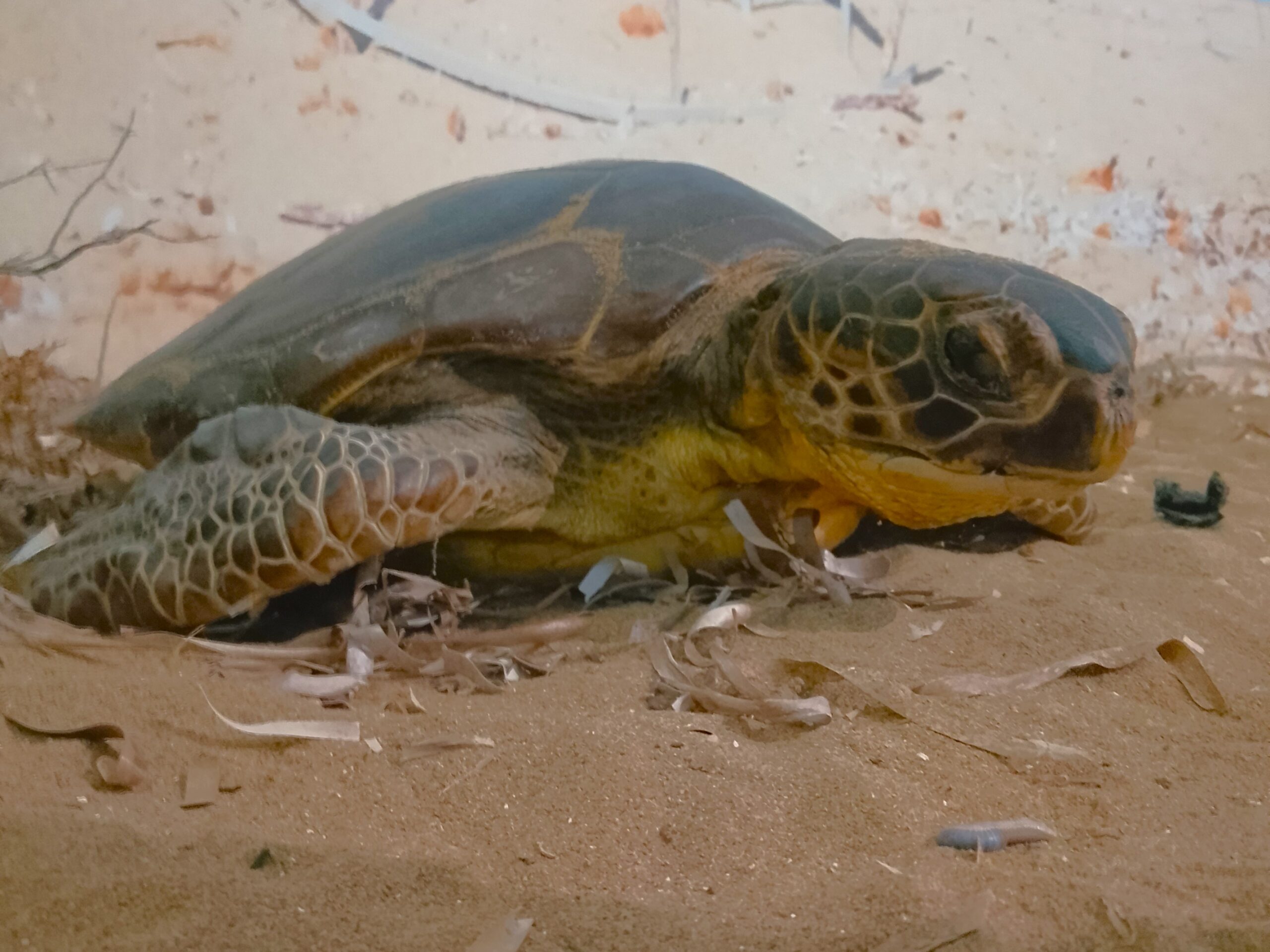
In the rush to protect endangered species there is a risk of potentially disastrous unintended consequences, as I discovered on a recent trip to Cyprus’ Akamas Peninsula.
The last decades have seen some major conservation successes, including the re-establishment of Arabian oryx in the wild, repopulation of European bison and the huge rise in humpback and blue whale numbers that has come with the moratorium on commercial whaling.
The mountains of northwest Cyprus wouldn’t be most people’s first choice for learning more about the island nation’s own marine life. But it turns out there was method in my perceived madness.
Walking the 2.5-kilometre short version of Smigies Nature Trail through pine forest offering up extraordinary coastal views, my guide Manos Ioannou told me something very interesting: that one of the main reasons for the creation of Akamas National Forest Park in which Smigies Nature Trail is located was the presence of turtles along this area of coast.
The mere fact that turtles come to nest on North and South Lara Bay each July has helped preserve around 24 of the 40-odd habitats in Cyprus. This in turn protects endemic and other species living in these habitats, including rays, octopus, Neptune seagrass meadows, corals, dolphins and a tiny population of around 20 Mediterranean monk seals.
This is a known effect defining a species like the turtles as an umbrella species – one whose own conservation ends up protecting a much wider variety of other species within an ecosystem.
All good news I thought, given that I’ve previously learnt of the endangered nature of turtles around the world including in Ghana.
A visit to the Turtle Museum had me think again. Opened in June 2023 in the hillside village of Innia (or Ineia) on Cyprus’ Laona Plateau, located at roughly 600 metres above sea level due to the fact much of the coast is protected as a European Natura 2000 site and can’t be developed.
Cypriot waters are home to two species of nesting turtle: loggerhead and green turtles. Loggerheads aren’t particularly fussy eaters, consuming everything from Neptune seagrasses to jellyfish, crabs and molluscs.
Thanks to conservation efforts such as the creation of Akamas National Forest Park, they’re doing well. As my museum guide there, Pambos Palates, joked “We have millions, so basically we don’t care about them.”
The same can’t be said for the green turtle. A much pickier eater, limited to Neptune seagrass beds as a vegetarian species, they are being outcompeted by their loggerhead cousins.
The creation of turtle hatcheries on the beaches of Lara Bay should help. The hatcheries relocate freshly-laid eggs to protected areas of sand to increase the numbers of hatchlings which survive natural predation by seabirds and Cypriot foxes.
But they do point out the risk of our involvement (or interference) in natural environments even when the aim is a positive one. We only have to look back at the introduction of cane toads to Australia or grey squirrels to the UK as a reminder of what can happen. Perhaps we will need to launch a conservation effort to protect Cypriot foxes in future, now that we are removing one of their major food sources.
We are rapidly learning that steering clear to begin with is the best course of action when it comes to the natural environment and conservation. In somewhere as crowded as the Mediterranean, home to 150 million people, increasing gas and oil fields, fishing pressures and economically-important tourist destinations, the question is if this is even possible.
My time in Cyprus suggests that with passionate people such as Palates, it could be.