
















Ignoring the tradition of Bank Holiday wash-outs, the long weekend saw thermometers rocket days after a new climate repot delivered recommended urgent adaptation steps.
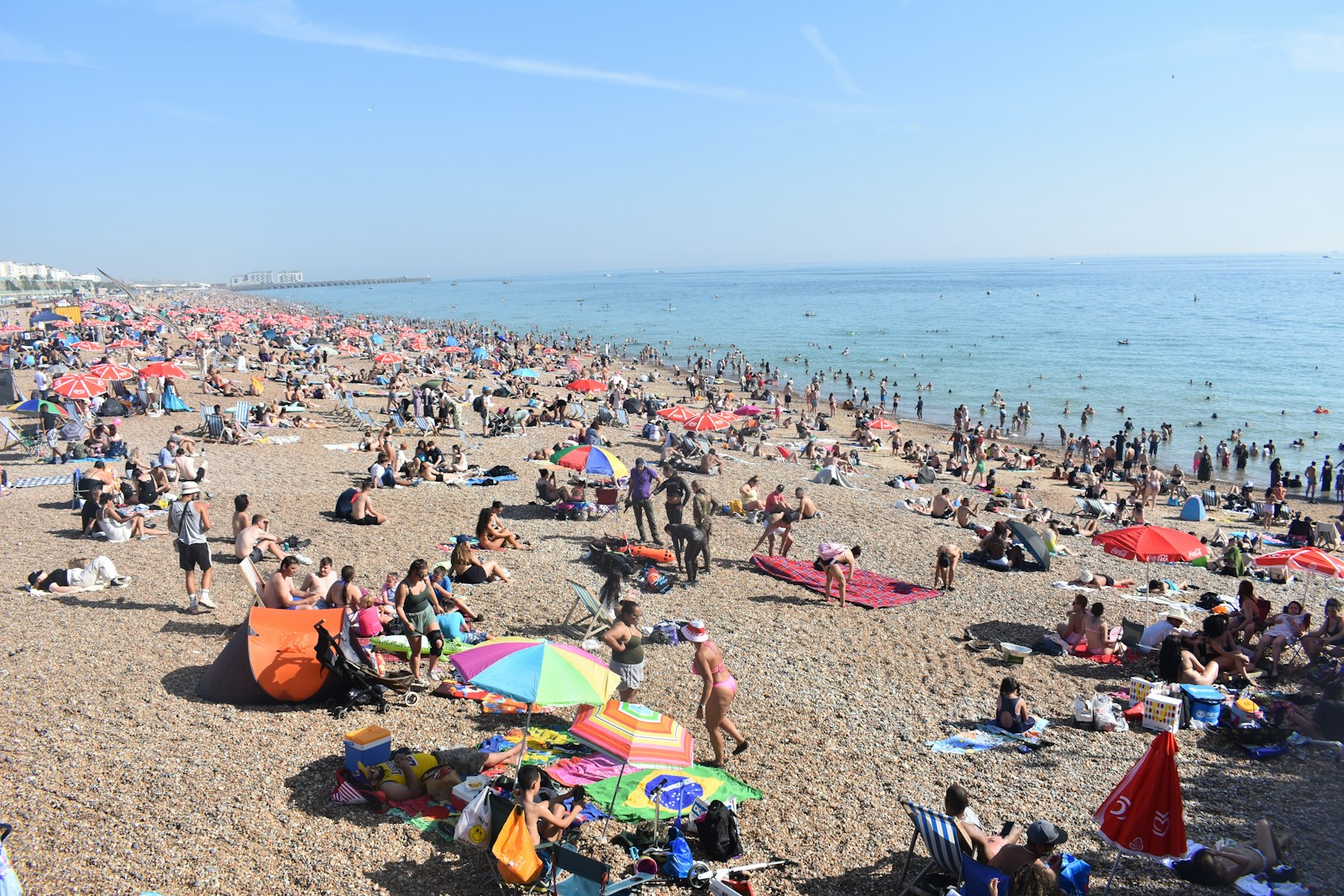
Temperatures across Britain went well above averages for this time of year over the long weekend. Peaking yesterday, Monday 25th May, Kew Gardens is believed to be the hottest recorded temperature at 34.8C — setting an all-time high for meteorological spring.
In total, 12 locations are also thought to have broken all-time seasonal records, including parts of Suffolk, Berkshire and Warwickshire. According to the Met Office, 97 monitoring stations surpassed 30C.
Warmth persisted through the night, too, with Kenley Airfield in South London remaining above 21.3C between dusk and dawn — the hottest May night ever recorded in Britain, easily meeting the 20C and over criteria for official classification as a ‘tropical night’. The same location set the previous overnight record (19.4C) the previous day — Sunday 24th May.
However, meteorologists kept heat warnings in place for Tuesday 26th May, when there is a chance that new all-time highs could again be recorded in various parts of the country. 35C or even 36C temperatures could be seen in areas such as the Midlands, South West England, East Anglia, and South Wales.
Emphasising the repercussions of extreme heat, there is also concern about intense thunderstorms and flash flooding, with potential for up to 30mm of rain to fall in less than an hour.
‘Further heat is in the forecast for much of England and Wales, with similar temperatures forecast for Tuesday,’ Dan Suri, Chief Operational Meteorologist at the Met Office.
‘High pressure is forecast to gradually lose its influence later in the week, though maximum temperatures will still remain high and in the low 30°Cs for some mid-week and high 20°Cs late this week,’ he continued.
Last week, the Climate Change Committee published a new report on the urgent need to improve resilience and adaptation to Britain’s changing climate. You can read the recommendations here.
More Biodiversity & Climate Change:
Woodland project could shape future tree-planting across the UK
Why climate change is making Ebola outbreaks in Africa more likely
Maximum workplace temperatures and home air con, welcome 2050s Britain