
















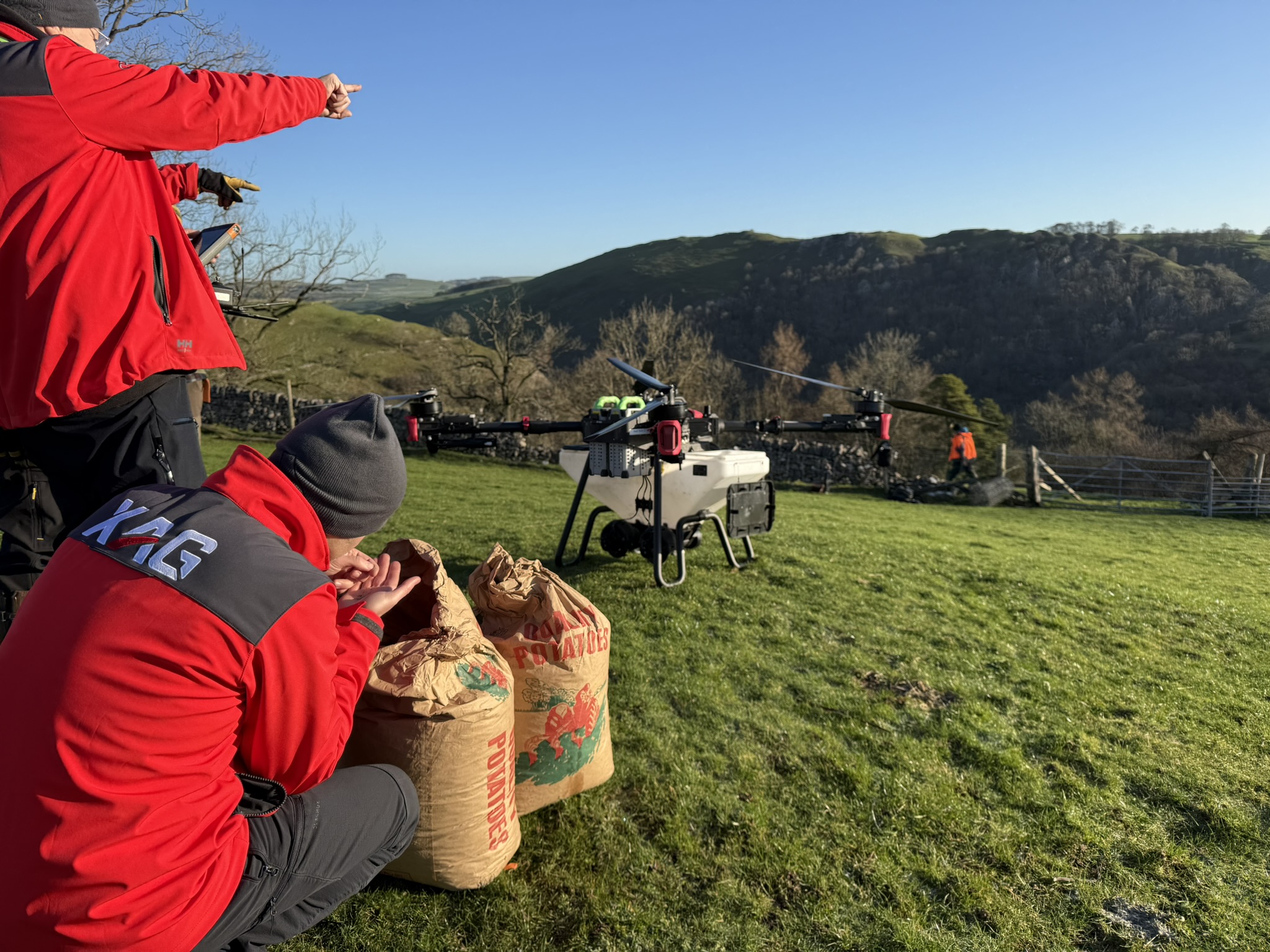
In a first-of-its-kind trial above the Peak District, drones are being used to scatter tree seeds as part of the ‘LIFE in the Ravines’ project.
Led by Natural England, the initiative aims to find innovative ways to restore fragile ravine woodlands devastated by ash dieback disease.
The Peak District’s ravine woodlands are heavily reliant on ash trees, making them particularly vulnerable to ash dieback, a deadly fungal disease first identified in the area in 2015. As infection continues to spread, conservationists warn that a wide range of woodland species, from rare moths and beetles to redstarts and other birds, could be affected.
This trial, believed to be one of the first of its kind in a steep, confined ravine woodland, involved specially designed drones dispersing a mix of native tree seeds. The test took place across a 0.75-hectare plot in Dovedale and a similar area in Lathkill Dale.
The seed mix includes field maple, wych elm, alder, small-leaved lime, birch, rowan, yew, goat willow, crab apple and holly – all carefully chosen from the project’s restoration palette for ravine woodlands.
The steep, rocky terrain of Dovedale and Lathkill Dale poses major challenges for conservation teams. Although traditional tree planting and seeding have been carried out across the Peak District Dales as part of the wider project—by both Natural England and the National Trust, some slopes are simply too dangerous or difficult to work on by hand.
Drones offer a potentially safe, efficient, and cost-effective alternative. They mimic natural seed dispersal, as if mature trees were already present on site.
These remote, steep woodland ravines will be revisited several times a year to track seed germination and sapling survival. Control plots outside the seeded areas will be used for comparison. The trial will also help determine whether drone seeding is more cost-effective than traditional planting and seeding methods.
Adam Linnet, Lead Ranger at the National Trust in the White Peak, said: ‘This trial will help us to explore new techniques and technology to work at the pace and scale needed to help the woodlands in the area recover and thrive again.
‘The trees in the steep sided ravines in and around the National Nature Reserve at Dovedale support wildlife, store carbon, stabilise the ground, prevent erosion and flooding, and make the area look beautiful throughout the seasons.
‘The technology used in this trial mimics natural seed dispersal so we are hopeful it could provide a solution to help trees establish in harder to reach areas, creating healthier and more resilient woodlands.’
The LIFE in the Ravines project has already seen over 100,000 trees planted across the Peak District Dales to combat ash dieback.
Photo: Natural England