













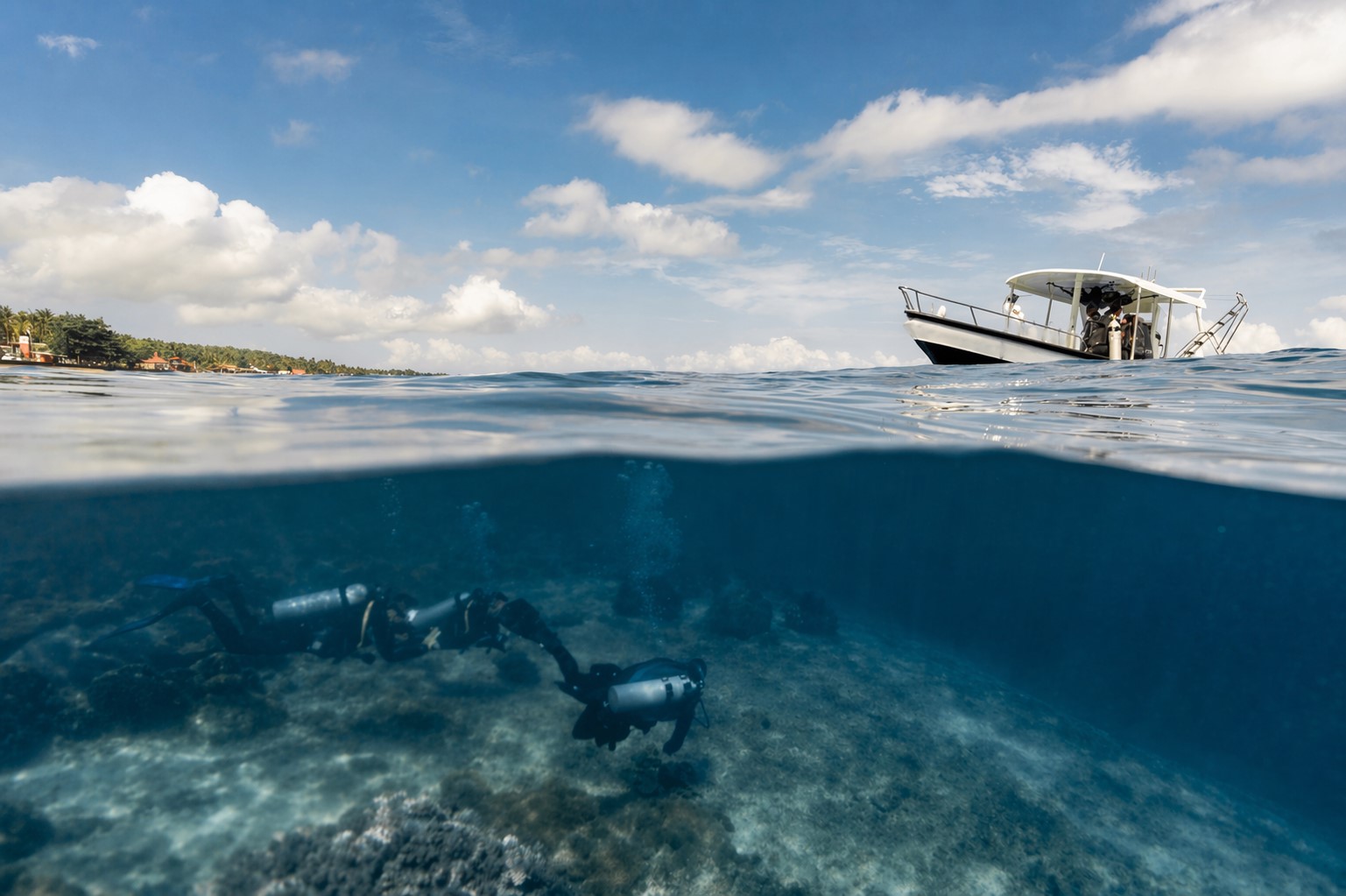
Scuba diving tourism, long marketed as an eco-friendly way to experience coral reefs, is causing widespread and largely hidden damage to some of the world’s most fragile marine ecosystems, according to new research.
The study, which led by Dr Bing Lin from the University of Sydney’s Thriving Oceans Research Hub, analysed the behaviour of more than 700 divers at popular tourism sites in the Philippines and Indonesia, including Bali.
Drawing on more than 300 hours of underwater observation, the researchers recorded nearly 5,000 reef contact events among 411 divers. Around 41% of those contacts caused observable damage – ranging from direct breakage of coral to the stirring of sediment that can smother reef life.
On average, divers made contact with the reef roughly once every four minutes, spending nearly two seconds of every minute in direct contact. The cumulative effect across millions of dive tourism visits each year is considerable.
What makes the findings particularly striking is that most of the damage is unintentional. More than 80% of damaging contacts were either accidental or went entirely unnoticed by the diver. This was compounded by a significant gap between how divers perceived their own behaviour and what the data actually showed – in matched observations, divers underestimated how often they touched the reef by nearly five times.
The study also documented two well-known psychological phenomena playing out underwater. Around three-quarters of divers rated themselves as above average at avoiding reef contact compared to their peers – a classic example of illusory superiority. The research also found evidence of the Dunning-Kruger effect, with less experienced divers most likely to overestimate their competence.
Certain behaviours significantly increased the risk of damage. Divers carrying underwater cameras, wearing gloves or using pointer sticks all had higher contact rates. Peer influence was also a factor, when one diver touched the reef, others were noticeably more likely to follow. Wildlife encounters, often the main draw for dive tourists, proved particularly problematic, increasing intentional reef contacts by 220% and damaging contacts by more than 100% as divers manoeuvred for a better view.
The researchers also found that a small minority of divers were responsible for a disproportionately large share of total damage, suggesting that targeted interventions, focused on the highest-impact individuals, could deliver meaningful results.
Dr Lin said: ‘First and foremost, divers need to understand that they are a part of the problem before we can convince them to become a part of the solution.
‘Tourism is critical to many coastal economies, including those closely linked to Australia, but without changes to diver behaviour, training and industry standards, it risks undermining the very ecosystems it depends on..
Among measures the researchers suggest are improved buoyancy training, tighter controls on equipment use, stronger pre-dive environmental briefings and higher certification standards for both divers and dive operators.
Photo: Dr Bing Lin