

















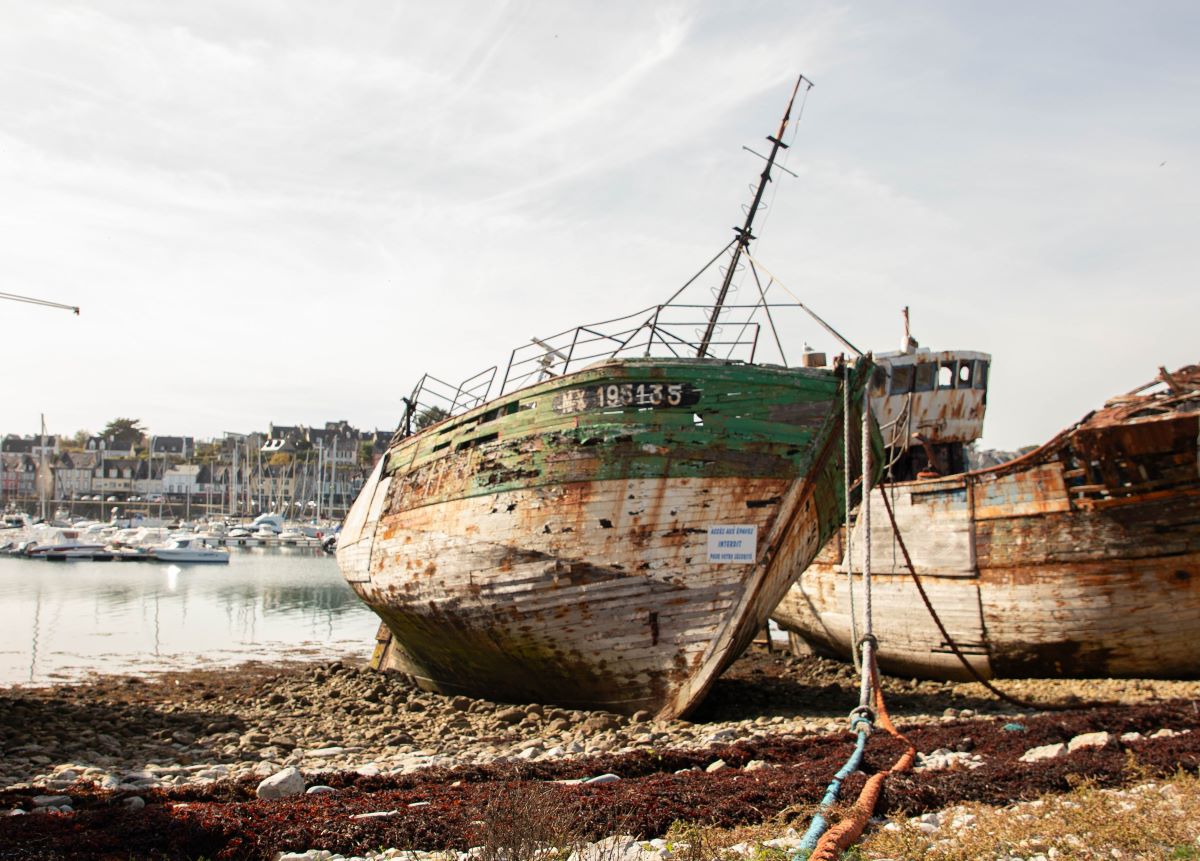
A marine biologist’s discovery of fibreglass particles in British shellfish has inspired a United Nations-endorsed international project tackling the hidden environmental threat posed by thousands of abandoned fibreglass boats across Europe.
Dr Corina Ciocan at the University of Brighton was among the first to identify microscopic fibreglass fibres in oysters and mussels sampled from UK waters. Her findings suggest that ageing, derelict vessels are shedding material into surrounding water and sediment, where it enters the marine food chain through filter-feeding shellfish. The long-term implications for both ecosystems and human health remain poorly understood.
Now, her research has spurred Regenerative Tides: Sailing for Solutions (ReTISS), a citizen science project operating across France, the United Kingdom and Portugal. Led by French charity Floating Stories Lab, the initiative brings together scientists, coastal communities and students to map abandoned fibreglass vessels and assess their environmental impact.
Dr Ciocan said: ‘This recognition shows how a local research finding can grow into something much bigger. It connects our work with a global community focused on protecting the ocean and helps ensure this issue receives the attention it deserves.’
The project has secured official endorsement as a Decade Action of the United Nations Decade of Ocean Science for Sustainable Development, following review by UNESCO’s Intergovernmental Oceanographic Commission. The recognition places ReTISS within a global network of initiatives working to improve ocean health.
Early findings are striking. Every oyster and mussel sample analysed from study sites contained fibreglass and plastic particles, pointing to widespread contamination in affected coastal areas. The project has already documented dozens of abandoned boats along European coastlines and developed a publicly accessible online mapping platform, allowing members of the public to report sightings and upload photographs.
College students have taken part in fieldwork across France, collecting and analysing samples to investigate contamination levels. The project is now expanding to bring together boat builders, fishermen and coastal communities to explore practical solutions.
There is currently no coordinated system in Europe for tracking or managing end-of-life fibreglass boats, even as millions of vessels built since the 1960s reach the end of their usable life. With no widely adopted recycling solution in place, the project combines scientific research with community-led action to make this largely invisible form of pollution visible – and to drive the policy changes needed to protect marine environments.
Dr Ciocan said: ‘This is a complex issue that affects ecosystems, industries, and communities. By working together across disciplines and borders, we have a much better chance of developing solutions that are both effective and sustainable.’