

















Regardless of future reforms, BNG is going nowhere. The key to success is identifying implementation processes which maximise benefits to ecosystems, clients and communities, engaging in portfolio-level investment, and nurturing relationships with off-site operators.
There has been much debate recently in the UK and around the world on Net Zero, green energy policies and the practicalities of implementing these on projects. However, no matter what the future has in store, Britain’s biodiversity net gain (BNG) policy is likely to continue in some form or another, as it delivers ecosystem services essential to human wellbeing and the economy. For example, pollination and climate change resilience, saving millions in mitigation and damage. Over the long-term, protecting biodiversity is just as imperative to the security of the economy as it is for nature.
Mandatory BNG1 came into effect in England in February 2024, stipulating that developers must deliver a 10% increase in biodiversity value compared to the pre-development baseline. This is achieved by either creating or enhancing habitats within a project’s site boundaries or at off-site locations, both of which need to be secured for 30 years. There have been many opportunities
for the Transmission and Distribution [T&D] industry to engage with the process and start honing best practices since mandatory BNG came into effect. While the coming years will streamline BNG as a system through precedence, data, and business strategy, there are already practical steps we can take to implement a number of key learnings from the first year, including balancing on-site and off-site BNG provisions, planning ahead and thinking at a portfolio level.
On-Site vs Off-Site
Due to the nature of T&D projects, it is often necessary to remove trees, woodland and hedges and, due to safety and maintenance requirements, keep the areas around overhead lines, substations, and underground cables free of woody vegetation. Often, the first proposed solution is to compensate for these losses by creating habitat on nearby land, by planting trees and other vegetation. However, when this is farmland or other productive land, it can raise debate over the long-term effects on a community, given quality farmland is likely to be removed and unable to produce much for 30 years or more.
There’s also the question go whether or not, after 30-years of management, the land then reverts back to agriculture or continues to be managed as a BNG-focused habitat? Arguably, there may be more long-term value to biodiversity and nature resilience in purchasing credits off-site in an area that is protected in perpetuity and forms part of a functioning ecosystem, such as a nature reserve. But the decision is difficult because BNG metrics are organised in a way that favours proximity to the area of habitat disturbance and/or loss. Meanwhile, for the T&D industry off-site often works better within the constraints of a project as it may only be possible to secure the area for 30 years, or there could be limited land available for purchase close to site. It also helps de-risk aspects of BNG for the project owners, such as long-term maintenance and the monitoring requirements for registered BNG.
Plan Ahead
As with most parts of a project, BNG is best considered as early as possible to identify habitats at site, inform how the metric is set up and calculate biodiversity units. Since substations and other T&D projects have longer timescales, it can have a negative impact on scores in the metric early if interventions are delayed. Whilst conversely, scores can be improved if BNG is undertaken early on.
In addition, to expedite the process of obtaining off-site units, it is important for the client to establish a relationship with off-site BNG providers, or habitat banks, in advance. If an organisation has a pre-established template for the terms of the off-site BNG agreement already in place or there is a framework agreement, then you can obtain off-site units for the project more quickly.
Go Wholesale
Some clients approach BNG one site at a time, surveying small parcels of land with low biodiversity unit quantities for each project before trying to purchase small quantities of units from habitat banks, and need to negotiate separate contracts for each purchase. But it would be simpler and more efficient to quantify biodiversity units at a portfolio level and purchase off-site units to match collective demand from amalgamated projects. Buying wholesale creates an economy of scale, meaning there are fewer contracts to negotiate, and off-site BNG credit providers are able to do long-term, portfolio-level planning as well.
This approach could also be beneficial to wildlife, too, as larger, continuously connected habitats will be created compared to a patchwork of small, fragmented equivalents. Purchasing biodiversity units from providers like existing nature reserves and nationally recognised trusts or organisations which are registered [or considering registering] as habitat banks with Natural England enables future-proofing to an extent. The areas offered for BNG have been selected to support nature recovery and will be protected in perpetuity.
So project managers have the ability to plan long-term, more ecologically beneficial projects. Building relationships with organisations which offer biodiversity units within existing nature reserves and protected areas can help boost economic resilience for land stewards by providing an additional income stream, which has knock-on effects for local communities. It also limits the impact on existing productive land and helps secure nature for future generations.
Ultimately, statutory BNG is likely to remain in some form for the benefit of all in the UK. The key is finding a system of implementation that maximises the benefits to nature, clients and communities by planning ahead, operating at a portfolio level, and establishing and maintaining key relationships with off-site operators. In order to continue to identify and overcome barriers
for the T&D industry, it is important to talk about pragmatic steps, key learnings and the advantages of a well-planned, future-oriented approach to BNG.
This article was written by Burns & McDonnell, a global engineering and construction firm.
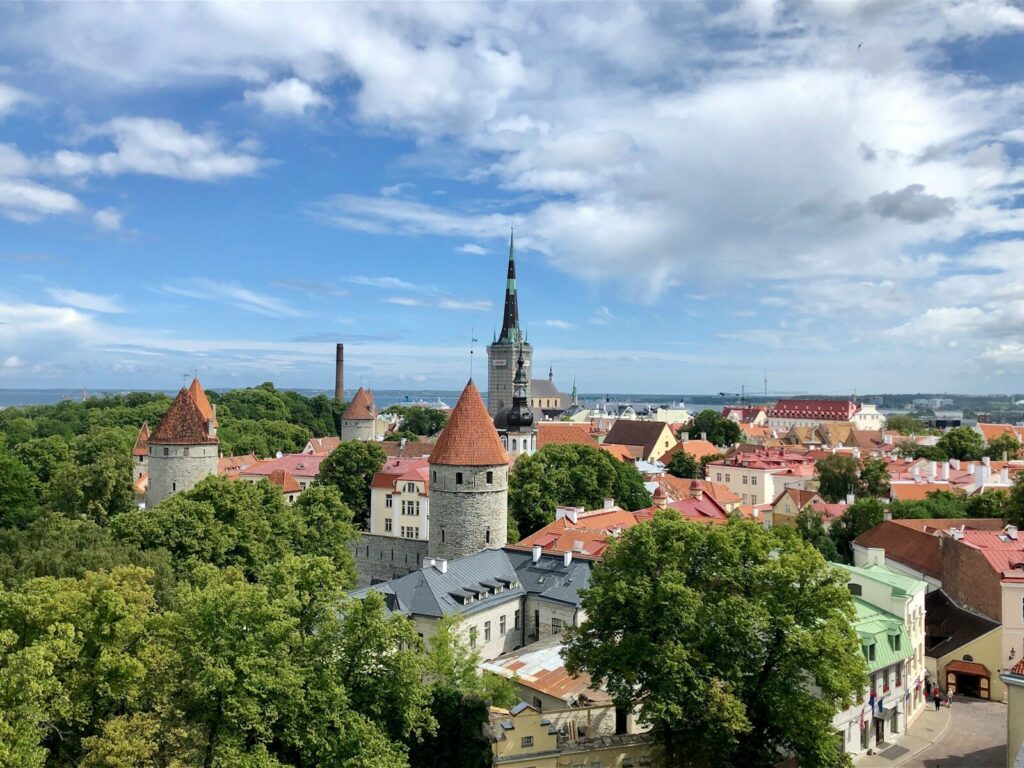
Image: Vikram Chouhan Udaipur Web Designer / Unsplash
More Case Studies, Features & Industry Insight:
Collaboration is key: How business and policy can drive sustainable agriculture
Missed connections: emissions, economics and Britain’s airport bonanza
Can aviation offsets drive greener growth across multiple sectors?