


















For small online retailers, the operational decisions that cut logistics emissions often cut costs too. Where the real savings sit.
Small online retailers face growing pressure to lower the carbon footprint of their shipping and fulfilment. New evidence suggests the changes that reduce emissions often reduce cost at the same time.
Logistics is one of the harder parts of an eCommerce business to decarbonise. Warehousing, packaging, and the movement of goods all carry an environmental cost, and for smaller brands the assumption has long been that greener operations mean higher bills. Recent market data points the other way.
A 2023 Sendcloud survey of online shoppers across four European markets, including the UK, found that 54% expect retailers to offer eco-friendly delivery at the checkout, and 37% would pay more for it. For SMEs, that shift in expectation sits alongside a practical reality: the operational decisions that lower emissions, fewer wasted miles, less packaging, fewer failed deliveries, tend to lower spend as well.
Where the Emissions Sit
For most small retailers, the footprint of getting an order to a customer concentrates in three areas. Warehousing accounts for energy use in storage and handling. Packaging carries the embedded carbon of materials and the waste they generate. Transport, particularly the final leg to the doorstep, is usually the largest single contributor.
Understanding that split matters, because it shows where effort produces results. A brand that switches to recycled mailers but ships half-empty vehicles on inefficient routes has addressed the smallest part of the problem. The transport layer is where the largest reductions, and the largest cost savings, are found.

The Cost of Greener Shipping
The cost question is the one that stalls most SMEs. Sustainable shipping is often presented as a premium service, and some elements do carry a higher unit price. Carbon-conscious carriers and recyclable packaging can cost more per item than the cheapest available option.
The fuller picture is more balanced. Packaging waste is a recurring cost as well as an environmental one, and reducing it lowers both.
Right-sizing parcels cuts material spend and lowers the volumetric weight that couriers charge against. Accurate picking reduces returns, and returns are among the most carbon-intensive and expensive events in the fulfilment cycle. Each of these is an efficiency measure first and a sustainability measure second.
How Active Delivery Decisions Reduce Both Carbon and Cost
The clearest example of overlap is in how deliveries are planned and routed. Consolidating collections so couriers make fewer stops, optimising routes to cut unnecessary mileage, and selecting carriers by efficiency rather than headline price all reduce fuel use. They also reduce the bill.
Software-driven fulfilment is changing what smaller retailers can do without large capital outlay. The relevant point for an SME is not the technology itself but what it enables: better demand forecasting, fewer stockouts, and shipping decisions based on live data rather than guesswork. Each of those reduces waste, whether that waste is an expedited shipment to cover a stockout or a vehicle dispatched below capacity.
Why Cross-Border Shipping Deserves Separate Attention
For brands selling into Europe, the carbon and cost picture changes again. Shipping every order from a single UK base means longer journeys, higher courier charges, and customs handling that adds both delay and administrative cost. Since the UK left the EU, that friction has grown rather than eased.
Fulfilling European orders from within the EU addresses several of these problems at once. Stock held at a continental hub reaches customers across the bloc without crossing a customs border for each parcel, which shortens delivery distances and removes a layer of paperwork. The result is lower emissions per order, faster delivery, and fewer of the surcharges that erode margin on international sales.
For an SME testing European demand, the calculation is less about scale than about avoiding the per-parcel penalties that cross-border shipping from the UK now carries.

A Practical Sequence for Smaller Retailers
For an SME with limited time and budget, the order of changes matters. A workable sequence looks like this:
- Measure first. Establish where emissions and costs actually sit before changing anything. Many brands assume packaging is the issue when transport is the larger factor.
- Fix packaging waste. Right-size parcels and move to recyclable materials. This lowers material spend and courier charges at the same time.
- Reduce returns. Improve picking accuracy and product information. Fewer returns mean lower costs and lower emissions.
- Optimise transport. Consolidate collections, review carrier choices, and route deliveries efficiently. This is where the largest reductions usually appear.
- Consider stock placement. For brands shipping across borders, regional fulfi lment shortens delivery distances and cuts both time and carbon.
None of these steps requires a brand to choose between commercial performance and environmental responsibility. In most cases, the same decision improves both.
The Role of Fulfilment Partners
Much of this work falls to the third-party logistics providers that handle warehousing and shipping on behalf of smaller brands. The sector is responding unevenly. Some providers treat sustainability as a reporting exercise; a smaller number have built it into how they operate and had that verified independently.
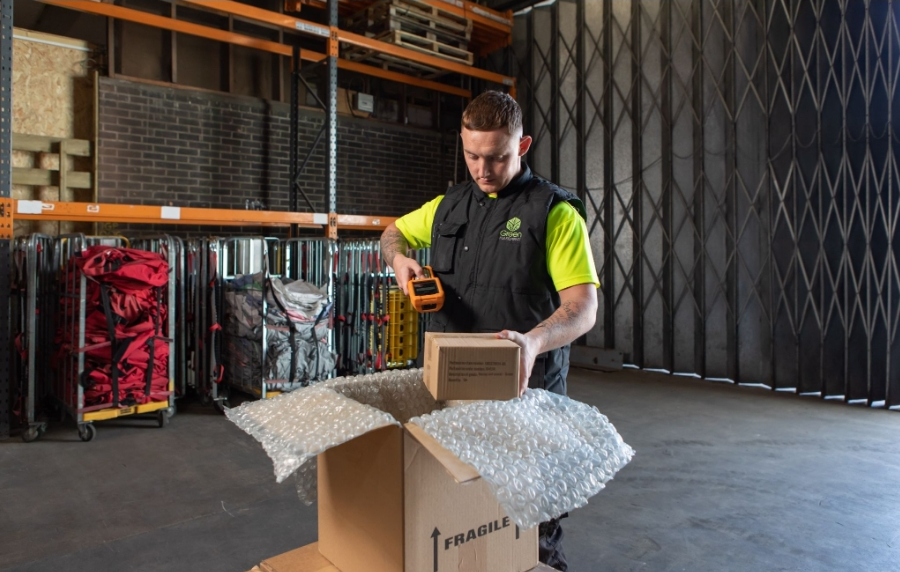
Green Fulfilment, a UK-based B Corp-certified 3PL, is among the providers measuring and reporting environmental impact across its operations rather than treating it as an add-on. Its work spans paperless dispatch, recyclable packaging, and route planning intended to lower emissions while keeping costs controlled. Alongside its UK sites, the company runs a fulfilment hub in Venlo in the Netherlands, which lets brands serve European customers from within the EU rather than shipping every order across the border.
For SMEs weighing the cost of greener logistics, the evidence increasingly suggests the question is framed wrongly. The relevant choice is not between cost and carbon, but between operations designed around efficiency and those that are not. Approaches to sustainable fulfilment that reduce waste and mileage tend to deliver on both counts.
Cain Fleming, Green Fulfilment
