















As VAT reductions, the cost of living crisis and climate concerns persuade more of us to stay local for our holidays, authorities responsible for everywhere from big cities to tidal islands are having to carefully balance the increased tourist footfall and the money it brings in with the needs of the area.
July 2026 saw Edinburgh introduce Scotland’s first Visitor Levy, a 5% charge on paid accommodation for stays of up to five nights. The intent of the levy isn’t to dissuade visitors. Figures from Visit Scotland show that Edinburgh’s 5 million overnight stays brought in more than £2.5bn in 2024.
Instead, the levy is meant to redress the fact Edinburgh locals are covering the cost required to ‘sustain, support and develop … public services, programmes and infrastructure that provide an enjoyable and safe visitor and resident experience’ the city council explains.
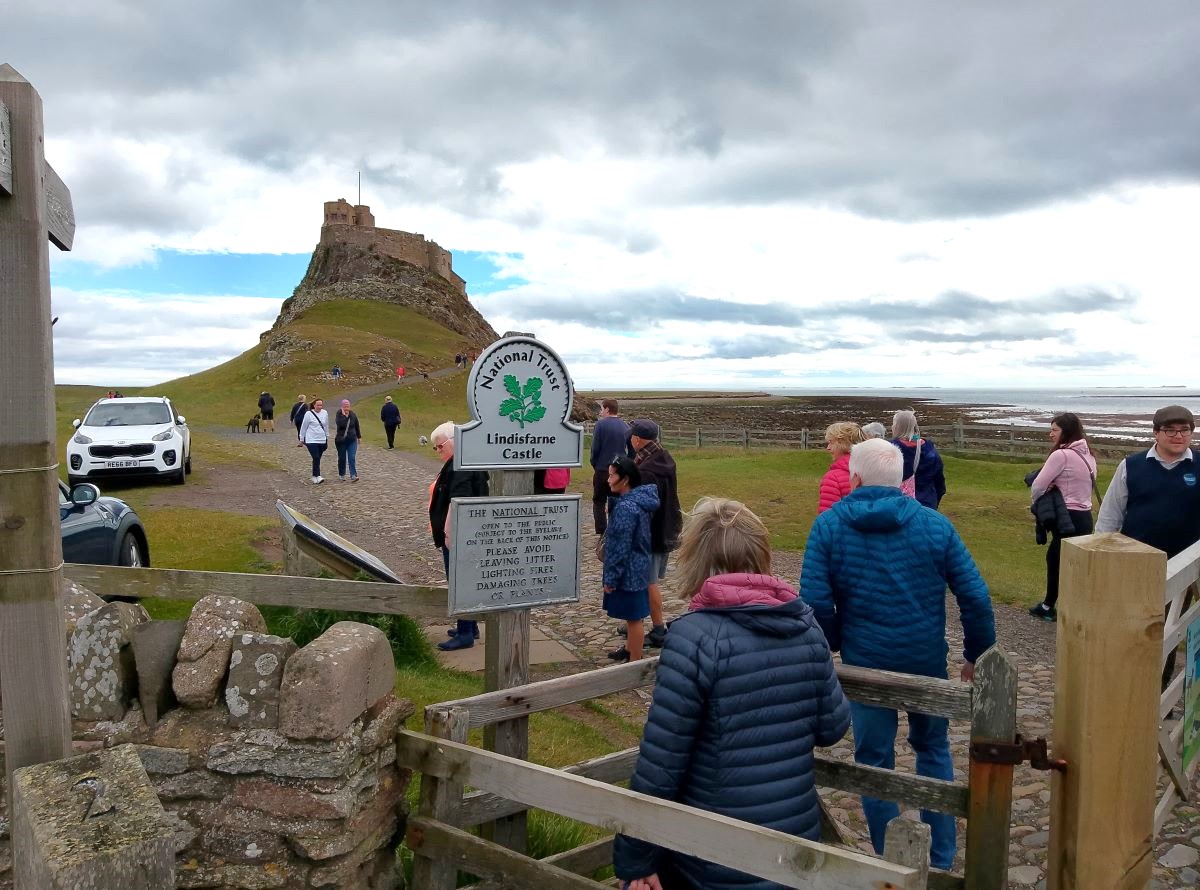
Slightly further south, off the Northumbrian coast, Lindisfarne (Holy Island) has been attracting visitors for even longer, from those on pilgrimage and rather less welcome Vikings to birders keen to take advantage of the island’s status as a nature reserve and major avian hotspot.
Its rough coastal grasslands provide habitat for skylarks and meadow pipits, while its tidal mud flats provide foraging for eider ducks, wading birds including ringed plover and oystercatcher, and seabirds including little terns.
Some like the little tern are visitors themselves – residents of West Africa, Asia and Australia – who fly to the UK each spring to breed. These mind-boggling annual journeys have seen drastic drops in number over my lifetime. Figures from the British Trust for Ornithology’s Seabird Monitoring Project show breeding numbers of little tern have fallen almost a fifth since 1986, while the related common tern have seen even more significant falls of 63%.
The cause, I discover taking my second trip to this part of Northumbria in as many months (by train at least), appears to be us. Coastal flooding caused by changes in climate have played their part, but it’s thought to be mainly human disturbance which has caused the fall in numbers.
Terns are notoriously bad nesters. In and around Lindisfarne they lay their eggs in slight shallows directly on the beaches, making them easily for predators to sniff out and for tourists to disturb by accident.
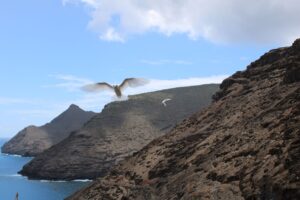
In some places, they don’t even bother do that. On Saint Helena island (pictured above), roughly midway between Brazil and Africa, I discovered terns are know to lay their eggs in the forks of tree branches and on window sills without even the semblance of a nest.
As more of us head to their remaining habitats, in Northumbria if not on Saint Helena, pressures are only going to increase. Natural England – the government’s adviser on the natural environment in England – are now stepping in, putting up temporary fences where terns are known to be nesting.
They also run a programme of wardens during the busier times of year who get to enjoy the golden sands of the area’s beaches while helping to prevent unintended disturbance by visitors.
It’s already proving successful. Not only are the number of birds arriving on Lindisfarne increasing, but so are their young successfully brought to fledgling stage, with increases of 12-fold over five years.
This in turn could lure in more tourists to a region that already welcomes around one million birders a year.
What Lindisfarne shows us is that maintaining the balance between tourist numbers and the environment, whether that’s Edinburgh or our nature reserves, is education. My experience is that people generally want to do the right thing – if only they know what the right thing to do is.