
















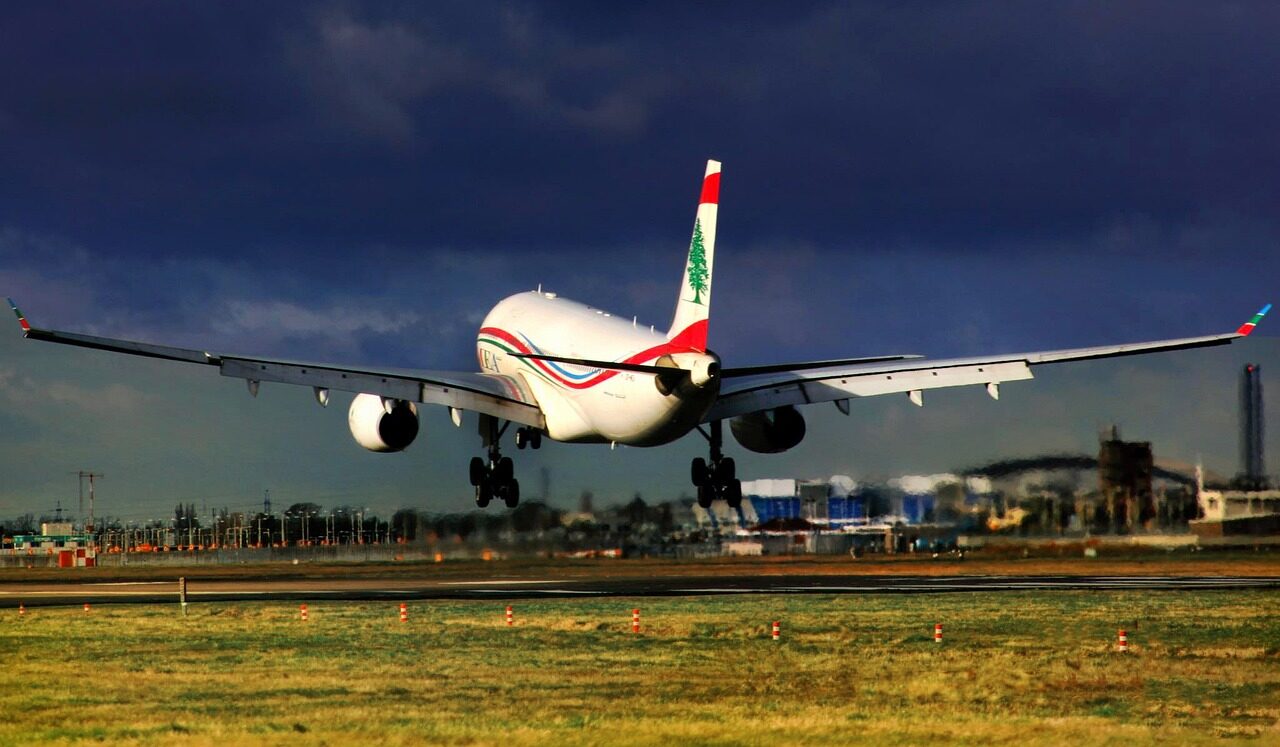
Plans to expand Heathrow Airport with a third runway are incompatible with the UK’s legally binding climate targets, according to new analysis by climate scientists at the University of Manchester’s Tyndall Centre for Climate Change Research.
The report, commissioned by environmental organisation Friends of the Earth, examines whether the proposed expansion could take place while the UK remains within its legally binding carbon budgets.
It concludes that there is ‘no credible scenario’ in which a third runway at Heathrow could go ahead without making it harder for the UK to meet its climate commitments.
The findings come as the government considers proposals to expand capacity at Heathrow, while other UK airports have also secured approval for expansion.
The public consultation on the government’s Heathrow Expansion National Policy Statement (HENPS) closed on Tuesday 1st September.
The report says the aviation sector is already projected to exceed its share of the UK’s Seventh Carbon Budget, covering 2038 to 2042, before any additional emissions from a third runway at Heathrow are included.
Depending on the amount of sustainable aviation fuel (SAF) that becomes available, the researchers estimate aviation could exceed its allocated share of the budget by between 21% and 50%.
The case for increasing aviation capacity relies in part on technologies intended to reduce or offset emissions, including sustainable aviation fuels and greenhouse gas removals.
However, the Tyndall Centre analysis argues that neither technology is currently developing quickly enough to support the level of aviation growth envisaged.
Sustainable aviation fuels are intended to replace conventional jet fuel with alternatives that have lower lifecycle emissions. But the report says even an optimistic rollout of SAF would not be sufficient to close the projected emissions gap.
It also highlights concerns about the resources required to produce some types of SAF, including potential competition with agriculture for land and water.
The second technology examined is greenhouse gas removal, taking CO2 from the atmosphere and storing it for the long term, but the researchers conclude the global deployment of these technologies is significantly behind what would be required.
Despite this, the report says future aviation scenarios rely heavily on greenhouse gas removals to offset emissions.
It argues that aviation could become the largest projected user of the UK’s carbon-removal capacity even before airport expansion is taken into account.
The researchers warn that if sustainable aviation fuels fail to deliver at the levels assumed in modelling, even greater reliance would have to be placed on carbon removals.
The report also raises concerns about aviation’s non-CO2 effects, saying carbon budgets do not account fully for the warming effects of pollutants including nitrogen oxides and black carbon, which can contribute to the formation of contrails.
According to the analysis, these effects account for around two-thirds of aviation’s overall warming impact, meaning the sector’s contribution to climate change could be greater than figures based solely on carbon dioxide emissions suggest.
The lead researchers, Dr Lois Pennington, Professor Alice Larkin and Dr Chris Jones, have recommended that any proposed expansion at Heathrow Airport be rejected
Dr Lois Pennington, research fellow at the Tyndall Centre said: ‘Every aviation scenario the UK government has published overshoots the carbon budget parliament has legislated, before a third runway at Heathrow is even taken into account.
‘Our analysis shows that aviation cannot continue to grow if the sector is to make a proportionate contribution to meeting the UK’s carbon budgets. Sustainable aviation fuels and carbon removals can contribute to limiting aviation emissions, but there is currently no evidence that these technologies can support the scale of aviation expansion envisaged by the government.
‘Further aviation expansion carries a significant risk of exacerbating climate impacts by relying on the growth of technologies that are unlikely to materialise in the timescale needed.
‘The UK is experiencing another exceptionally hot summer, while record-breaking severe wildfires have burnt across Western Europe. The government must reassess the case for expansion. Climate policy must be grounded in what we can demonstrate and evidence, rather than what we hope may become possible.’
Mike Childs, head of policy, science and research at Friends of the Earth, said: ‘After this summer of record-breaking heat and nearly 3,000 excess deaths, adding a third runway at Heathrow is the climate equivalent of pouring petrol on a raging wildfire.
‘The evidence is clear: there is no route where expansion at Heathrow can be in line with our legally binding climate targets. Suggesting that sustainable aviation fuel and greenhouse gas removals can enable airport expansion is simply trying to pull the wool over people’s eyes.
‘The government has a choice: commit to taking action on the climate seriously, reject Heathrow expansion and constrain excessive flying, or abandon the UK’s climate targets and future generations by giving the third runway the go ahead.
‘With a weak economic case to support expansion set against a huge impact on the climate and communities, this is the opportunity for the new Prime Minister to truly set a precedent by turning his back to corporate lobbying and saying no to a third runway at Heathrow.’