














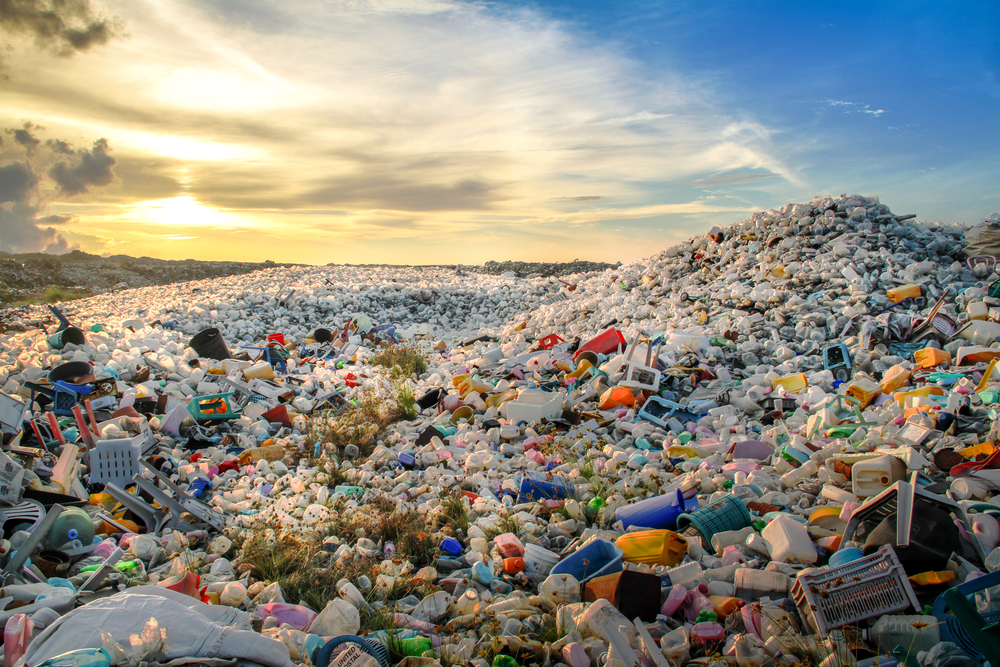
Scientists from the US and China are urging the United Nations to introduce mandatory global reporting on plastics, arguing that countries cannot tackle pollution effectively without knowing how much plastic is being produced, used and thrown away.
The proposal comes as negotiations continue on a UN treaty aimed at tackling plastic pollution around the world.
Researchers from the University of California, Santa Barbara (UCSB) and Tsinghua University in Beijing say the treaty should include a standardised system for countries to measure and report what happens to plastics from production through to disposal.
Their recommendations will be discussed at a workshop in Geneva, Switzerland, on 16th and 17th September.
The scientists say countries should collect information on the types and quantities of plastics they produce, how those plastics are traded, what happens to them after use and how much ends up as waste or pollution.
At present, countries do not have a single, consistent system for collecting and reporting this information.
Roland Geyer, professor of industrial ecology at UCSB and a co-author of the research, said: ‘The biggest worry would be that the first version of the Global Plastics Treaty has no reporting requirements.’
Lead author Quanyin Tan, an assistant professor at Tsinghua University, said: ‘As the negotiations progressed, we became increasingly concerned that data and reporting were not receiving the attention we felt they deserved. That concern became an important motivation for this paper.’
The scientists point to existing international environmental agreements as evidence that global reporting systems can work.
The Montreal Protocol, for example, requires countries to monitor substances that damage the ozone layer, while the Paris Agreement relies on countries reporting greenhouse gas emissions.
As Geyer puts it: ‘You can’t manage what you don’t measure. Regulations like the Clean Water Act, Clean Air Act and Resource Conservation and Recovery Act are powerful because they involve measuring things and then coming up with regulation based on what you measure.’
Plastic presents a particular challenge because, unlike many traditional materials, it does not readily break down in the natural environment. A plastic item used for just a few minutes can remain in landfill or the environment for hundreds of years.
The researchers stress that they are not calling for plastic to be eliminated altogether. They recognise that it is an important material used in healthcare, manufacturing, food safety and countless everyday products.
Instead, they argue that society needs better information about where plastic is being used unnecessarily and where its environmental costs are greatest.
Plastic production and consumption are continuing to rise, despite growing concern about pollution and its potential effects on human health and wildlife.
The proposed reporting system would not, on its own, solve the problem. But the scientists say reliable data could give governments the evidence they need to set effective targets, identify the biggest sources of waste and track progress.
The Geneva workshop will bring together scientists, policymakers, industry representatives and experts involved in putting the eventual treaty into practice.