
















When looking for lessons in how to make every litre of H20 count, you could do far worse than the Arabian Peninsula’s desert states.
I don’t blame people for thinking that water scarcity is a problem that belongs only to arid regions like deserts, rural communities, or countries that experience extreme heat all year round. However, as droughts across Europe this summer have shown, the UK must accept it can become a ‘water-stressed’ nation, too.
Defining ‘water scarcity’
Water scarcity happens when the demand for clean freshwater is higher than the available supply, or when poor management stops people from getting it.
The UK has experienced this three out of the last five summers, as prolonged low rainfall and high temperatures have reduced supplies faster than natural systems can replenish them. Water stress has become a recurring reality, even in a country historically considered water rich.
With more than 20 million people under hosepipe restrictions, England receiving just 17% of its long-term average rainfall for August by 18 August, and reservoir storage falling by 3.4% in a week (to 62.6%), the scale of the pressure is clear. This is not only a problem for water companies or households.
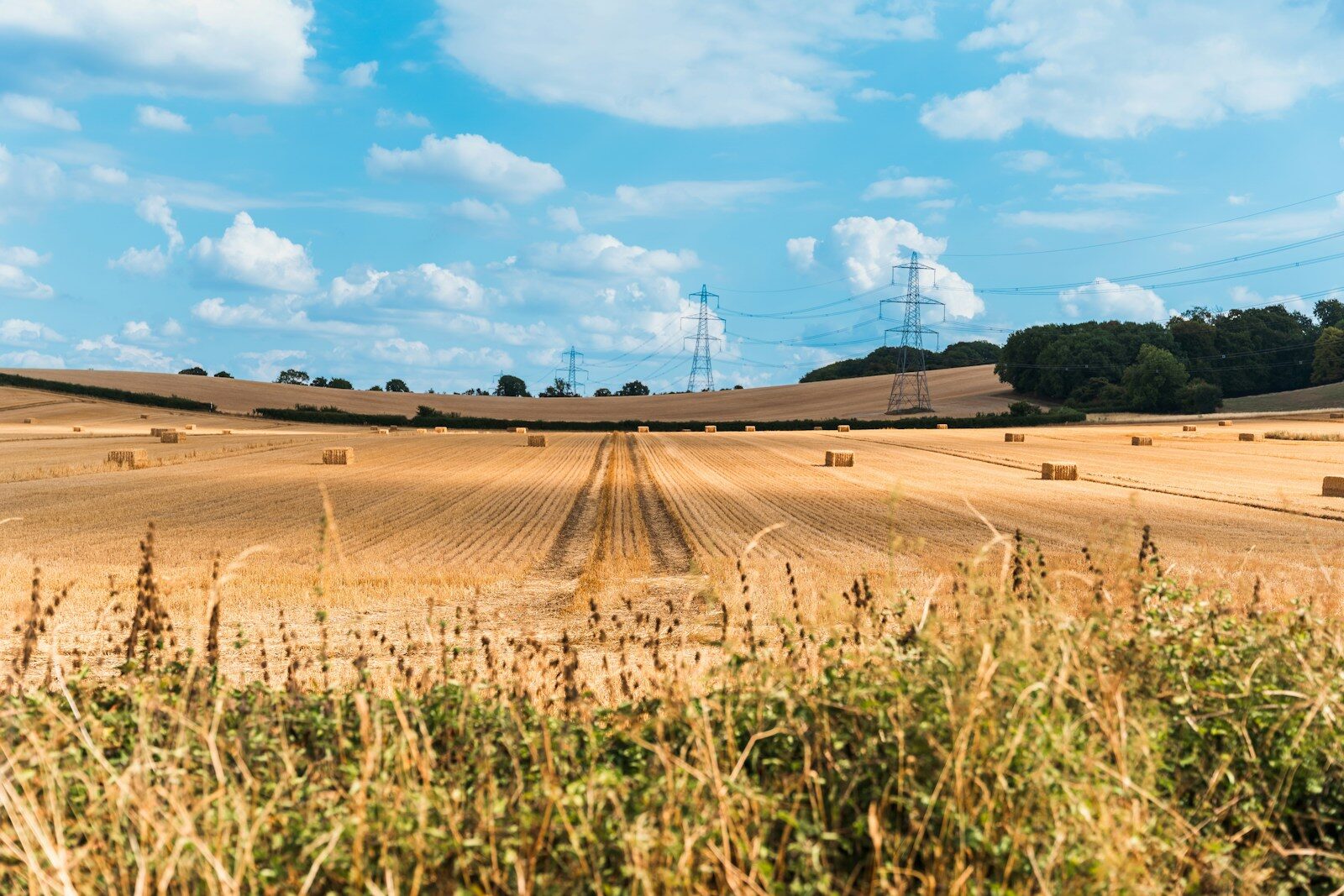
For farmers, the impact is direct: heat and low rainfall deplete soil moisture, restrict irrigation and prevent grass from growing. Crops and livestock need water at particular points in the growing season. Rainfall at another time cannot necessarily sustain crop yield immediately.
This is why water security and food security cannot be separated: drought is a threat to agriculture, food supply chains and national resilience, with some organisations warning of food shortages in the future due to the impact on harvests.
As a scientist working in this field, I see the UK’s experience as a reminder of how difficult managing a prolonged, climate-driven water crisis is, without necessary systems and infrastructure already being in place. However, quickly scalable solutions do exist – and are often about utilising the right technologies or implementing the best management practices.
The challenge and the technology-driven solution
Through my work at King Abdullah University of Science and Technology (KAUST), I led a team that developed the first mobile wastewater-treatment technology of its kind in Saudi Arabia. The system recovers and treats wastewater to produce high-quality reclaimed water for areas not connected to the central sewage network.
The technology uses an anaerobic membrane bioreactor, in which microorganisms break down organic material in wastewater and convert it into methane, which can be recovered as an energy source. The water is then filtered and disinfected using membrane technology, ultraviolet light and hydrogen peroxide. Because the process retains nutrients such as ammonium and phosphate, the treated water can support crop growth, while the biomass produced can be used as agricultural fertiliser.
During a pilot conduced in Jeddah, the system treated around 23,000 litres of wastewater per day. It was estimated to save up to 2 kilowatt-hours per cubic metre compared with conventional treatment and produce around 20 times less sludge. If scaled, an earlier estimate suggested that the technology could provide up to 15% of Saudi Arabia’s agricultural water needs.
This is the sort of development that could offer Britain a way to make existing water supplies go further – without the building of any new ‘hard’ infrastructure, where much of the media focus has been over the summer. This would be particularly useful for agricultural, industrial and urban uses, allowing higher-quality freshwater to be reserved for drinking and ecosystems, and reducing pressure on rivers, reservoirs and groundwater during periods of prolonged drought.
One mobile treatment plant will not solve a national drought, but the principle of decentralised water treatment can bring infrastructure closer to where waste is produced, and where reclaimed water is needed most. Of course, safe reuse depends on robust treatment, continuous monitoring, clear standards and transparent communication. Public confidence would be essential, particularly if potable reuse were ever considered.
Learning from those with experience
Countries like Saudi Arabia have had to prepare for and manage water scarcity for decades, which is why their experience can offer useful lessons. While a blueprint for water management from an arid country cannot be reproduced in its entirety in the UK (with its different climate, infrastructure and patterns of water use), the essential thing we can learn is to treat water as a strategic resource, and in doing so, develop multiple supply sources.
An example of these additional supply sources is desalination – utilising seawater as a source when low rainfall has reduced river, reservoir and groundwater supplies. However, we know that desalination has high energy consumption, and the concentrated brine produced poses an environmental/waste problem.
At KAUST, we test new desalination techniques as part of our reuse research facilities. This includes a Seawater Reverse Osmosis pilot testing energy-efficient membrane technologies; absorption desalination facilities exploring the use of solar energy; and an industrial cooling-tower pilot examining how water can be treated and reused in industrial processes. All of these help provide solutions to the real-world desalination issues of energy use and environmental impact.
For a coastal country such as the UK, desalination could provide an additional source for public water supplies during severe shortages. However, it should only complement the principles of water reuse, storage and demand reduction, not replace them.
For a country like the UK to build long-term water resilience, both supply and demand-side questions must be considered across water, food and energy. This includes re-thinking its approach to reservoirs; on-farm storage; leakage reduction; efficient irrigation and improved monitoring.
Resilience comes from a system that can reduce demand, recover used water and provide more than one source of supply. This can only be built with the right technologies, infrastructure, monitoring, best water management practices, and, crucially, public trust. The key is to recognise that water scarcity is no longer someone else’s problem—and that preparation must begin before the next drought becomes a crisis.
By Professor Peiying Hong at King Abdullah University of Science and Technology (KAUST).
Image: Jan Kraus / Unsplash
More on drought:
Half of England enters drought as heatwaves and record low rainfall take their toll
Drought-proofing the UK: behavioural change is fastest route to resilience