















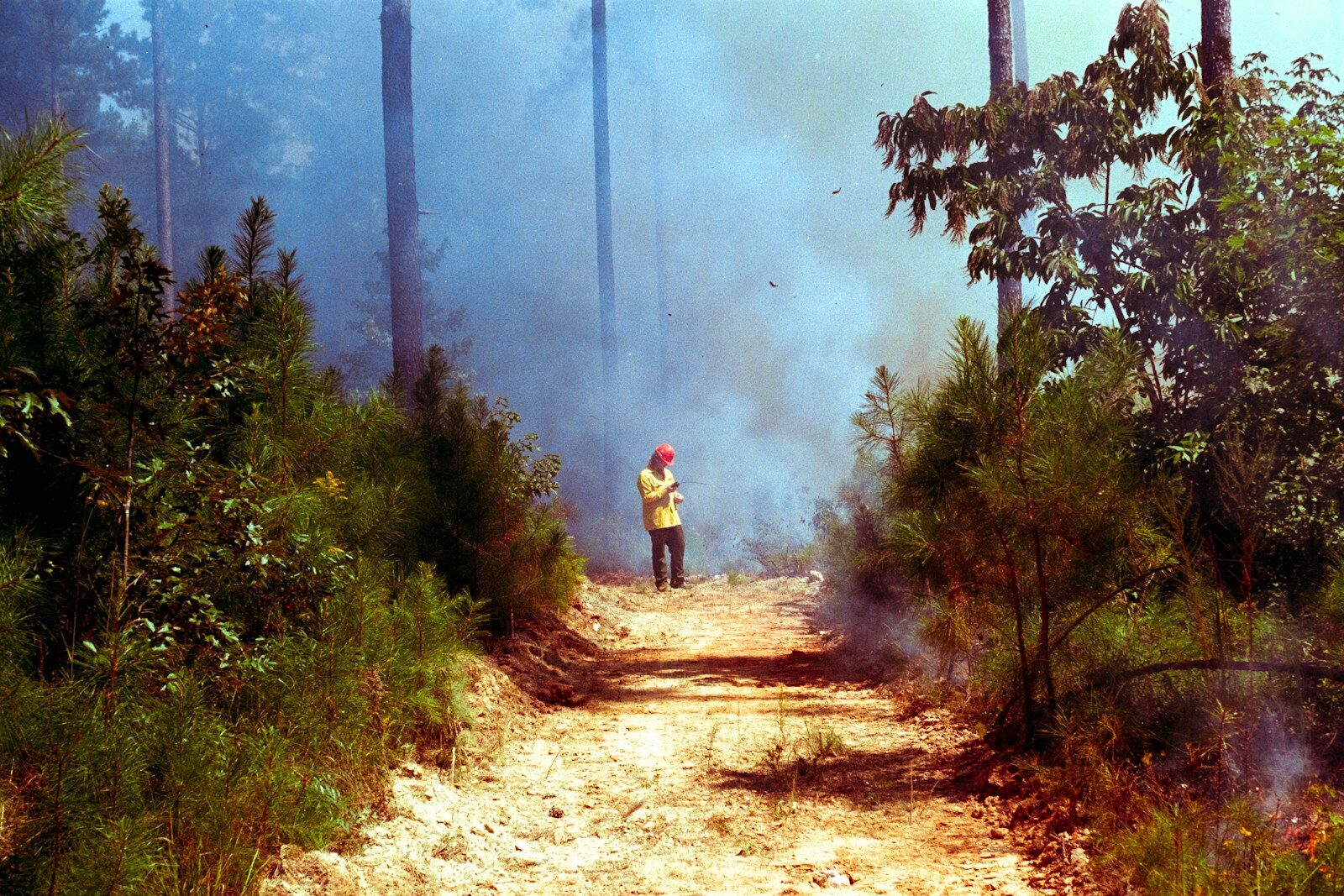
Travel networks are being pushed to their limit by uncontrollable blazes, risking leaving people trapped in burning environments.
The International Transport Forum (ITF) was held in Paris earlier this month. Delegates were given a stark warning as to the increasing threat to life posed by wildfires, which are now disrupting transport routes relied on for emergency response and evacuation.
In addition to the growing threat of leaving residents trapped in inescapable blazes, travel disruption can contribute to supply chain problems in other areas which are not directly impacted by the flames themselves. Planners are now calling for a significant assessment of how effective road, rail and air networks are in the face of more regular, widespread and extreme wildfires, and a redesign of routes where necessary.
‘When wildfires strike, transport becomes a lifeline. People need to get out while firefighters, equipment and supplies need to get in. Transport networks need to be designed and managed with both challenges in mind,’ said a spokesperson for the ITF.
Amongst other things, wildfires can quickly lead to roads and railway lines being cut off completely — as happened this summer in Gironde, France, leaving evacuation by sea the only option. Road surfaces, bride supports, train tracks, traffic lights and signage can also rapidly become damaged and unworkable, from buckled lines to melted signals and inoperable communication systems. All of which can become deadly. Beyond this, thick smoke can be a major issue for a number of land-based vehicles, air traffic control and aircraft, alongside port activities. Landslides, debris flow and flooding are also highly likely in the aftermath of wildfires, again presenting threats to transit and public safety.
Transport routes also play a role in containing wildfires and defending against the damage they cause. Cleared transport corridors can act as a fuel break providing vegetation and nature are properly managed. This slows the spread of flames. In Croatia, bike paths are being introduced to double down on this approach. Meanwhile, Australia’s bushfire resilience network incorporates measures such as road design that help emergency vehicles and evacuees navigate fires more effectively, reflective signage that is easier to see in an emergency, and pavement markers which improve visibility despite heavy smoke.
ITF experts are now calling on authorities in countries with increasing wildfire risk to plan multiple evacuation routes in a bid to adapt to the ‘new normal’ — including the UK. Additional approaches should include:
- Design roads, bridges, ports and airports for evacuation and emergency access.
- Use vegetation management and fire-resistant planting to create fuel breaks around critical infrastructure.
- Maintain alternative routes and transport modes so that communities are not dependent on a single evacuation corridor.
- Integrate transport into wildfire emergency planning, bringing together transport authorities, operators, emergency services and civil protection agencies.
- Invest in real-time information systems to communicate closures, risks and alternative routes.
- Prepare for cascading hazards, including landslides, debris flows and flooding following wildfires.
- Strengthen the specialist workforce needed for wildfire response, including aviation and emergency transport personnel.
You can read the ITF’s full fact sheet on this here.
Image: Erik Morales / Unsplash
More on wildfires:
Messages of hope (and regenerative farming solutions) from wildfire ravaged Spain
Most carbon released by Canada’s 2023 wildfires came from burning soils
Greater Manchester residents let down by lack of wildfire health warnings