















Southern Europe is once again battling the worst summertime symptoms of our climate emergency. We hear from experts on the ground about impacts, hopes and long term solutions.
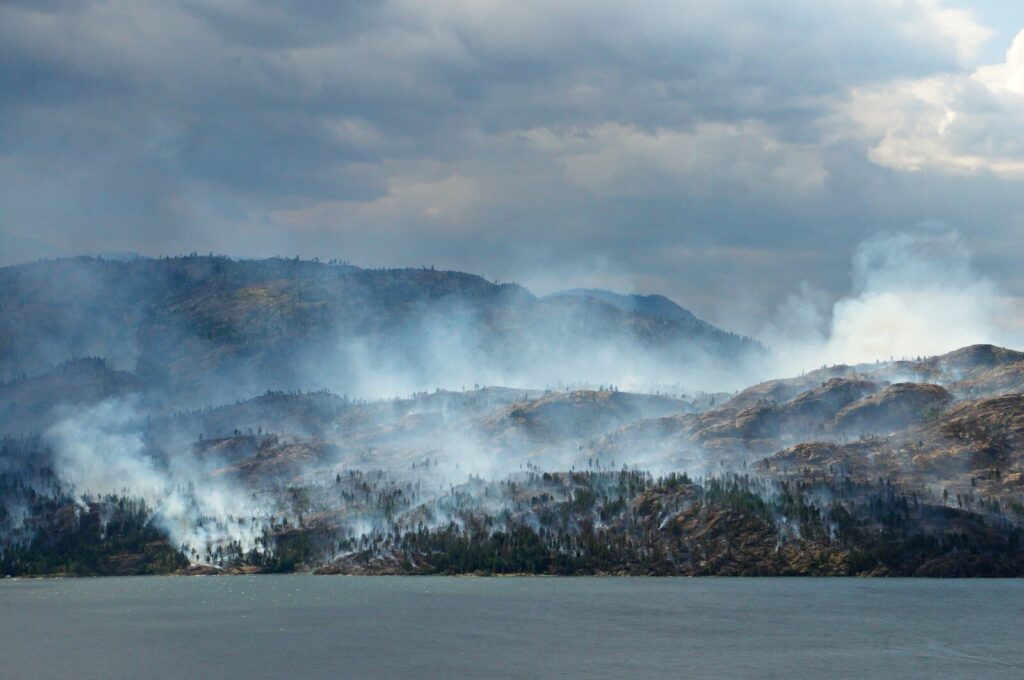
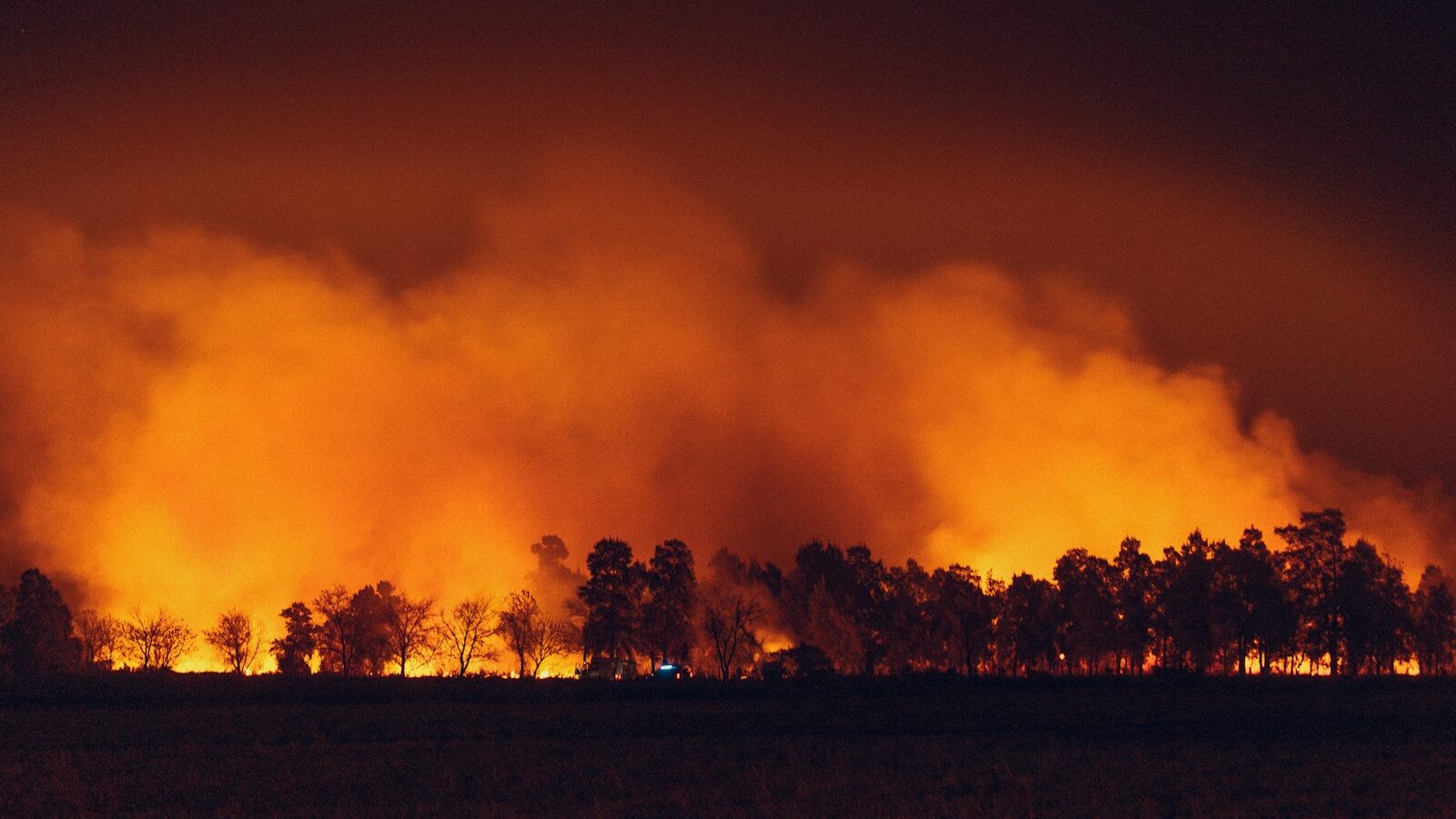
By late-July 2026, 150,000 hectares of Spanish countryside had been burnt in major wildfires. A familiar story in a country that has been on the frontline of drought and global warming for years, and one that has been severely exacerbated by the extreme heatwaves that have gripped Europe since mid-May.
Several blazes are ongoing in the country’s southwest, with news reports earlier this week emphasising that fire crews were struggling to combat flames in Huelva, Andalusia, El Madrono close to Seville, Castellón and Segovia. Just a handful of locations, since the beginning of summer there have been more than 35 separate infernos across the nation, forcing the evacuation of tens of thousands of residents, marking 2026 as far more severe and deadly compared with 2025,
Global warming, and prolonged dry weather are catalysts for the apocalyptic scenes dominating environmental headlines in recent months. But improved land management and preventative solutions can offer some protection for the future. Given Spain is Europe’s top producer for fruit and vegetables with many countries, the potential consequences of inaction impact people across the continent, with the viability and sustainability of everything from agriculture to rural communities now being called into question. Understanding just how grave the situation is becoming is important, learning how we can try and mitigate, or at least reduce the risk is crucial. With that in mind, we invited experts from fire ravaged regions to share their insight.
Elvira Marín Irigaray, Land Restoration Expert at Commonland
What people see on the news is the flames and the burned trees. What they don’t see is that a fire destroys decades — sometimes centuries — of slow ecological recovery. Mediterranean ecosystems develop incredibly slowly. My father is a geologist, and growing up he took me and my brother to geological sites every weekend in Almería. He taught me how the Earth developed over deep time and how much damage we’ve done in such a short period. When a fire rips through a landscape, you’re not just losing vegetation.
You’re losing soil structure, water retention capacity, microbiology — the living infrastructure that holds everything together. Complete restoration of tree canopy and complex ecosystems after a high-intensity fire can take 20 to 50 years. And in a place like Spain, where we’re already dealing with desertification and drought, that recovery window is getting longer and harder.
But the loss goes far beyond ecology. When landscape burns, the people connected to it lose their livelihoods, their sense of place, their future. In Spain, we’re already seeing massive rural depopulation — and every fire accelerates that. The farmers and shepherds who remain are the ones actively managing these landscapes. When they leave, nobody replaces them, and the land becomes even more vulnerable to the next fire. It’s a vicious cycle.
What also concerns me is the policy response. In Spain, we understand conservation — protecting high-quality nature reserves. But the idea that you can actively restore degraded agricultural land, regenerate it, and that this is actually your best fire prevention strategy — that hasn’t landed with the public or with most policymakers. People only talk about restoration after a disaster.
Spain has spent up to an estimated €3.275 billion on firefighting this year. The EU approved an emergency aid package of €120 million. And restoring the burned landscapes will cost even more than the firefighting itself. But almost none of that money goes to the kind of long-term landscape management that would have reduced the damage in the first place. We keep paying for the crisis instead of investing in prevention. That has to change.
Sergi Caballero, Co-Founder of Cooperativa Mas Les Vinyes and EARA farmer
I’m speaking to you from my first break in months — four and a half days off. And even on holiday, what worries me most right now is the fires. This is the most dangerous summer I’ve ever experienced. I’ve never had to use a fan at night, we’re inland, we get minus 12 in winter but this year I’ve measured 45C in the field. The drought three years ago killed a whole crop of apricots in full production, and this year I’ve already counted 20 more dead pear trees.
My wife and I are both trained as volunteer forest defence firefighters — ADFs, as they’re called in Catalonia. When a fire breaks out near our farm, we’re called in as first responders, sometimes before the professional fire brigade arrives, because in rural areas there often aren’t crews available. Right now, with fires burning across Catalonia, we’ve been asked to stay on high alert with our water tanks positioned at key points around the farm.
When we redesigned the farm, the first thing we did was map our fire sectors, identifying where fire is most likely to reach us. For us, the biggest risks come from combine harvesters in neighbouring grain fields and from the west side, where fire moves fastest. Over ten years, we’ve removed all the fire-prone pine trees from those sectors and kept the oaks and holm oaks. We use wood chippers to break down dead branches and turn them into soil fertiliser. In spring and winter, we bring the livestock in to graze those areas so there’s no dry grass building up – the animals cycle all the organic matter into compost and manure.
We also placed our two large water-cleaning ponds — around a million litres total — right on our western fire sector, so they act as firebreaks. If fire comes up the slope, it hits those ponds. Firefighters could connect to them, and we can run hoses with pumps.
In the early years we brought in 40 goats to intensively graze the understorey. Now we maintain it with sheep. When I take the flock into the forest, I carry an axe and a saw; I cut down dead wood as I go, because a plague killed many of our box trees and left extremely dry, dense, flammable wood standing.
Most people focus on their fields and leave the forest untouched. We actually produce food from the forest — our livestock graze the understorey and we get a product from it. Administration officials have come to see how we manage to produce meat from forest land while neighbouring farms don’t use it at all.
Ana Digón, President of the Spanish Association for Regenerative Agriculture
We’ve been closely following several of our farmer members who have suffered from wildfires this and last year. What people don’t see is what comes after the fire. In the first moment, there’s an adrenaline rush: fighting the fire, community spirit, media coverage. Then that peters out and people are left with the reality of what they’ve lost. When a herd dies, the farmer loses genetic material they’ve been developing for generations – and animals adapted to their land, their management, their reality. It’s not just about buying a new herd. This kind of loss sets them back decades.
We sent our technicians and a photographer to a member’s farm that suffered a fire a few weeks ago, and analysed the soil, plants, and impact across different parts of the farm and neighbouring land. The conclusions are striking. Where sheep had been grazed in a planned fashion — moved daily and used to clear areas around buildings and regenerate the prairies — the fire ran through quickly. Trees were affected but will recover.
On neighbouring farms with unplanned grazing, there was far more bush, the fire stayed longer, and trees were much more damaged, and some won’t recover. On a large area without enough grazers like cows roaming in planned ways, that’s where the fire really took hold. Dense bush, massive damage, replanting required, and the fire brigade couldn’t even get in. This is the same fire, in the same landscape, but three types of management.
The sector is already in dire straits. The average age of farmers in Spain is well over sixty and rising. Young people don’t want to be shepherds or farmers. After a fire, with the losses, the bureaucratic nightmare, the painfully slow compensation, the already challenging income issue – who would want to join? Who would want to take over?
But regenerative farming is actually a ray of hope. A recent study of regenerative farmers in Spain found that 93% were very happy and very proud of their work. That’s an extraordinary figure in a sector riddled with depression and abandonment.
Regenerative agriculture is bringing hope, tools and connection back to farming – discovering new birds, insects and plants on your land, connecting with other passionate farmers, finding real ways to lower the risk of disaster like wildfire. It’s about nurturing that excitement and understanding the tools to farm better. And planned grazing of herbivores is without a doubt one of the key tools, especially in these landscapes.
Carmen Bueno, Founder and Farmer at Serranias Vivas in Andalucía
Having cattle – sheeps and horses in our case – makes the biggest difference. The areas managed with cattle did not suffer as much from wildfires. Just this May, we created a preventive plan against fire, which is mandatory in the Natural Park where we farm, prioritising regenerative techniques.
That has helped us a lot with the fires. Even though burnt, our trees – mainly cork oaks – look like they will all regenerate. The key to this is that we did not remove the cork during the last 11 years: the cork is the trees’ greatest protection. While it may look burnt on the outside, it is protecting the tree itself.
People cannot understand how complicated bureaucracy is in these types of situations. They see the landscapes burnt and feel pitiful, but they don’t see how the farmers get burnt from incoherent and unfavourable policies – and the reality of the risks and losses they face from wildfire. We, as regenerative, organic, biodynamic farmers, take on the emotional and financial burden. We are, in many cases, the only people left in landscapes truly stewarding the land. And most people don’t realise the reality of that responsibility.
Mediterranean woodland and scrub need grazers – like cattle – to protect them. But bringing cattle into the forest is far more expensive and requires far more work than keeping them in stables. Policymakers should immediately shift policy towards financially compensating regenerative cattle breeders and farmers for bringing their cattle to graze in woodlands – instead of charging them money to allow them to access public woodlands.
They are providing a vital societal service in managing woodlands and preventing wildfire that should be rewarded. Of course, this always needs to be done using controlled regenerative management methods and in a planned way (unplanned grazing can be as harmful as no grazing at all). But the ecosystemic service that regenerative farmers provide through this kind of planned grazing is enormous. Shifting policy to support regenerative cattle farmers would seriously support the bottom lines of most farmers doing this work in our region, who currently live on the breadline from small herds of sheep, goats, or cows.
Image: Fachy Marín / Unsplash