














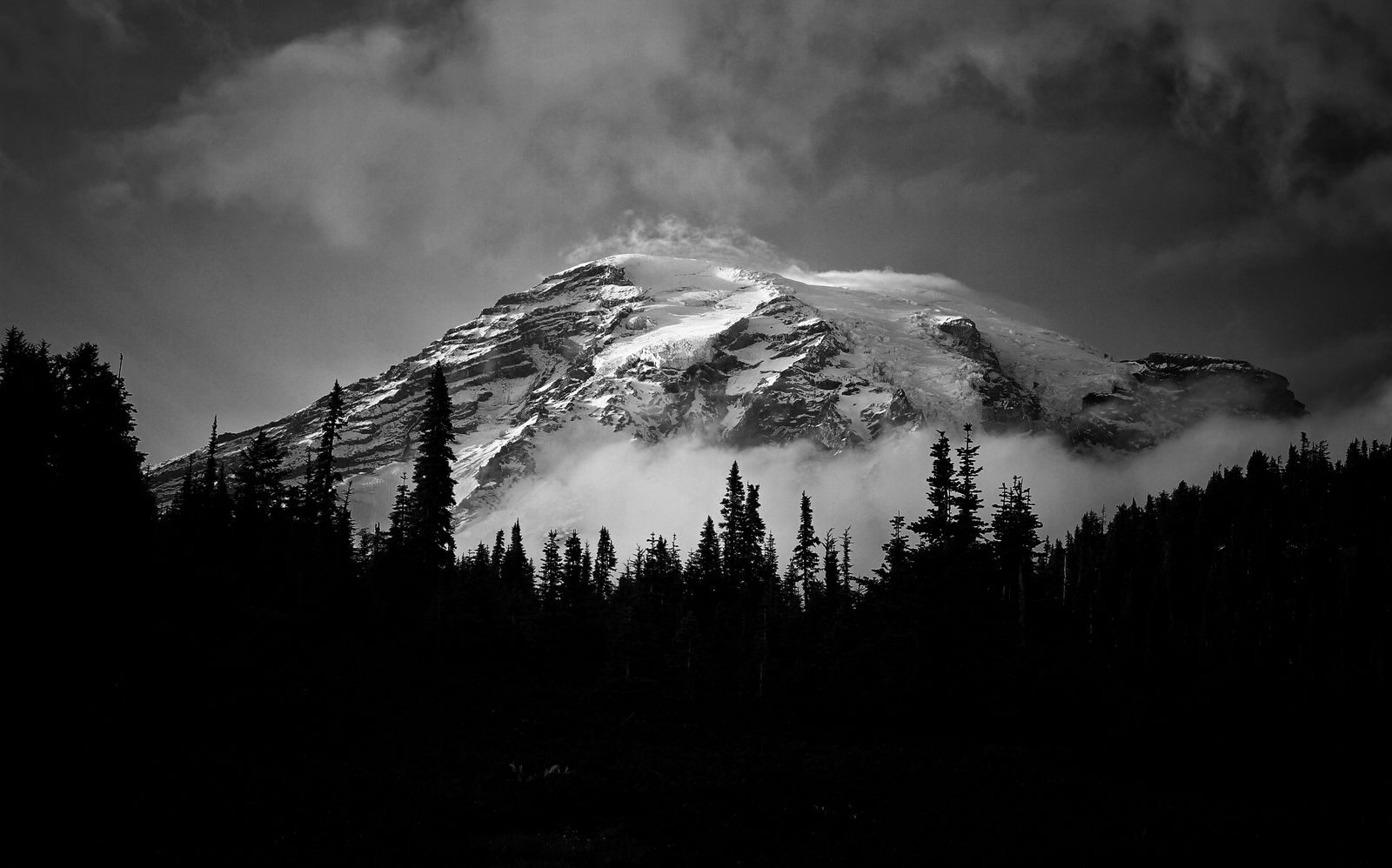
A long-term study of rain and cloud water collected high on New Hampshire’s Mount Washington has revealed that rainfall does far more than simply wash pollution from the sky, it plays an equally important role as the pollution’s source in determining how polluted clouds and rain become.
The research, led by scientists from the University of Michigan, analysed 582 cloud and rain samples collected over 19 summers between 1996 and 2014. By combining traditional air-mass tracking with measurements of the chemical ‘fingerprints’ of water molecules, the team was able to tease apart where pollution came from and how rainfall altered it during its journey through the atmosphere.
Co-author of the study, Adriana Bailey said: ‘It’s a valuable piece of the scientific puzzle to have these physical samples to directly tell you something about where the air came from and what pollutants it carried.’
Scientists have long known that pollutants such as sulfate, produced largely by burning fossil fuels, can travel hundreds of kilometres before being deposited in rain or cloud water, but separating the influence of pollution sources from the cleansing effect of rain has proved much more difficult.
To put it another way, it’s not enough to know where an air mass came from, we also need to understand what happened to it along the way.
The team used sulfate concentrations as a measure of pollution and analysed the isotopic composition of water, a natural chemical signature that records the history of an air mass. As clouds form and rain falls, heavier forms of water are removed more readily, leaving behind a distinctive isotopic pattern. This allowed the researchers to estimate how much rain an air mass had already produced before reaching Mount Washington.
Traditional models that tracked where air masses came from explained about 40% of the differences in pollution levels. But when researchers instead used the chemical fingerprint of the water itself – which records what the air mass experienced during its journey- they could explain 51% of the variation.
Using both methods together gave the most accurate picture, explaining 56% of the variation. The study also showed that rainfall along the air mass’s route is just as important as its origin in determining how much pollution eventually ends up in cloud and rain water.
The findings also have implications for the future. As climate change alters rainfall patterns, the way pollutants are transported and removed from the atmosphere could also change. Although sulfate pollution has fallen significantly since the 1990s thanks to cleaner air regulations, the researchers say their methods could also be applied to other airborne contaminants, including mercury and even microplastics.
By using the natural chemical signatures locked within rain and cloud water, the study provides scientists with a new way to understand how pollution moves through the atmosphere. The approach could improve predictions of where pollutants end up and help researchers better assess the environmental impacts of changing weather and climate.
The full research can be read here
Photo: Balamurugan Anbazhagan