











Once declared a dead zone and beyond environmental salvage, one of the world’s greatest examples of land and resource mismanagement is slowly becoming a beacon of hope for climate activists.
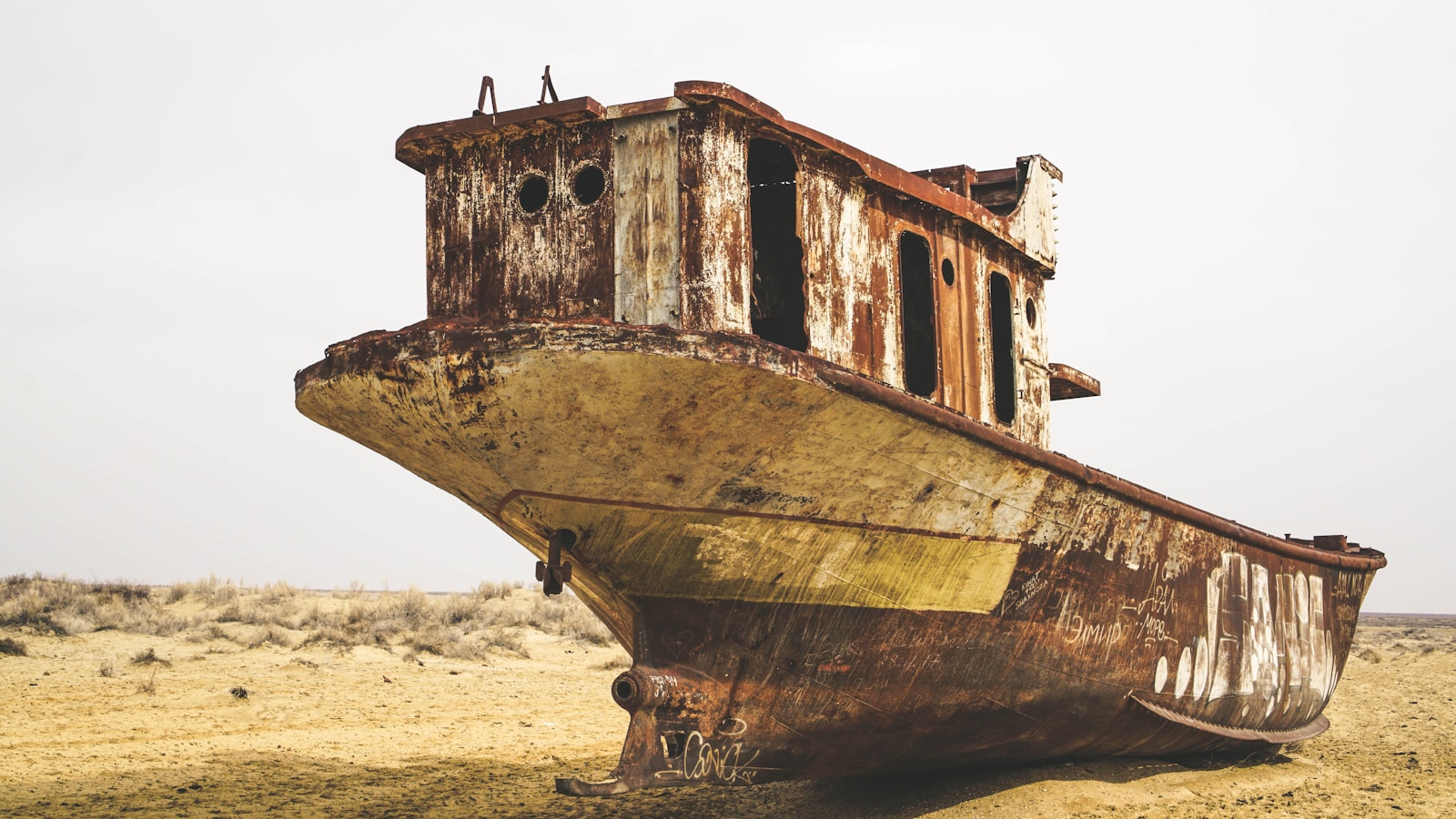
Up until the mid-20th Century, the Aral Sea was the third-largest lake on the planet. Straddling Kazakhstan and Uzbekistan, this region suffered at the hands of an ambitious plan by the Soviet Union to kickstart a major cotton production industry close by — a blueprint that required the creation of an extensive canal system, including diverting and rerouting the Amu Darya river in the south and the Syr Darya river in the east.
Sadly, this proved catastrophic for nature, with water flowing into the Aral Sea plummeting and the body experiencing a sustained reduction in size. Fisheries collapsed as species disappeared, infrastructure was left stranded and desertification took hold. Perhaps most shockingly, the promised economic benefit never materialised due to the poor design and construction of the manmade channels: almost no water made it to the cotton fields thanks to evaporation and leakages. The grand design failed.
By 2009, the Aral Sea was down to 10% of its original size. However, restoration efforts by the Kazakhstan government are now showing significant results. Water volume has increased to 24.1 billion cubic metres, with fish populations on the rise in some parts of the body. In addition to improved strategic management of resources, large infrastructure projects such as the Kokaral Dam are cited as bold and impactful steps in attempts to recover and restore this lost landmark. In the video above, Ibrahim Thiaw, Executive Secretary of the United Nations Convention to Combat Desertification, explains the full scale of the tragedy, and the efforts now underway to transform this degraded land.
Top Image: Artem Asset