















Rising ocean temperatures are reshaping marine life in the North Sea, one of the fastest-warming sea regions on the planet. Combined with decades of intensive fishing activity, these changes are driving cold-water fish species toward northern habitats and deeper waters.
Researchers have monitored the (legendary) Dogger Bank – which turns out to be a large shallow sandbank in the middle of the North Sea – for more than three decades. Using data collected over 32 years, the team examined shifts in fish and invertebrate communities and explored how these ecosystems may continue to change in the future.
The study assessed 101 species and found that nearly three-quarters showed delayed responses to environmental change. In these cases, habitat conditions had already altered, but the species had not yet fully adjusted.
Larger and more mobile species were frequently found to be experiencing what scientists call an ‘extinction debt’, meaning they continue to survive despite increasingly unsuitable conditions. In contrast, smaller and less mobile species often displayed ‘immigration credit’, where environmental conditions have become favourable, but the species have not yet established themselves in the area.
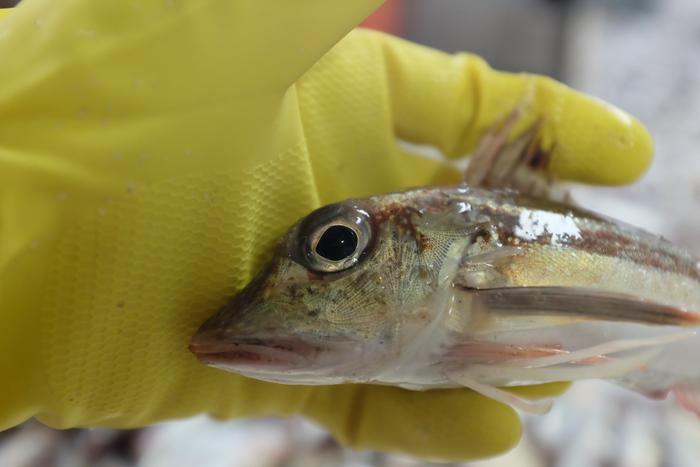
Among the species affected are several fish that hold ecological and commercial importance, including tub gurnard, grey gurnard , cod and whiting. Although these species are still present in the North Sea, ongoing warming is making the region progressively less suitable for their long-term survival.
According to Diego Pires Ferraz da Trindade, a Research Fellow in Macroecology at the University of Tartu, the overall number of species has remained relatively stable. However, he noted that this apparent stability masks deeper ecological changes, as environmental pressures are gradually favoring smaller species better adapted to warmer waters.
Despite these trends, researchers believe there is still an opportunity to reverse some of the impacts. Randel Kreitsberg, Associate Professor in Ecotoxicology at Tartu, explained: ‘We found that species locally lost in warmer sites are still suitable to local conditions and can still potentially recolonise their former sites if optimal conditions are met again.’
Kreitsberg emphasised the importance of recognising that biodiversity does not always respond immediately to environmental change. ‘These delayed responses and potential compositional shifts may weaken the food chain and affect ecosystem resilience. Identifying species showing signs of immigration credit can help anticipate future biodiversity trajectories and inform conservation planning.’
Photo: Randel Kreitsberg – a grey gurnard, one of the species struggling in the warming North Sea.