













A new report from UNICEF has revealed the scale of the climate crisis facing the world’s children, with almost all now exposed to at least one climate-related hazard and 1.1 billion facing three or more overlapping threats.
The Children’s Climate Risk Report 2026, published today, provides the most comprehensive picture to date of how climate hazards are affecting young people globally. Using new, high-resolution datasets, the analysis examines children’s exposure to hazards including river and coastal floods, droughts, tropical storms, heatwaves, extreme heat, fires, and sand and dust storms.
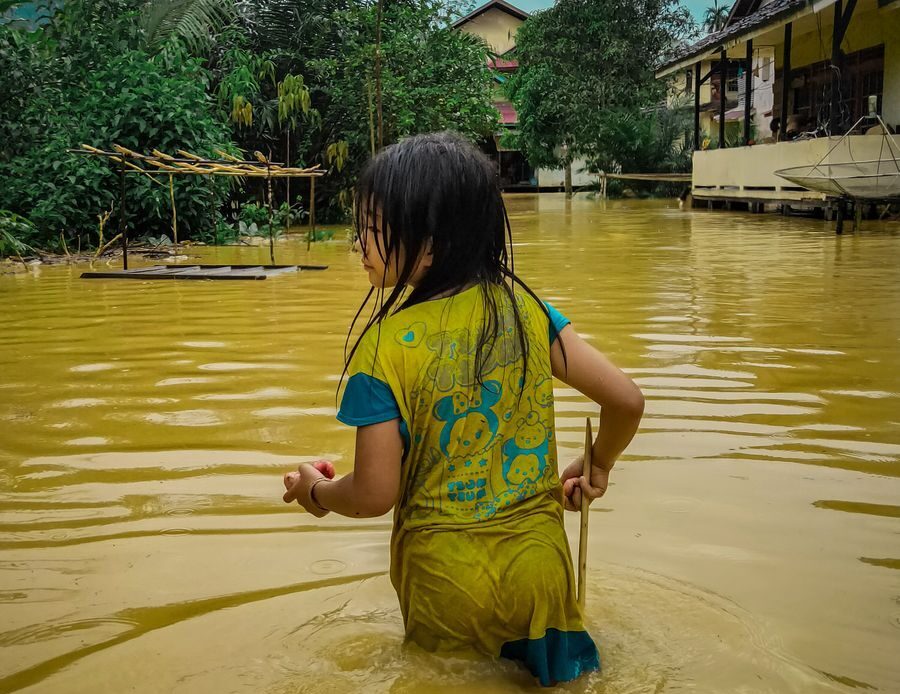
For millions of children, the reality is a complex cascade of multiple, overlapping hazards that can overwhelm unprepared social services and undermine the resilience of families and communities. A drought can devastate crops thus worsening food insecurity, while dry vegetation left behind can fuel wildfires that exacerbate air pollution and leave land vulnerable to flash floods. These floods can destroy homes, schools and hospitals, displace communities and spread waterborne diseases.
Children are disproportionately affected by these consequences, as their developing bodies make it harder for them to cope with physical and psychological stresses. They increasingly experience displacement and instability in the wake of climate shocks, further worsening their vulnerabilities.
Between 2016 and 2023, there were 62.1 million internal displacements of children from climate hazards, the equivalent of more than 21,000 child displacements per day. The report also warns that without timely action, climate change is estimated to cause an additional 28 million children to be wasted and 40 million children to be stunted globally by 2050.
The report examines six key service areas critical to children’s resilience: health, nutrition, water and sanitation, education, child protection and social protection.
In 2024, 634 million children still lacked safely managed drinking water, 1 billion lacked safely managed sanitation and 20 million children missed out on life-saving vaccines. When these systems are weak or not resilient to climate shocks, children’s lives are at risk.
The analysis also reveals that children are not affected equally. Vulnerability varies depending on age, gender, disability and ethnicity, with access to essential services often limited by location or socio-economic status.
Countries with large child populations, such as Bangladesh, India, Nigeria and Pakistan, consistently appear at the top of absolute exposure lists, while Small Island Developing States and landlocked developing countries often experience the highest relative exposure to individual hazards.
UNICEF is calling on governments and partners to reduce emissions across all sectors, protect children through inclusive climate adaptation that prioritises the resilience of social services, and empower young people to participate meaningfully in climate action. The report argues that upholding every child’s right to a clean, healthy and sustainable environment requires urgent, coordinated and child-responsive climate policies, action and investment.
The full report can be downloaded here
Photo: Yohanes Deobi