
















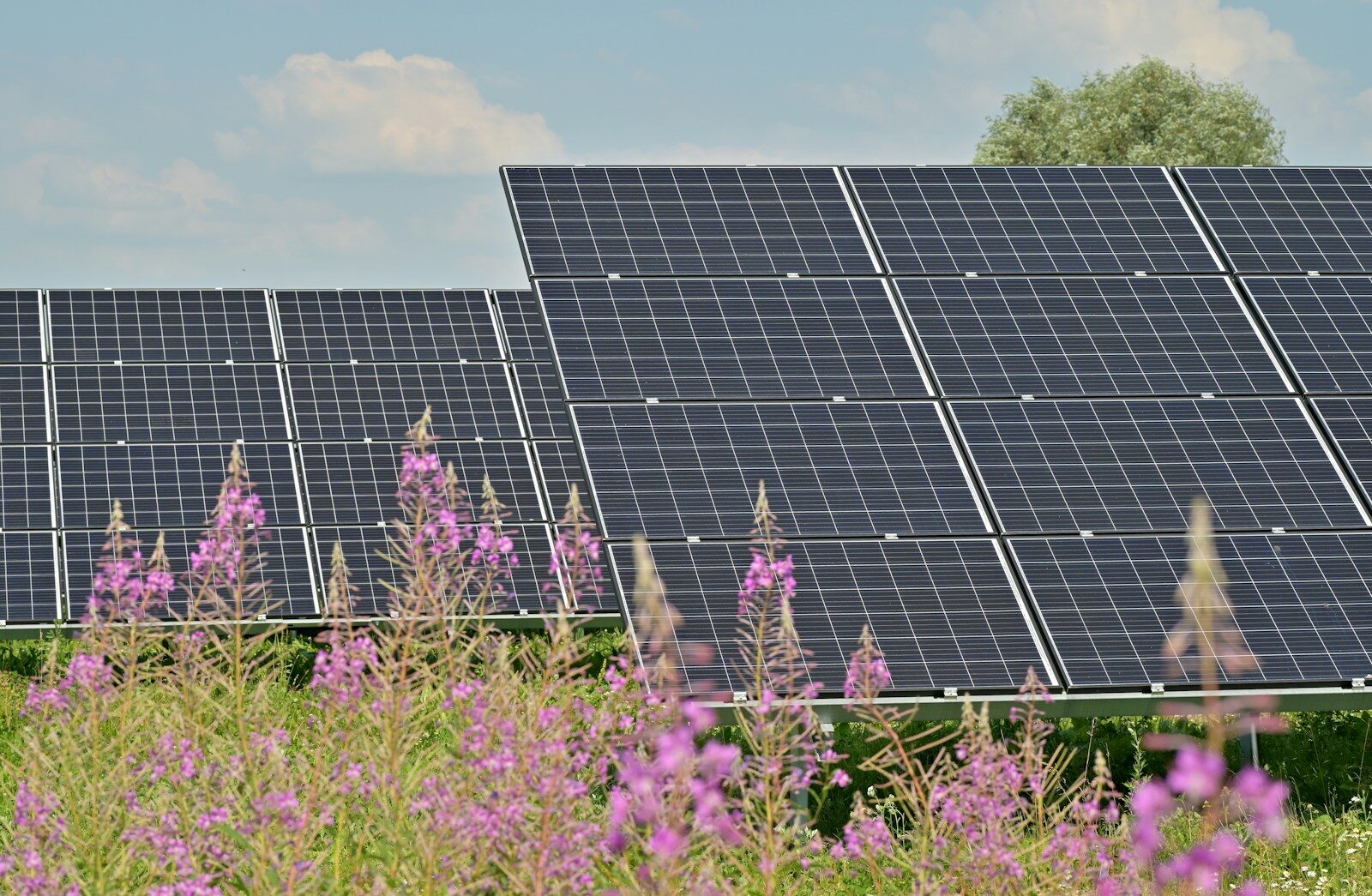
A 12-year study has found that a Suffolk solar farm has increased biodiversity by 41%, providing evidence that renewable energy generation and nature recovery can be achieved together through long-term environmental management.
The research, carried out by Suffolk Wildlife Trust in partnership with renewable energy company Cubico and Broxted Estate, monitored wildlife and habitats at Broxted Estate and Solar Farm in Suffolk over more than a decade. The findings suggest that well-designed solar developments can support biodiversity while continuing to generate clean electricity.
Broxted Solar Farm, which began operating in 2013, was one of the UK’s largest solar farms when it opened. Unlike many renewable energy projects, it was designed as part of a wider estate strategy that combined electricity generation with habitat restoration, farming, woodland management and community engagement.
Researchers found that biodiversity across the estate has increased by 41% since 2011, according to a retrospective Biodiversity Net Gain assessment. They attribute the improvement to active habitat management and a landscape-scale approach that integrates conservation alongside renewable energy production.
The report documents a wide range of wildlife benefits. Six Red List and 13 Amber List bird species of conservation concern were recorded in habitats surrounding the solar farm, including the internationally threatened turtle dove. Meadow pipit numbers have more than doubled over the study period, making the site regionally significant for the species despite national declines.
The estate also supports eight bat species, alongside common lizards, water shrews, common toads and pollinator-friendly wildflowers. Sheep grazing remains an important part of managing the grassland beneath and around the solar panels, allowing agricultural use of the land to continue while maintaining wildlife habitats.
However, the researchers say the findings also demonstrate the importance of careful planning. Skylarks, which favour large, uninterrupted areas of open grassland, have disappeared from within the solar farm itself, although they continue to nest in adjacent grasslands that were deliberately retained during the site’s design. The report argues this highlights the need to consider solar developments as part of the wider landscape rather than in isolation.
Since becoming operational, the solar farm has generated more than 350 gigawatt-hours of electricity – enough to meet the annual electricity consumption of around 100,000 UK homes.
The report concludes that the project’s success has depended on collaboration between the landowner, renewable energy operator, conservation organisations and the local community. Researchers argue that the Broxted model demonstrates how future solar developments could contribute simultaneously to tackling the climate, energy and biodiversity crises.
Charles Ryder, owner of Broxted Estate, said: ‘I passionately believe that solar is the energy source of the 21st Century but is best delivered in a way which combines the clear and pressing need for energy with the needs of wildlife and communities too. At Broxted, we have therefore taken a holistic approach, creating an Integrated Strategy. This encompasses not only the solar farm but also the surrounding land and we have now been systematically implementing it for some 14 years.
‘Land use and the rural landscape are constantly evolving to meet Society’s needs and aspirations – Broxted is very much a case in point. The land has always been a source of energy as well as food and solar is the latest variant. But it is so important that this evolution works in harmony with the landscape, the Community and the wider ecology. I hope this report offers some useful guidance towards how this can be best achieved.’
Photo: Andres Siimon