
















Nearly three-quarters of the carbon released during Canada’s record-breaking 2023 wildfire season came from burning soil and peat rather than trees, according to new research that highlights a hidden source of greenhouse gas emissions.
The study, published in Geophysical Research Letters, estimates that the fires released around 554 million tonnes of carbon, with 74% coming from belowground organic soils and peatlands. The findings suggest that current estimates of wildfire emissions may overlook one of the largest contributors to climate-warming gases.
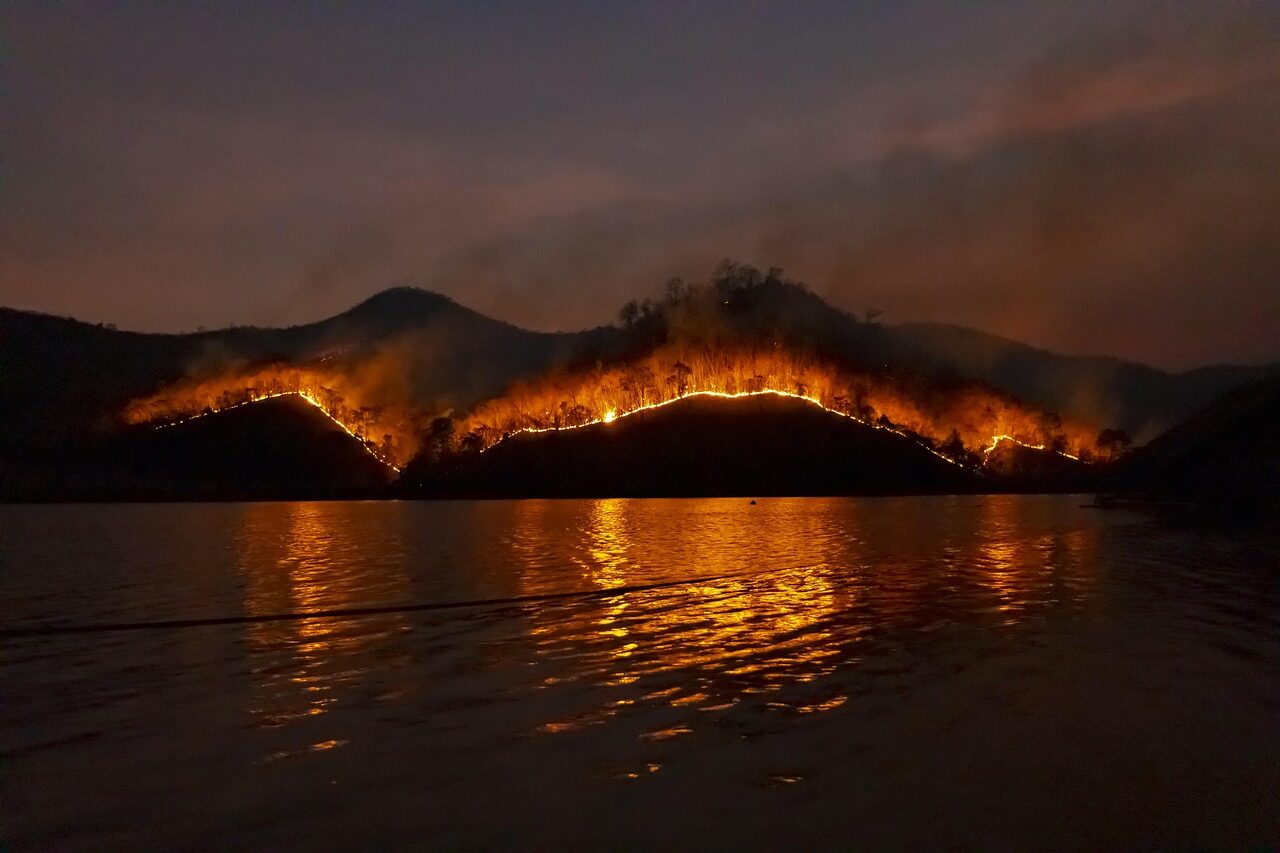
Canada experienced its most destructive wildfire season on record in 2023, with around 15 million hectares burned – an area roughly seven times larger than the country’s average annual burned area over the previous two decades. Smoke from the fires spread across North America and even reached Europe, bringing the scale of the disaster into sharp focus.
Alemu Gonsamo, associate professor in the School of Earth, Environment & Society said: ‘Canada stewards 20 per cent of the world’s soil organic carbon in its peatlands and soils. Future wildfire risk is not just about losing forests, it’s about releasing these vast stores of carbon that have accumulated underground over millennia into the atmosphere.’
While wildfires are often associated with burning forests, the new research shows that much of the carbon released came from underground stores that have built up over thousands of years. Peatlands and organic soils act as major carbon reservoirs, locking away vast amounts of carbon that would otherwise remain out of the atmosphere. When fires burn deeply into these soils during hot, dry conditions, they can release enormous quantities of stored carbon.
Gonsamo said: ‘For years we’ve focused mostly on the trees that burn. This study shows we must also pay attention to what’s happening beneath the surface. While forest management remains important, its impact is limited because many of these fires occur in remote, unmanaged areas. Prolonged hot and dry conditions are allowing smoldering ground fires to persist and releasing significant amounts of stored carbon.’
Researchers combined satellite observations, field measurements and machine learning to produce one of the most detailed estimates yet of carbon emissions from the 2023 fires. Their analysis found that soil combustion accounted for around 412 million tonnes of carbon, while burning vegetation contributed about 142 million tonnes.
Converted into carbon dioxide, the total emissions equate to more than two billion tonnes of CO₂ – around three times Canada’s reported greenhouse gas emissions from human activities in 2022.
The study also raises questions about how wildfire emissions are accounted for in national greenhouse gas inventories. Much of the carbon released from unmanaged forests and peatlands is not included in Canada’s reported anthropogenic emissions, despite representing a substantial contribution to atmospheric greenhouse gases.
The researchers found that dry weather and the timing of fires were among the strongest influences on how much carbon was released, reinforcing concerns that climate change could create conditions for more frequent and severe wildfire seasons. As temperatures rise and drought becomes more common, deep-burning fires in carbon-rich peatlands could become an increasingly important source of emissions.
Beyond Canada, the findings have implications for other northern regions, including Alaska, Scandinavia and Russia, where vast peatlands are also becoming more vulnerable to wildfire.
Gonsamo added: ‘There is no alternative to reducing global greenhouse gas emissions to slow climate change and curb the growing intensity of wildfire emissions in Canada and elsewhere. Addressing the root cause of increasingly severe fire seasons requires coordinated global action on climate change. This cannot be done by Canada alone.’
The full research can be read here
Photo: sippakorn