














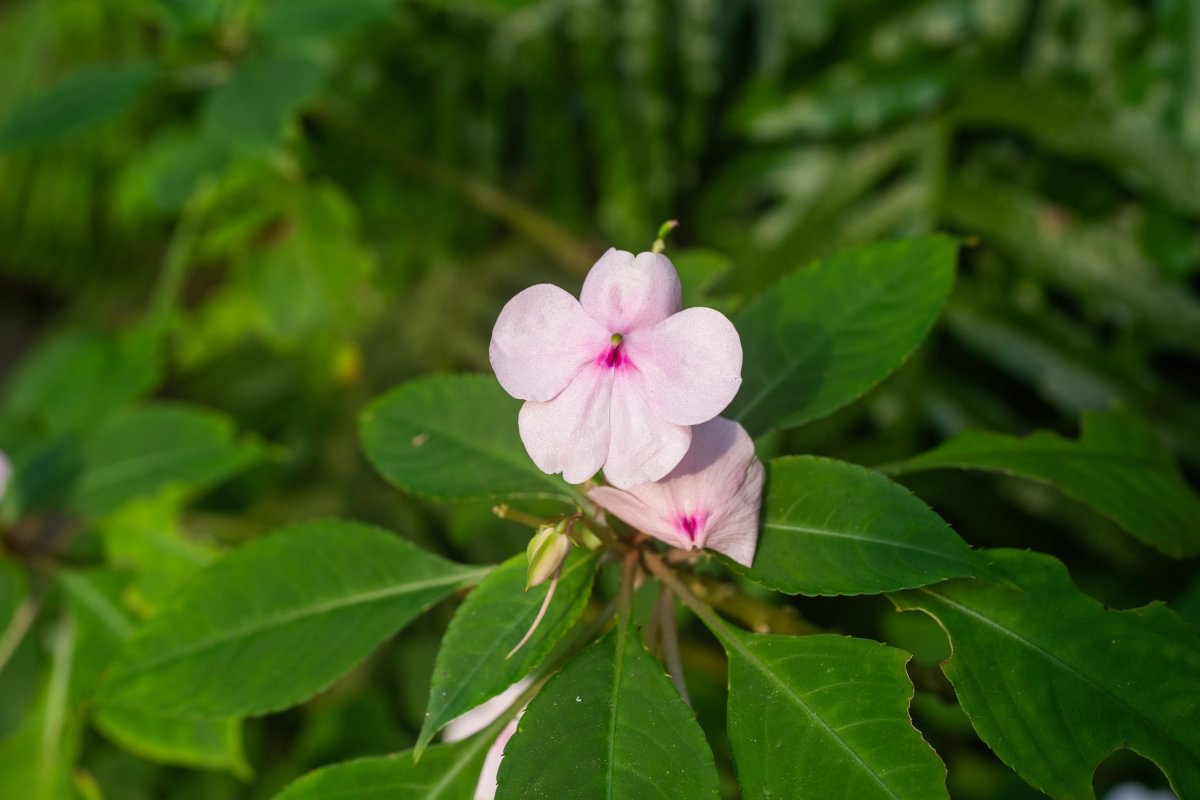
The collaboration revives a partnership that began in 2003 and offers visitors to the UK attraction the chance to ‘buy a plant and save the parents’.
Eden Project’s Impatiens Ray of Hope campaign saw tropical plants cultivated in the facility’s Rainforest Biome from Impatiens gordonii seeds which grow naturally in the Seychelles. In turn, this revenue was then sent to the Indian Ocean islands to help save the genus and a number of other endangered plant species.
From Tuesday 8th June, the campaign will begin again, with Impatiens available to buy for £10 from the Visitor Centre or online, with 40% of profits going to fund vital conservation work in the Seychelles. The brightly flowering specimens should be kept out of direct sunlight indoors in the UK, although in warmer months can be moved outside. Popular with pollinators, including butterflies and bees, the plant takes its name from the Latin for the word ‘impatient’, a reference to seeds which ‘burst’ when touched.
‘For 25 years, Eden has showcased the beauty and biodiversity of small islands in its Rainforest Biome, with species from the Seychelles featuring prominently,’ said Florence Mansbridge, Horticulture Manager at the Eden Project.
‘Impatiens Ray of Hope continues this legacy, giving visitors a tangible way to contribute to international conservation efforts while enjoying a long-flowering, beautiful plant in their own homes. We hope to highlight the critical importance of plant conservation on small islands, whilst making a lasting positive impact on nature recovery projects in the Seychelles,’ she continued.
Image: Eden Project
More on Eden Project:
Eden Project is a £6.8bn example of environment driving economics
Cornwall College University and Eden Project launch Centre for Excellence