















As the WHO declares a public health emergency over a new Ebola outbreak on the DRC’s eastern border, researchers warn that climate change could drive the deadly virus into previously unaffected countries, putting millions of people and endangered gorillas at risk.
It comes a little more than a decade after an outbreak in West Africa which led to the deaths of 11,323 people, or almost 40% of all those known to be have been infected, and fears climate change could make further outbreaks more likely in the near future.
Discovered in the DRC in 1976 and named after a river near its discovery site, Ebola is a viral haemorrhagic fever. Rarely infecting people, the main reservoir for the virus is believed to be fruit bat species, alongside chimpanzees, gorillas and antelope.
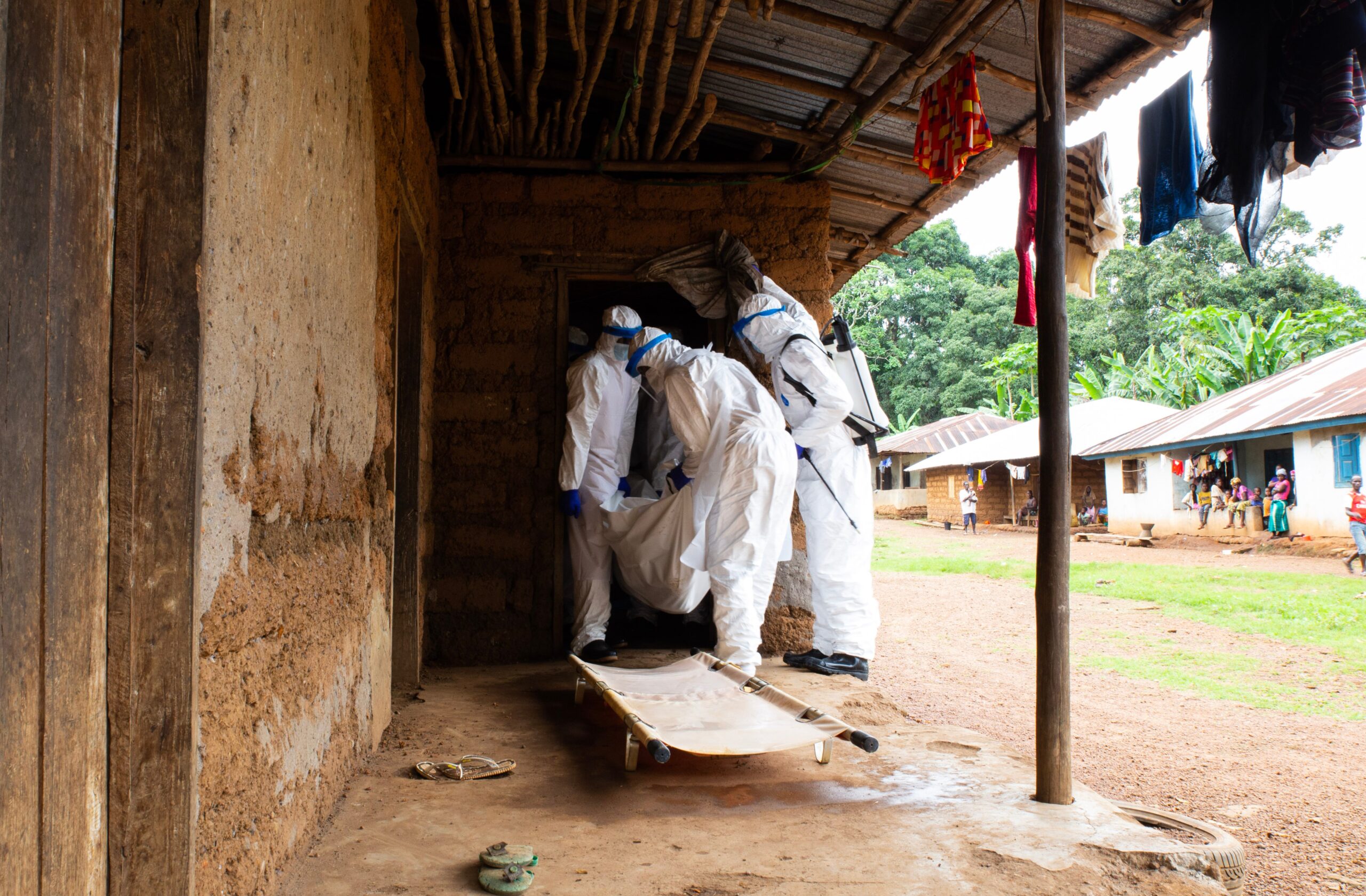
A significant means of transmission between people is thought to be funeral rites when the body of the deceased is held or washed – infected bodily fluids provide the link.
Human outbreaks probably occur as a result of touching infected animals – it’s not hard to imagine a child prodding a dead bat they find near their home – or through the consumption of bushmeat for sustenance or cultural reasons.
Initial research published in The New England Journal of Medicine suggested the outbreak centred on Liberia and Sierra Leone between 2013 and 2016 began with a two-year-old boy called Emile Ouamouno. He lived in the small village of Meliandou, surrounded by rainforest, in southern Guinea, close to the borders with Liberia and Sierra Leone.
I heard terrible stories from this outbreak during my several later visits to Sierra Leone, including tales of ambulance drivers demanding huge sums in ‘danger money’ to take away relatives who had succumb.
This outbreak in the DRC has, interestingly, also occurred in a border region, where the DRC, Uganda and Rwanda meet. The risk of it spreading regionally in the short term is all the higher as a result.
However, the bigger concern should be the geographic spread of Ebola across the continent as the climate warms. A mathematical modelling study published just last year in PLOS Neglected Tropical Diseases, which incorporated previous outbreaks of Ebola in eastern DRC, found that seasonal temperatures were likely a “key influencing factor” in the spread of the disease. Higher baseline temperatures across the year were found to make an outbreak more likely.
Africa is warming faster than the global average according to the World Meteorological Organisation, with a mean temperature rise of over 0.6°C compared to 1991-2000 levels and 1.23°C higher than temperatures recorded between 1961 and 1990.
Such rises make the geographic spread of Ebola across the continent more likely, with the study in PLOS Neglected Tropical Diseases suggesting countries as diverse as Cameroon, Ethiopia, Ghana and Tanzania that are currently beyond the range of Ebola could be at increased risk in seeing an outbreak of the disease. Tanzania in particular is a popular tourist destination with those heading on safari to the Serengeti and Ngorongoro Crater.

Climate change is therefore triggering a change that could potentially affect millions of people across sub-Saharan Africa and alter the way the rest of the world interacts with the continent. It also risks reserving the incredible work that has been done to shore up populations of endangered mountain gorillas over the past few decades.
Inhabiting the forested slopes of the borders of the DRC, Uganda and Rwanda – exactly where the latest outbreak of Ebola is centred – there are around 1,000 individual animals, up from a low of around 300.
At risk of a number of human diseases, from flu to coronavirus, it would be a travesty if climate change ultimately led to the extinction of these incredible animals as a result of the further spread of Ebola or similar diseases.
Ian Packham is a multiple-award nominated travel writer and public speaker