















One of the UK’s most significant nature restoration and ecosystem regeneration projects marks a major milestone with measurable social, economic and environmental impacts.
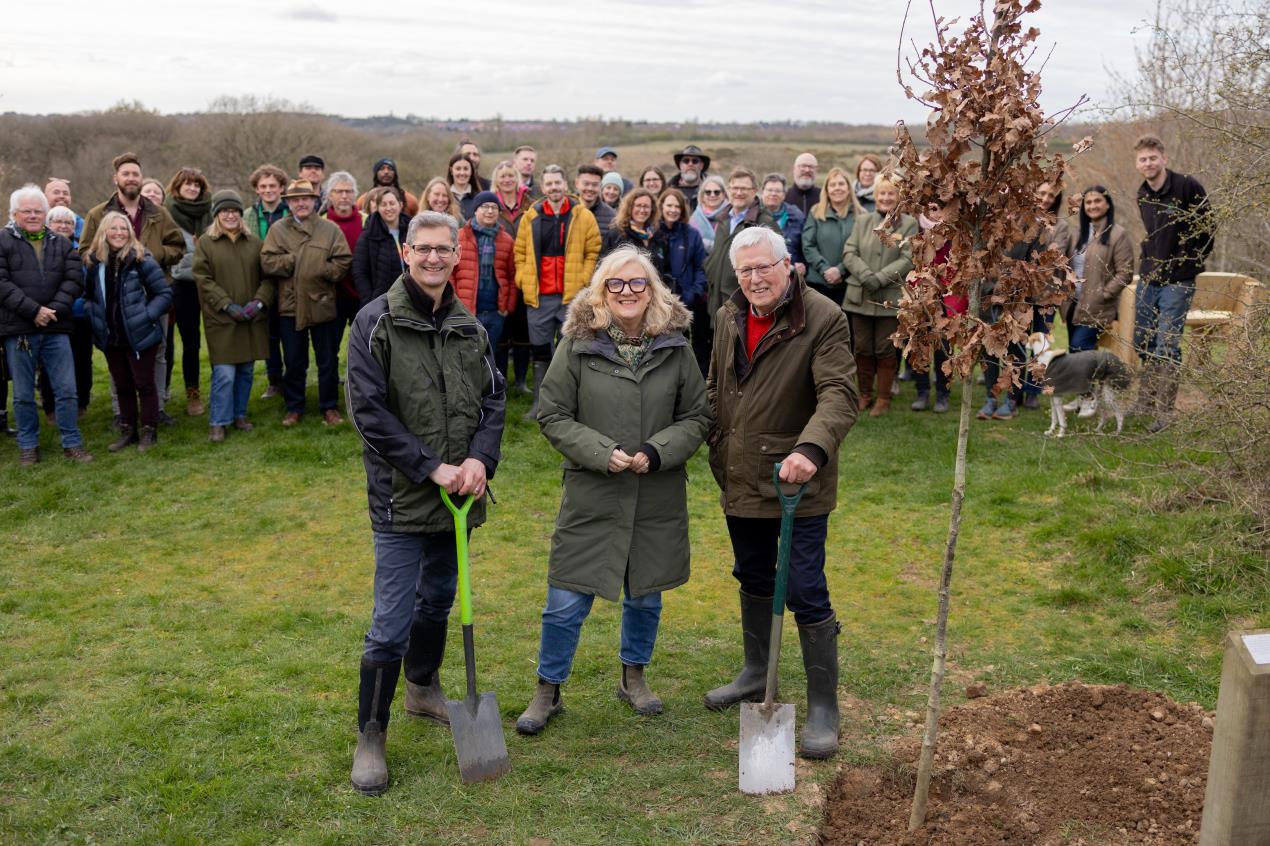
30 years after work first began to establish the National Forest across 200 square miles of the Midlands — spanning Derbyshire, Leicestershire and Staffordshire — the scheme has confirmed its 10 millionth tree planting this week. The momentous moment was marked with John Craven and Charlotte Smith planting a commemorative oak during a visit by BBC Countryfile.
The project is now considered a landmark model in how long-term investment in forest recovery can deliver measurable environmental, economic and social benefits, with woodland cover in the region expanding from 6% in the early-1990s to 25% today. Woodland bird populations, for example, have risen 48% in the area administered by the National Forest charity, while the UK-wide picture shows a drop of 7%. Elsewhere, species such as the purple emperor butterfly have returned after around 200 years of absence, while dormice are also back after more than a century.
In terms of ripple effects within society, 76% of households close to the National Forest now have access to green space within a 15 minute walk. For Britain as a whole, that figure drops to 71%. 320 kilometres of walking routes are now open to connect people with the landscape, while more than 70 volunteer groups have either been established or expanded to help care for the woodlands. 85% of schools in the region regularly engage in outdoor learning.
Looking at advantages to the economy, it’s estimated the National Forest has now sequestered and stored 730,000 tonnes of CO2e, contributing to wider climate goals. 8.7 million people are visiting the area annually, supporting job creation, and small businesses. Plans for growth, meanwhile, include investment to turn the Conkers Centre into a flagship visitor destination and continuing to grow tree cover to 33% of the landscape.
‘Reaching ten million trees shows what long-term commitment can achieve. In a single generation, we have transformed this area not only in how it looks, but in how it works, creating lasting transformation of landscapes, lives and livelihoods,’ aid John Everitt OBE, Chief Executive of the National Forest.
‘As a charity, our role has been to bring people together to make that happen, and it is incredibly inspiring to know that everyone involved can take credit for what has been achieved here. It demonstrates that forest creation can drive real change when it is rooted in partnership, ambition and collective action,’ he continued. ‘Our work is now helping to shape new national forests in England, sharing the lessons of the past 30 years to support the next generation of transformation.’
Image: National Forest Charity
More Biodiversity & Climate Change:
Spring means dandelions are in, chronic inflammatory diseases are out
Suffolk and Norfolk are case studies for nature based solutions investment