















Hiding beneath our feet, the world’s subterranean H2O stores are rapidly running dry. The result is supply shortages, mass subsidence and a rising threat to livelihood and lives.
Groundwater over-extraction is one of the least visible crises facing the global water system today. Aquifers that took thousands of years to form are being drained in decades.
Water is underpriced, undervalued and the most finite, in demand resource – and as we enter the era of global water bankruptcy, action on water this year needs to be urgent and meaningful.
Unlike floods, fires, or droughts, groundwater collapse can be largely invisible until the damage is irreversible. Wells suddenly run dry. Land subsides. Fresh water rivers are salinated. Ecosystems fail. Food systems destabilise. By the time the crisis becomes visible, the opportunity to prevent it has passed.
Unchecked groundwater extraction now threatens agricultural productivity, urban water security, economic growth and community stability across the world. According to research from Deltares, land subsidence caused by groundwater depletion is already damaging infrastructure, increasing flood risk and locking regions into long-term environmental and economic decline. The process is slow, cumulative and, once triggered, largely irreversible.
Yet much of the global response remains reactive. Deeper drilling, desalination plants and large-scale infrastructure expansion are often presented as solutions. In reality, they merely postpone the moment of reckoning. These approaches treat symptoms, not causes. They maintain demand rather than restoring true ecological balance.
Desalination alone is energy-intensive and often environmentally contentious. Some projects pair renewable energy and managed aquifer recharge with some success – including solar-powered desalination integrated into groundwater systems in Saudi Arabia, although report authors have called for further research over a longer period.
A return to the natural water cycle
A resilient future depends on us slowing extraction and rebuilding natural water reserves. That means returning, as closely as possible, to the way water naturally moves through landscapes.
Rainfall must be allowed to infiltrate soil rather than being channelled away. Landscapes must be rehydrated so they can store water longer. And critically, demand must be reduced so water can remain where it falls, replenishing aquifers, and living within boundaries instead of being immediately extracted.
Re-hydrating the planet cannot be a single megaproject or a policy lever. It must become a long-term, integrated mission – supported by governments and intra-national collaboration – and built on millions of small, everyday decisions; supported by smart infrastructure, better design and data-driven management.
The role of domestic water overuse
Agriculture is often cited as the main driver of groundwater depletion, but domestic consumption plays a far larger role than is commonly acknowledged, particularly in urban regions.
Showering alone represents one of the largest controllable demands on freshwater. Multiplied across billions of people, daily habits become a structural driver of aquifer decline. In the bathroom, one of the biggest culprits of water waste stems from long showers, with over 2 billion litres going down our drains each year in the UK alone.
Reducing household demand is not about sacrifice; it is about efficiency, awareness and smarter systems that reduce waste without reducing quality of life.
Restoring the hydrological cycle
To rehydrate landscapes and protect aquifers, solutions must address the full water cycle – from rainfall to reuse.
The most effective litre of water is the one never extracted. Efficient fixtures, behavioural nudges, real-time feedback and pricing structures that reflect water scarcity can dramatically reduce demand without compromising comfort or hygiene.
Harnessing the power of behaviour change, technology which enables people to make better choices around water use and stick to them is one of the easiest and fastest ways to save water.
Studies show that for behaviour change interventions to be effective, ‘nudges’, (for reducing single-use plastics, for example), and reminding people to bring reusable bags when they go shopping, are a useful tool – along with policymakers ensuring that people have access to plastic-free options.
In Israel – a country that is frequently hit with drought and historically blighted by chronic water shortages, has become a nation that now produces 20 percent more water than it needs.
Historically, water demand from Israel’s rapidly-growing population outpaced the supply and natural replenishment of potable water on such a large scale that by 2015, the gap between demand and available natural water supplies reached 1 billion cubic meters.
In the midst of consecutive droughts throughout the 2000s, the Israel Water Authority launched awareness campaigns via TV, radio and Internet urging the public to save water. They actively encouraged and brought about behavioural change to address the crisis.
Greywater also plays a key part in restoring the cycle – with water used for showers, sinks and laundry safely reused for irrigation, flushing and cooling. Scaling greywater systems reduces demand on groundwater, while also keeping it local.
Advanced treatment technologies now allow wastewater to be safely reused for agriculture, industry and even potable supply. When managed properly, recycled water can also support managed aquifer recharge, restoring underground reserves rather than depleting them.
Sponge cities helping to mitigate floods
‘Sponge cities’ demonstrate how permeable surfaces, green roofs and urban wetlands can capture rainfall and allow it to infiltrate soil. The concept, pioneered by Chinese landscape architect Kongjian Yu, uses natural and engineered systems to absorb rainfall and prevent flooding.
The World Economic Forum reports that these cities, including Copenhagen, prevent floods by soaking up excess water and releasing it more slowly back into rivers and water systems.
However, large-scale interventions, such as dams and river diversions, have often disrupted natural water pooling in wetlands – some of the most effective aquifer recharge zones – due to their permeable ground.
Wetlands cover more than 12.1 million square kilometres, approximately six per cent of the Earth’s land surface, and constitute some of the most productive ecosystems in the world.
The Global Wetlands Outlook 2025 estimates that the 1.425 billion hectares of wetlands remaining on the planet generate between USD 7.98 and 39.01 trillion in benefits for society each year, by providing essential ecosystem services, employment and economic opportunities, including those related to wetland tourism.
However, wetlands have been lost at an average rate of 0.52% per year since 1970 as a result of urban, agricultural, and industrial pollution; urban expansion; infrastructure development; agricultural intensification and land drainage.
Cutting water waste
Inefficient appliances, excessive pressure and outdated systems lead to enormous losses before water is ever used.
Globally, more than 30 per cent of treated water is lost through leaks. The good news is that smart sensors, pressure management and predictive maintenance can recover vast volumes of water that would otherwise be pumped unnecessarily from aquifers.
Why has once-fertile land become barren and dry?
The answer lies in cumulative cause and effect. Wetlands were drained. Rivers were straightened and soil compacted. Groundwater has been drained faster than it could be replenished. Each intervention strained the natural water cycle.
Reversing this trend requires joining the dots – from sustainable farming practices that rebuild soil carbon and infiltration capacity, to advanced treatment technologies that close the loop on wastewater, to urban design that works with water rather than against it.
Data, AI and rapid response
Modern water systems generate enormous volumes of data. AI can transform that data into real-time insight – detecting leaks, identifying contamination, monitoring aquifer health and tracing chemical or sewage pollution back to its source.
Emerging organic contaminants (EOCs) and environmental DNA (eDNA) are innovative tools that can be used to identify sources of pollution in groundwater. Using these tools, a team of ESR scientists in New Zealand is analysing the presence of EOCs and the diversity of species through eDNA, to build a predictive model for pollution source identification and aid targeted mitigation.
A mission spanning sectors and generations
Re-hydrating the planet will require expertise across disciplines: hydrology, agriculture, urban planning, materials science, data analytics and advanced treatment technologies. No single solution is enough. But together, they form a coherent path forward.
Groundwater collapse is not inevitable. It is the result of choices, which can be mitigated by better ones. A viable future depends on slowing extraction, restoring natural processes and rebuilding reserves one behaviour change, one system upgrade and one landscape at a time.
Steve Harding, CEO and founder, Showerkap, a pioneering tech company on a mission to change how businesses monitor, manage and use water and energy.
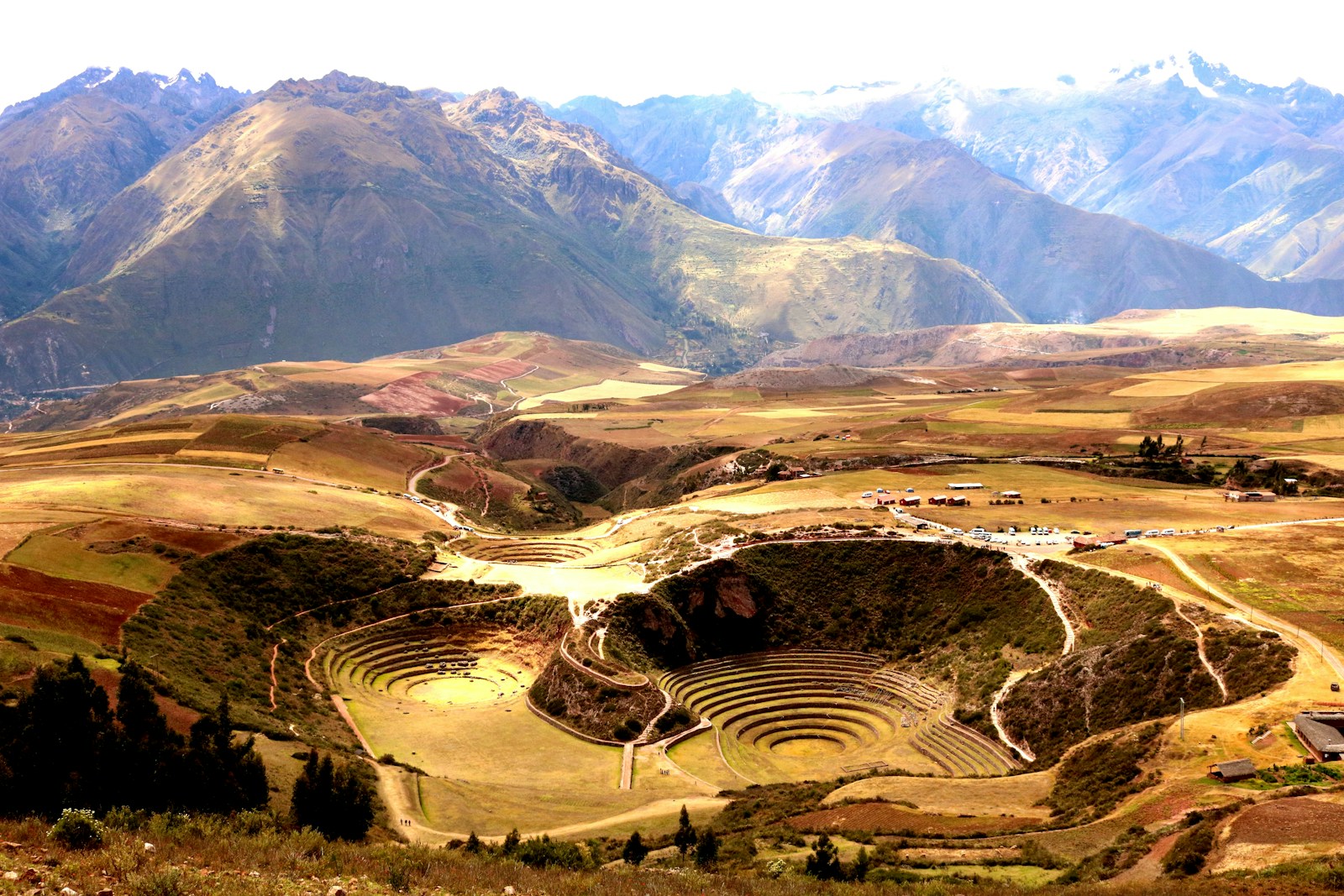
Image: Viajes con Astro Cartografía / Unsplash