

















That plastic water bottle you toss in the recycling bin could one day help power your electric car or smartphone.
Researchers at Penn State have successfully converted waste PET plastic – the kind used in most drink bottles – into high-quality synthetic graphite, a key material in lithium-ion batteries. Their findings suggest that one of the world’s most common waste problems could become part of the solution for clean energy storage.
Graphite serves as the anode in batteries, storing and releasing the electrical charge that powers everything from EVs to grid-scale renewable energy systems. As demand for these technologies skyrockets, so does the need for battery-grade graphite.
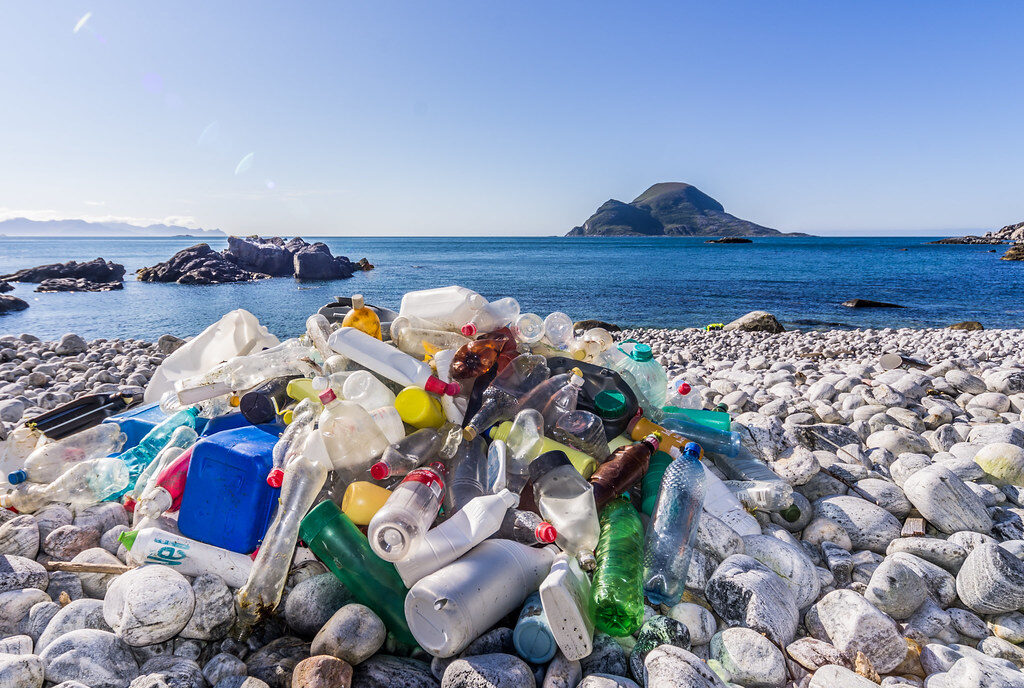
At the same time, PET plastic is ubiquitous and most of it never truly gets recycled. Much ends up in landfills, incinerators, or downcycled into lower-value products.
The Penn State team saw a chance to tackle both issues at once.
Shakshi Sekar, lead author and doctoral student in energy and mineral engineering, said: ‘We’re not simply finding a use for waste plastic. We’re creating a valuable material that could help support the growing demand for batteries and clean energy technologies.’
The process is surprisingly clean. The researchers shredded PET plastic, mixed it with tiny amounts of graphene oxide and heated it through a carefully controlled thermal process. This reorganised the carbon atoms inside the plastic into highly ordered, crystalline structures which is, essentially, synthetic graphite.
Remarkably, just 2.5% graphene oxide by weight, produced graphite with crystallite dimensions that actually exceeded those of commercial natural graphite, meaning its structure was even more ordered and potentially better suited for battery anodes.
Significantly, the team avoided a common pitfall of traditional graphitisation methods. Most techniques rely on metal catalysts like iron or nickel, which leave behind impurities that require extra chemical washing. Instead, the Penn State researchers used graphene-based additives that promote graphitisation without introducing metallic contaminants.
That means cleaner graphite, less chemical waste, and simpler manufacturing.
Sekar said: ‘Our work shows that the same material can become a valuable resource for producing graphite, which is essential for modern battery technologies.
‘If waste plastic can become a feedstock for advanced energy materials, it changes how we think about recycling.’