

















Numbers from 2023 show an urgent need to look at transport modality into and out of the city region, although long haul arrivals present a major challenge.
Conducted by Tyndall Centre for Climate Change Research at the University of Manchester, a new study offers the only direct analysis of tourism’s carbon impact on the 10 boroughs. Commissioned by Marketing Manchester, Visit England and the Growth Company, this is also the first time any city-region in England has been subject to this type of investigation.
Travel to and from Grater Manchester accounted for the highest proportion of emissions, and in particular long haul flights landing at the UK’s third biggest airport. Although the report acknowledges passenger numbers from Asia, Oceania and North America are comparatively low, they produce a disproportionately large amount of carbon dioxide and equivalent greenhouse gas emissions.
This is followed by domestic car travel, with petrol and diesel trips making up the majority of UK-based travel emissions. This was true even on well-connected rail routes, pointing to perennial issues with pricing, reliability and communication.
Despite this, the Tyndall Centre team did commend the city region for ensuring ‘most major attractions benefit from excellent public transport accessibility, increasing the opportunity for car-free tourism. Nevertheless, a number of recommendations have been made. These include:
- Promoting rail and ferry access from nearby European countries.
- Targeting tourism growth in markets accessible by low-carbon transport.
- Supporting accommodation providers and attractions to meet local energy efficiency targets.
- Encouraging car-free tourism through public transport integration and sustainable travel itineraries.
You can read the full report here.
‘Tourism is a significant contributor to Manchester’s economy, but we cannot overlook its environmental impact,’ said Victoria Braddock, Managing Director of Marketing Manchester. ‘As a destination, Manchester is passionate about driving forward low-carbon tourism, and this report, in collaboration with the Tyndall Centre, is helping us set a standard for other English cities to follow.
Having clear objectives will help us to make a positive impact and support our partners to become greener in the process; all of which will contribute to our region’s ambition to become carbon neutral by 2038 and keep our status as a leading sustainable UK destination,’ she continued.
In 2023, Manchester ranked as the third most-visited town or city in the UK, behind London and Edinburgh. The combined authority and marketing team now have the ambition to close the gap on Scotland’s capita, and increase the value of the visitor economy to around £15billion by 2030.
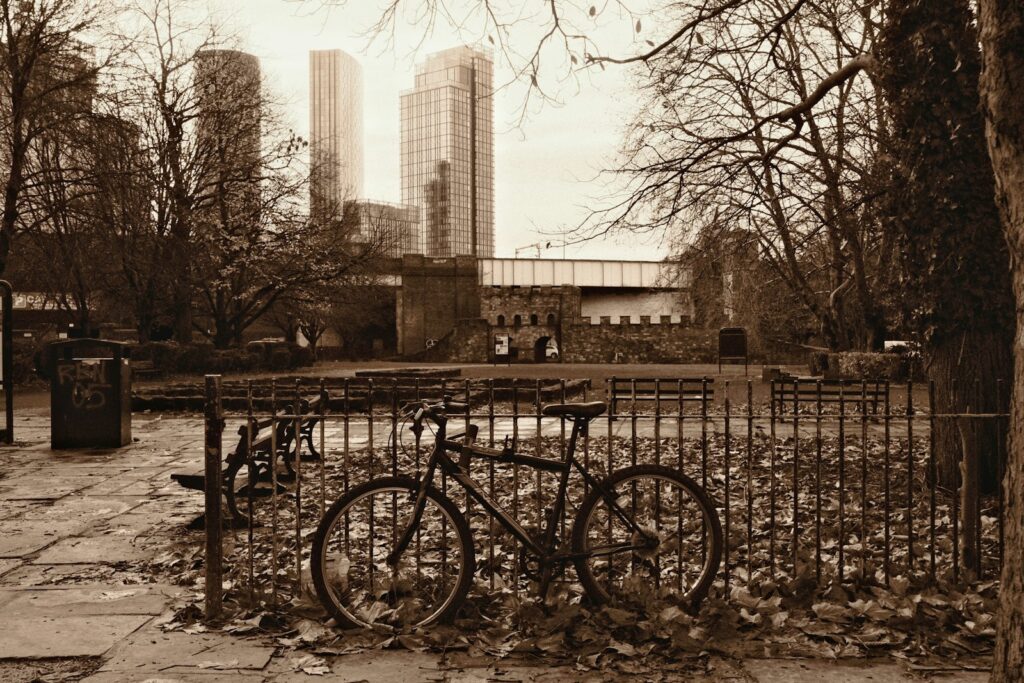
Image: Mylo Kaye / Unsplash
More Transport, Infrastructure and Planning: