


















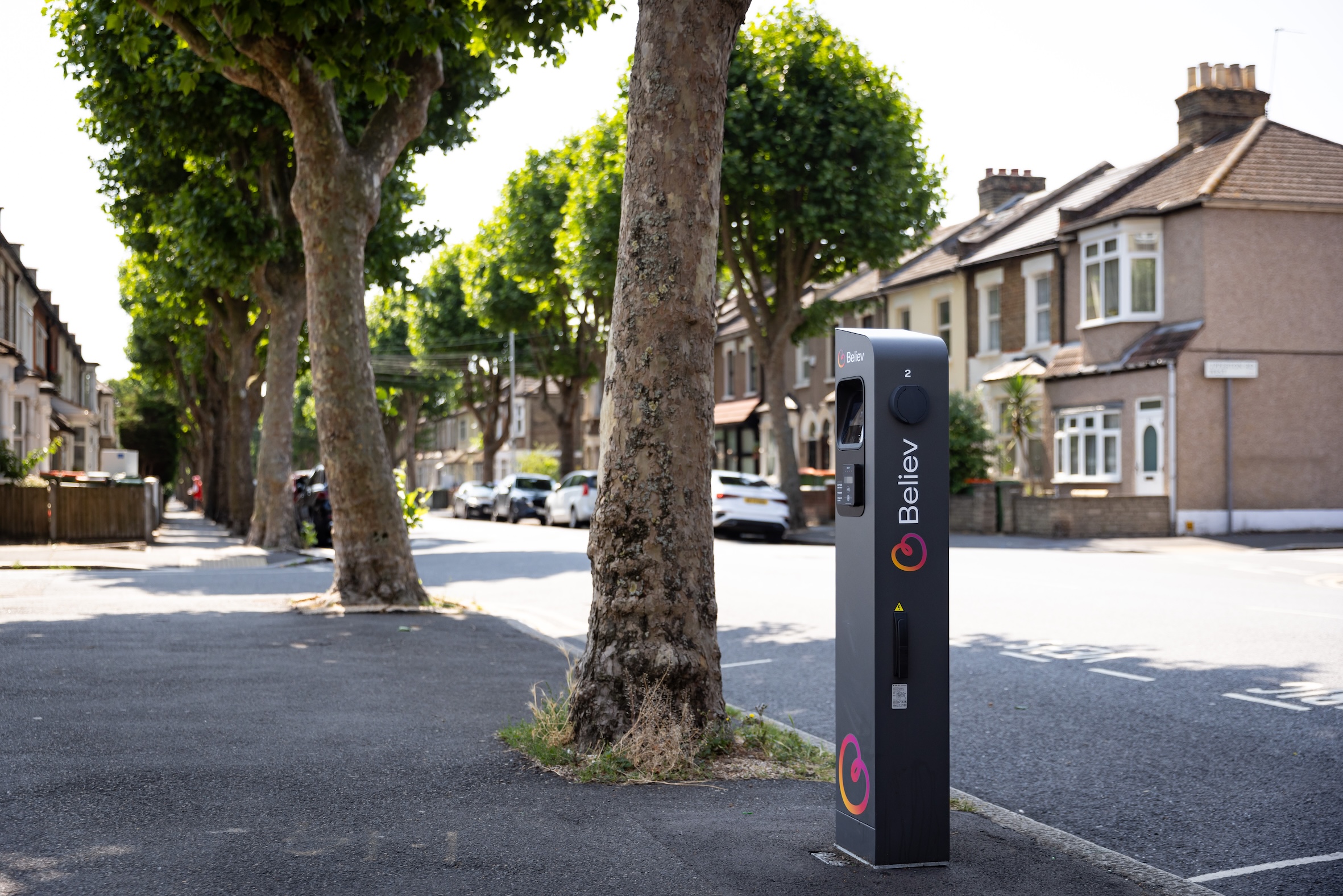
101 local authorities across England and Wales have been asked about the biggest obstacles to installing new public electric vehicle charge points.
The most frequently cited problem was ongoing – and in many cases, increasing – pressures on council budgets. As per 75% of responses.
This issue was followed by almost two-thirds reporting issues with central government funding, and 42% which experienced logistical and delivery challenges. Among other things, these include grid capacity and and site constraints.
Conducted by Believ as part of a new Local Authority Insight Report, Accelerating the UK’s EV future, this year will see an additional £200 million allocated to increase the network earmarked in 2025’s autumn budget. Funds will be used to add a significant number of charge points to the UK’s existing 88,000 public devices at 45,000 locations.
Top barriers to EV charge point installation
- Budgetary issues (council budgets): 75%
- Budgetary issues (government funding): 63%
- Logistical/delivery challenges: 42%
- Low EV ownership/local demand: 31%
- Public sector procurement challenges: 17%
- Lack of siting guidance: 16%
- Regulatory constraints: 12%
- Resident reticence: 11%
‘The report is the only piece of research of its kind, talking to more than a quarter of local authorities, directly to the Councillors responsible for the EV charging rollout. And as such, we must act on the results,’ said Guy Bartlett, Believ CEO.
‘The clear and urgent priorities of unlocking funding, streamlining processes, expanding and signposting guidance must be addressed,’ he continued. ‘The responsibility for this lies in tandem with the charging industry and government – with the right partnerships, the UK can build an EV charging network that works for everyone.’
Notably, on the whole 71% of councils – rising to 78% for rural and semi-rural areas – said they would prefer a more direct and targeted funding system over the current Local Electric Vehicle Infrastructure scheme. Almost half (43%) wanted more say in local budget decisions.
Image: Believ
More Transport, Planning & Infrastructure:
London is officially the world’s slowest capital city (again)
Suffolk County Council begins major EV infrastructure rollout