











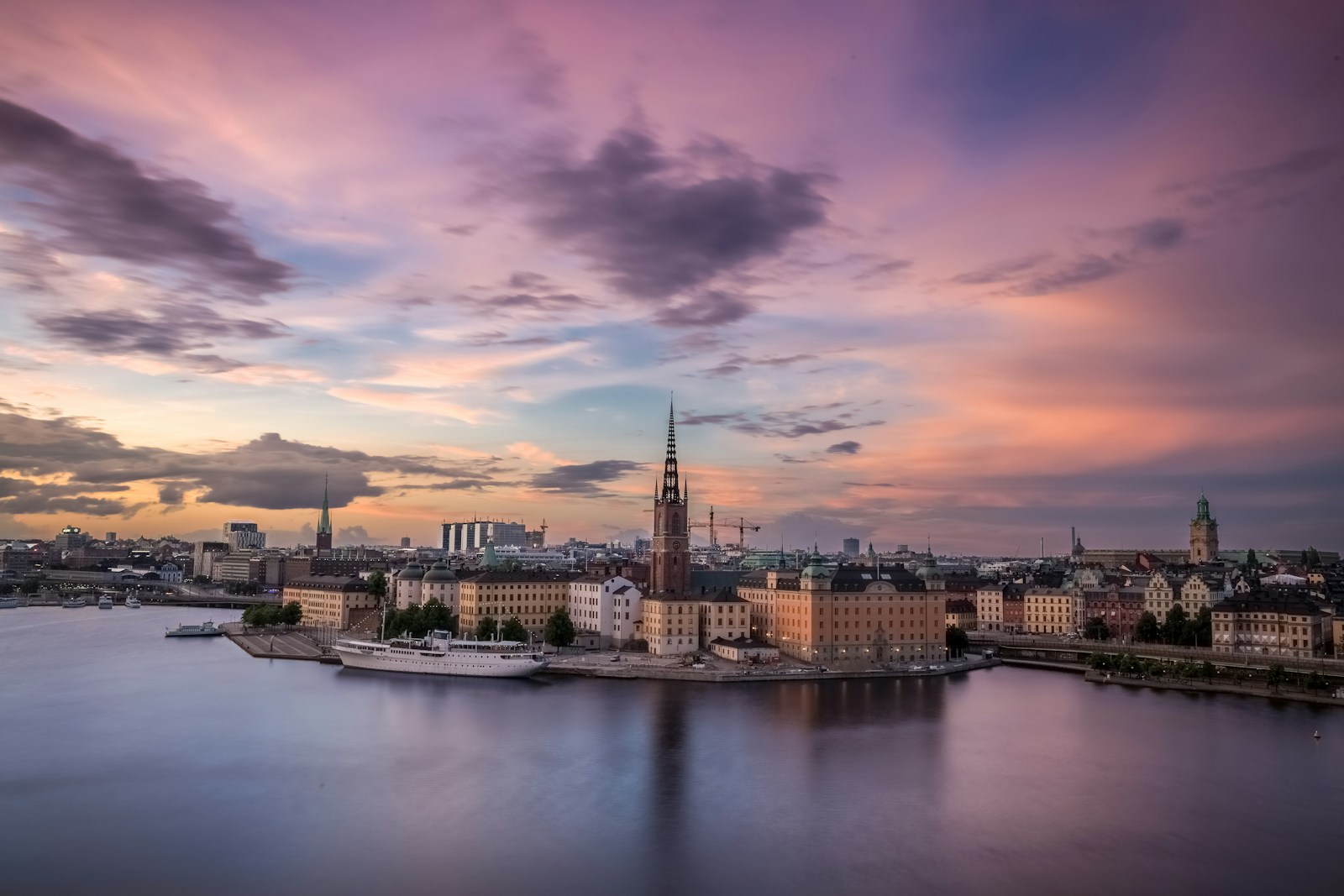

Just over 12 months since service began, a new report points to dramatic improvements in local climate conditions.
Introduced in late-2024, Stockholm’s all-electric ‘flying’ ferry is actually a Candela P-12 hydrofoil shuttle, which the manufacturer claims is the fastest electricity-powered vessel available anywhere in the world.
Currently offering services between Ekerö and the centre of the Swedish capital — with passengers alighting close to City Hall — travel times have been cut from 55 to 30 minutes, while carbon dioxide output has plummeted by 94% compared with diesel alternatives. Charging requirements are relatively low, too, meaning dockside upgrades using these models are significantly less expansive and disruptive compared to most other electric ferries.
While this is just one route across the metropolitan area, further expansion could have a significant overall impact. Stockholm is famously built in 14 individual islands, however ferry services are often criticised for their slow speeds and infrequent departure times, pushing many onto roads and the city’s huge number of bridges.
Of the waterborne routes that are available, heavy polluting ferries account for almost all journeys, contributing just under 50% of the region’s entire public transport greenhouse gas footprint.
In addition to a much improved emissions rate and reduced journey times, noise pollution has also fallen dramatically. Hydrofoil shuttles are now barely audible from 25 metres away, and are roughly as loud as a car travelling at 45 km per hour.’
‘The Candela P-12 can transform urban waterways,’ Gustav Hasselskog, founder and CEO of Candela, told Euro News. ‘By combining high speed, minimal energy use, and near-zero emissions, we can unlock faster, cleaner, and more cost-efficient waterborne transport for cities worldwide.’
It is now understood that Berlin, Germany and Mumbai, India are among the cities looking to introduce the vessels on their own urban routes.
Image: Raphael Andres / Unsplash
More on Transport, Infrastructure and Planning:
Environmental guidance published for Shetland and Newquay spaceports
Mechanical sales and wind power are no longer a shipping niche