














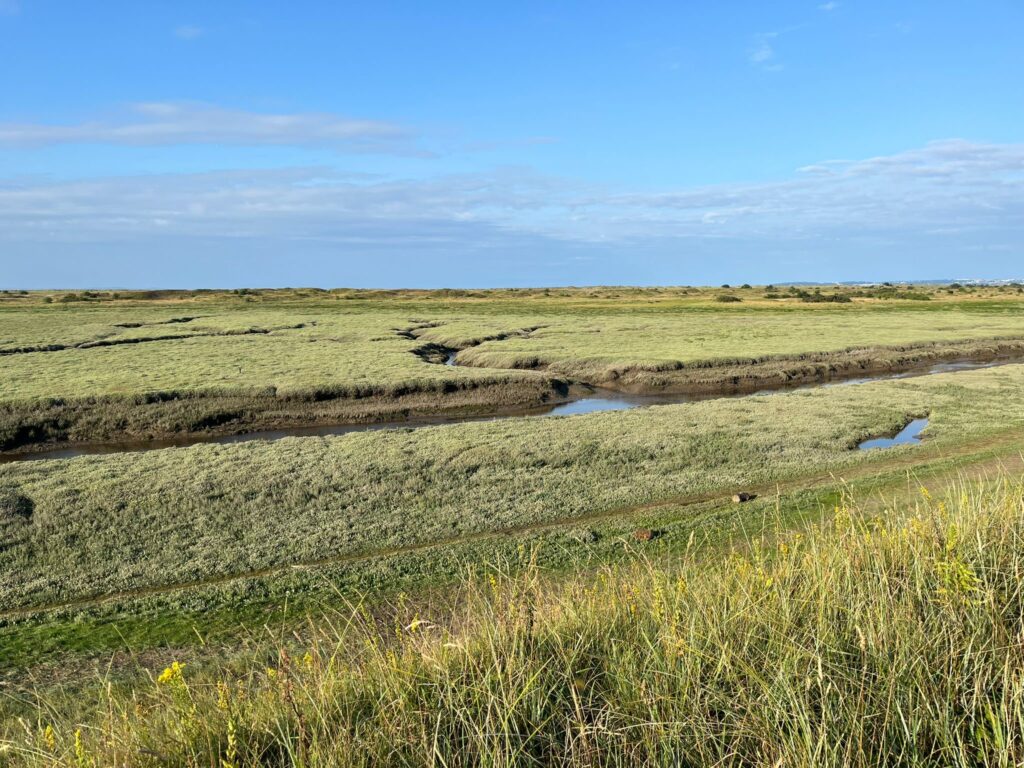



Following the publication of the Land Use Framework, England faces pressure to balance housing, energy and nature goals. Rethinking how rural land is used will be central in achieving them.
The idea that England cannot meet its housing, energy and environmental ambitions by treating the countryside as off-limits reflects the lived reality of many rural places. Too often, policy and public discourse approach the countryside as if it were a static landscape: something to be protected, preserved, and curated, rather than a living and working environment. . But the countryside is not standing still. . It is home to millions of people, businesses, and communities that are grappling with very real 21st Century challenges.
The countryside is not a monument
Framing the countryside as something to be “preserved in aspic” fundamentally misunderstands its role. Rural England is dynamic, productive, and evolving. According to government figures, around 17–19% of England’s population lives in rural areas, and these communities are not homogenous idylls. They are places of work, innovation, and increasingly, strain.
A defining feature of many rural areas today is demographic imbalance. Over a quarter of rural residents are aged 65 or over, with younger people disproportionately leaving for education and employment opportunities elsewhere. This ageing population places pressure on health and care services while simultaneously reducing the local labour force and economic vitality.
At the same time, connectivity challenges – both physical and digital – continue to constrain opportunity. Rural areas still lag significantly behind urban ones in broadband access and mobile coverage, with large disparities in gigabit connectivity and service quality. Transport constraints further exacerbate isolation: half of rural residents live in areas with the poorest access to services when measured by travel time.
These are not conditions of stability; they are symptoms of structural challenges.
The risk of rural stagnation
Against this backdrop, overly restrictive approaches to development risk accelerating decline rather than preserving character. When housing supply is constrained, affordability deteriorates. In many rural areas house prices are significantly higher relative to earnings than urban equivalents, contributing to the displacement of younger and lower-income households.
The consequences can be significant : schools can close due to falling enrolment, local services can become unsustainable and economic activity can concentrate elsewhere. In effect, the very policies intended to “protect” rural communities can unintentionally hollow them out.
There is a growing risk that parts of the countryside become places of limited social mobility, restricted opportunity and demographic imbalance. What emerges is not preservation, but stagnation.
Why incrementalism is not enough
In this context, the idea that small-scale development or “tinkering at the edges” will address these challenges is difficult to sustain. While incremental growth has a role, it is unlikely on its own to address structural issues such as housing need, economic diversification, or infrastructure investment.
Rural economies increasingly depend on sectors beyond traditional agriculture, including tourism, manufacturing and services, yet these sectors are often constrained by labour shortages, poor connectivity, and a lack of suitable premises. Addressing these constraints requires coordinated investment and planning at a scale that goes beyond individual sites or piecemeal approvals.
This is where the case for comprehensive, strategic planning becomes compelling. Regional or sub-regional approaches can help align housing delivery, infrastructure provision, environmental management, and economic development in a way that localised decisions alone cannot.
Moving beyond greenfield vs brownfield
The emergence in March of England’s Land Use Framework signalled an important shift in how these issues are understood. Rather than treating land-use decisions as a binary choice between development and protection – or between brownfield and greenfield – a more integrated approach is required in rural areas
England’s land is finite, but it is capable of accommodating multiple objectives simultaneously: housing growth, clean energy generation, food production, and nature recovery. The challenge is not a lack of land per se, but how effectively and strategically it is used.
This reframing is critical. The traditional “brownfield first” debate, while important, is unlikely t on its own to meet the scale of need. Even optimistic assessments suggest that brownfield capacity, while substantial, does not fully resolve the housing challenge, particularly when delivery constraints and geographic mismatch are considered.
Equally, framing greenfield development as inherently harmful overlooks the potential for well-planned schemes to deliver environmental net gain, new infrastructure, and resilient communities. The question should not simply be where development occurs, but how it is integrated into a broader spatial strategy.
The need for a new mindset
The Land Use Framework begins to articulate a more sophisticated way of thinking about the countryside – not as off-limits , but as multifunctional and adaptable. It recognises that decisions about housing, energy, agriculture, and nature have too often been made in isolation, leading to inefficiencies and missed opportunities.
By contrast, a strategic approach allows for synergy: renewable energy infrastructure coexisting with agriculture, housing integrated with green infrastructure, and nature recovery embedded within development patterns.
For rural communities, this offers a pathway out of the false choice between growth and protection, acknowledging that well planned growth is not necessarily incompatible with rural life, but can be part of its continuation.
Treating the countryside as a fixed, sacrosanct landscape risks undermining the very communities it seeks to preserve. Rural England is already changing – demographically, economically, and socially – and policy must respond to those realities.
The challenge is not whether development should occur, but how it can be planned in a way that sustains and revitalises rural communities. Incremental approaches are unlikely to be enough on their own. Instead, a more ambitious, integrated, and strategic model of land use is required – one that moves beyond simplistic binaries and recognises the countryside as a living, working environment.
The Land Use Framework provides a foundation for this shift. By aligning national priorities with local decision-making, and by embracing the complexity of competing land demands, it can support more balanced and resilient future.
In that sense, protecting the countryside does not mean freezing it in time. It means enabling it to evolve – so that it remains not only a place of beauty, but a place of opportunity, vitality, and life.
Image: James Read / Unsplash
Katy Davis, National Head of Planning at Carter Jonas.
More on housing:
Ordnance Survey launches tool to boost biodiversity in housing
Housing over nature as Biodiversity Net Gain exemptions expand
Should London rethink Green Belt and Metropolitan Open Land to solve housing crisis?