















City’s benefit from much more than we thought from green spaces. Begging the question: why don’t we have more?
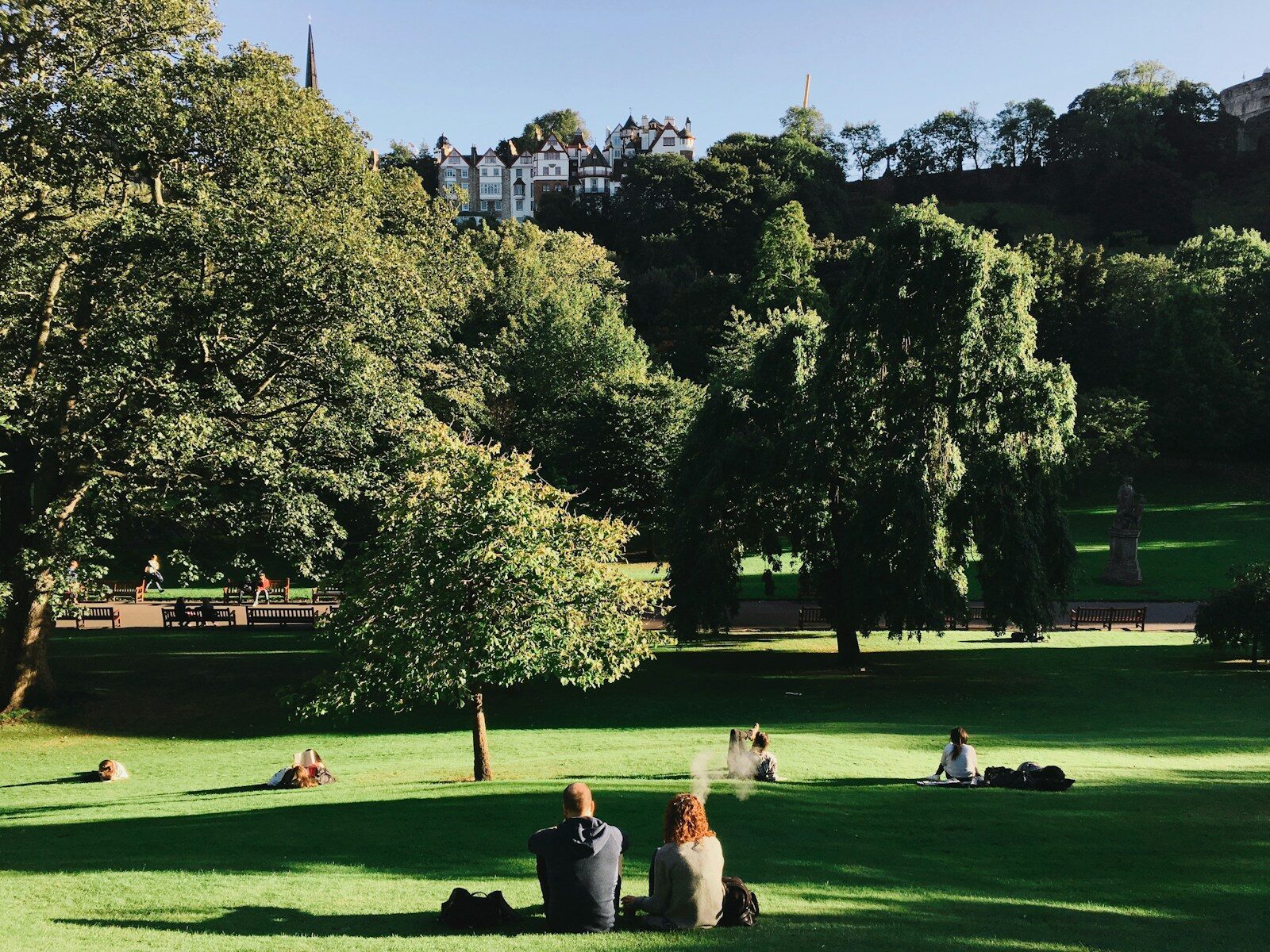
Stoke Park is a 52 hectare expanse of grasslands, manicured gardens and lines of trees. The largest park in Guildford, Surrey, it was an obvious choice for the University of Surrey’s Global Centre for Clean Air Research to focus on for a new study, looking the wider impact of nature on towns and cities.
Less obvious was just how significant the impact is. According to the team behind the assessment, and the results first published in City and Environment Interactions, PM10 particulate matter was 11% lower inside the park than the town’s average. Morning temperatures were also down 6.5%, and remained consistently cooler throughout the day.
Although this isn’t necessarily anything new, when the researchers began to look at neighbouring locations close to the park they realised there were profound effects taking place outside the park.
For every 100 metres they travelled away from the entrance gates, temperatures rose by 0.5C, up to a maximum distance of 300 metres. At which point conditions were no longer positively impacted by the green space. Noise pollution from nearby roads was also improved, dropping 5.41 decibels inside parklands.
‘This is proof that the benefits of parks extend far beyond their boundaries. Shaded areas with trees particularly improved thermal comfort during hotter periods of the day,’ Soheila Khalili, Postgraduate Researcher at the University of Surrey’s GCARE. ‘Cities are having to adapt more and more as the climate continues to warm, so understanding exactly how parks improve environmental conditions can help guide more effective urban design.’
‘Our work shows that parks can bring measurable cuts in heat, pollution and noise both inside parks and across surrounding neighbourhoods,’ added Professor Prashant Kumar, Founding Director of GCARE and corresponding author of the study. ‘This provides stronger evidence for planners and policymakers looking to design healthier and more climate-resilient towns and cities.’
Image: Sherry Xu / Unsplash
More on air and noise pollution:
One-in-four neighbourhoods breach nature pollution thresholds
Nosie pollution from deep sea-mining could stretch millions of kilometers