

















Finance, procurement, operations, and commercial functions. Cost structures, risk exposure, and access to capital. In a stormy and unstable world, ESG reporting has emerged as the most important guardrail for future-proofing prospects.
Volatility, whether it’s in energy markets, supply chains, or regulatory expectations, has become a defining feature of today’s business environment. As instability persists, the gap between companies that adapt and those that fall behind is increasingly shaped by how well they understand what is happening within their own operations.
Companies are shifting how they use sustainability data. Once treated primarily as a reporting requirement, it is now becoming a source of operational intelligence that informs cost, risk, and performance on a day-to-day basis.
Historically, sustainability often sat alongside business strategy, framed as a compliance exercise or reputational concern. That distinction is becoming untenable. Leadership teams now face a more immediate question: do they have sufficient visibility to make informed decisions on energy sourcing, procurement, and supplier management?
The implications are already clear. Companies that diversified their energy supply are experiencing today’s price volatility differently from those that did not. What was once seen purely as a sustainability initiative is now a means of protecting margins. Similarly, organisations with greater visibility into supplier emissions are better positioned to identify concentration risk and respond to disruption. Their advantage lies not in reacting faster, but in having built the insight needed to act with confidence.
In this sense, sustainability data is shifting fast from retrospective disclosure to forward-looking insight. It highlights inefficiencies, exposes dependencies, and signals where external changes will have the greatest impact. As a result, its use is expanding beyond sustainability teams into finance, procurement, operations, and commercial functions.
This shift is also raising expectations around data quality. CFOs, in particular, are beginning to apply the same scrutiny to ESG metrics as they do to financial data, questioning whether it can be trusted, audited, and used to support decisions. This reflects a broader recognition that sustainability factors directly influence financial performance through cost structures, risk exposure, and access to capital.
At the same time, external pressures are intensifying. Regulatory requirements are becoming more detailed and enforceable, increasing the risk of incomplete or inconsistent disclosures. Investors are integrating climate considerations into their assessments. Meanwhile customers and procurement teams are placing greater weight on ESG performance. Together, these forces mean sustainability data can no longer be treated as fragmented or secondary.
Scope 3 emissions illustrate this clearly. While they are the most complex to measure, they often provide the most meaningful insight into a company’s value chain, highlighting supplier concentration, operational dependencies, and potential cost volatility. Yet for many organisations, this remains the least developed area of their data management, limiting their ability to fully understand and manage risk.
The companies I see making the most progress are not waiting for perfect data. Instead, they are building robust, centralised systems that allow them to act while continuously improving data quality. By creating a shared, structured view of sustainability information, they enable better coordination across the business.
The benefits are tangible. Inefficiencies become easier to identify, procurement strategies can be adjusted based on real supplier risk, and commercial teams can respond more effectively to ESG-related demands. Compliance also becomes less expensive and slow, as reporting draws from an established data foundation rather than being rebuilt each cycle.
Against this backdrop, the idea of sustainability as just another cost centre is becoming outdated. The greater cost lies in the absence of usable data, leading to duplicated effort, missed risks, and slower decision-making at a time when speed and clarity are critical.
Instead of seeing regulation as the primary driver of investment, for me it is better understood as a catalyst. Various climate laws are accelerating a broader shift towards embedding sustainability into core business processes by raising expectations around transparency and accountability. For organisations that recognise this, compliance becomes part of a wider transformation, so that rather than building systems solely for reporting, they are investing in data infrastructure that supports risk management, operational efficiency, and strategic planning.
Ultimately, what distinguishes the leading companies from the laggards is not that they report more, but that they use sustainability data to run their businesses more effectively. By treating it as operational intelligence, they are better equipped to navigate uncertainty, respond to external pressures, and identify opportunities others may miss.
In an environment defined by constant change, the ability to see clearly, and act accordingly, is becoming a decisive competitive advantage.
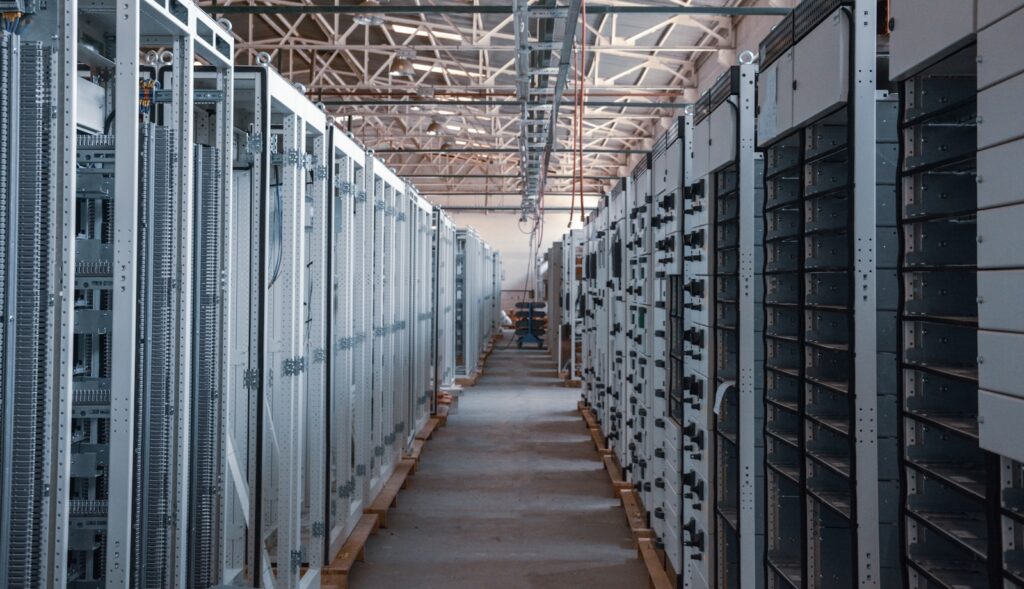
Image: Felix Mittermeier / Unsplash
Rachel Delacour, Founder and CEO of Sweep, a platform which uses sustainability data to help leaders see measurable business performance.
More Case Studies, Features & Opinion:
The circular economy isn’t failing, we’re just making it unnecessarily hard
We need to talk about groundwater drought (and rehydrating the planet)
ADEPT’s new toolkit provides dedicated guidance for climate communicators