

















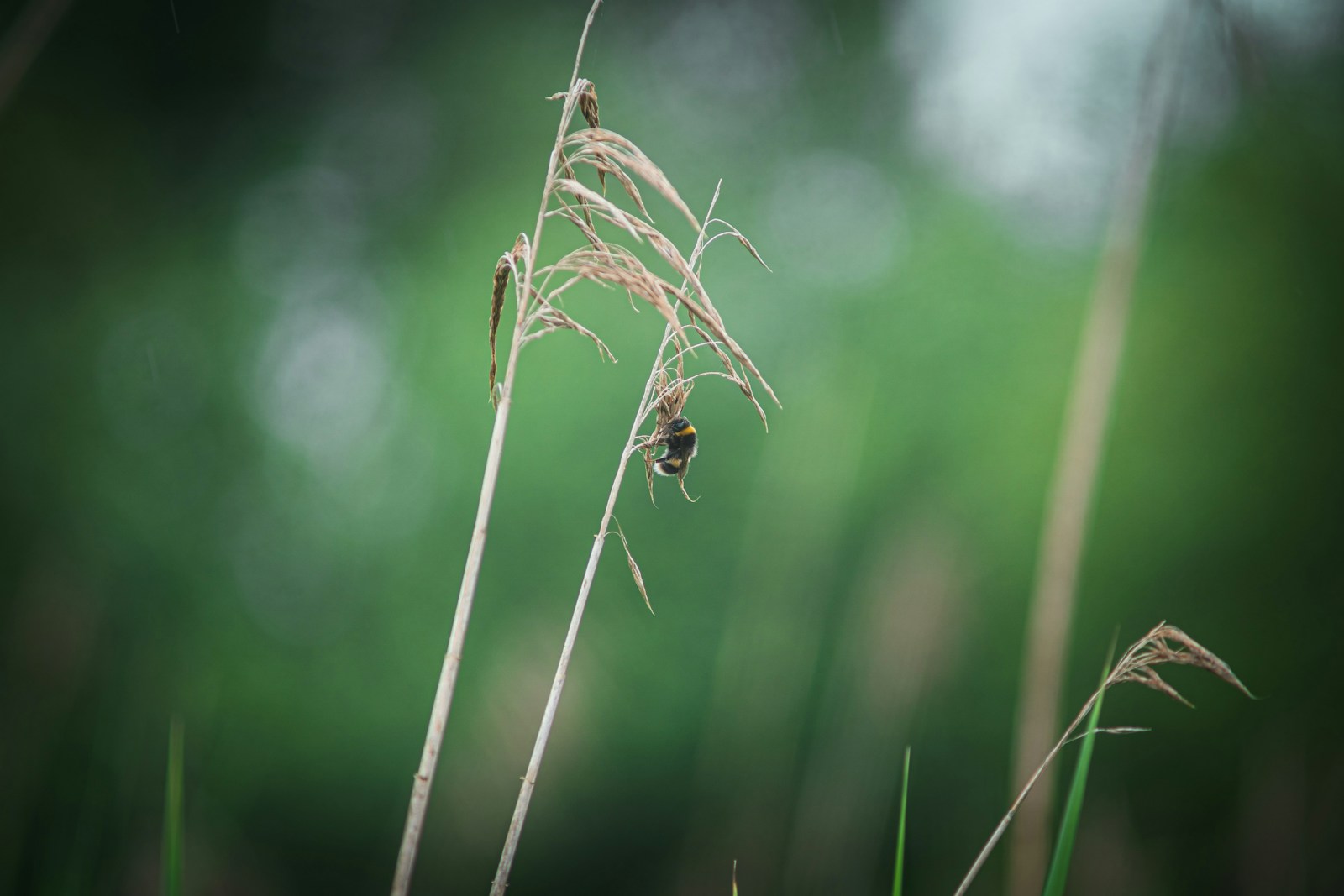
A new study has shown that insects love living in perennial grasses, less so short-lived annual species.
Conducted by the University of Göttingen and Hungary’s HUN-REN Centre for Ecological Research, the analysis looked at wasps, midges, beetles, flies and other common garden species. 225 of these lived in grass types which are prominent for 12 months of the year, while none were discovered in seasonal varieties which die back in colder months.
More so, the longer the shoot of grass the more diversity of species was discovered, with around one-third of the lifeforms feeding directly on this form of flora. All others – most of which were wasps – lived parasitically on insects which ate plants. Overall, two-thirds of the species studied were considered to be ‘gras specialists’, while half were specific to individual grass types.
First published in the journal Basic and Applied Ecology, the team found that regular mowing directly threatened not just the density of populations, but the diversity of specialised species found within grasses. According to those involved, entities and individuals responsible for grass management must give more focus to many of the lifeforms we see everyday but take for granted in terms of sustainability and prevalence.
‘The hidden wealth of insect species in shoots of grass is unfortunately largely ignored by grassland management, even though most species depend on the undisturbed development of grasses,’ said lead author Professor Teja Tscharntke at Göttingen University, adding the community depends on intact grass shoots overwintering in minimally disturbed habitats, meaning un-mown long-term refuges are essential. ‘The management of grasslands should pay much more attention to the neglected community of specialised insects in grass shoots.’
Image: Alfred Kenneally / Unsplash
More Biodiversity & Climate Change:
Somerset, Severn, Thames areas face month of extreme weather
New tourism standard tracks environmental and human impact of holidays
IPBES report unveiled in Manchester: no future for business without biodiversity