
















With indoor air quality still not a priority in many workplaces, and summer temperatures soaring each year, we hear from an industry expert about the energy efficiency and health benefits of high tech climate conditioning.
The quality of the air we breathe impacts our health, productivity and overall wellbeing every day. We spend approximately 90% of our time indoors and for many employees, a considerable portion of this time is spent in office environments.
As businesses increasingly recognise the importance of indoor air quality, there has been a shift in focus towards solutions that can effectively monitor and manage workplace environments. The integration of smart technology and ventilation offers a promising approach to addressing these air quality challenges while also supporting sustainability goals.
With the rapid evolution of technology, smart devices have become a regular feature in many buildings, including offices. In light of this, Alan Siggins, Managing Director of ventilation providers Airflow, has explained how smart ventilation works and how it can have a meaningful impact on employees and the environment.
What is smart technology and smart ventilation?
Smart ventilation uses sensors and automation to improve airflow in buildings, ensuring a healthy and comfortable indoor environment. It adjusts ventilation based on factors like air quality and temperature, reducing energy waste while improving air circulation.
In commercial development projects, smart ventilation can be integrated into new buildings or retrofitted into existing structures to enhance energy efficiency and indoor air quality. It is part of a broader trend of smart energy systems, which also include smart lighting, heating, and cooling systems. These technologies help buildings operate more efficiently, reducing their energy consumption and environmental impact, whilst simultaneously creating a healthier, more productive work environment.
How does smart ventilation improve energy efficiency?
Smart technology improves energy efficiency by adjusting energy usage in real time, based on actual occupancy and needs. This reduces waste and lowers overall consumption during times when the office isn’t fully occupied, such as after hours or on quiet days. Mechanical ventilation with heat recovery (MVHR) systems optimise airflow while capturing and reusing heat from outgoing air. This process helps maintain indoor comfort, reduces heating costs, and boosts overall energy efficiency.
Another key component of smart ventilation systems that contributes to improved energy efficiency is Variable Air Volume (VAV) systems. These involve sensors and dampers that adjust airflow based on the specific needs of different areas or rooms within a building. For example, if a room is empty, the supply of air would be reduced, and if another room is full of people, the system would increase the volume of conditioned air to this area.
By integrating these systems into office buildings, the energy waste associated with over-ventilating unoccupied or low-demand spaces is reduced and overall energy use is minimised, reducing the environmental impact. VAV has the added benefit of reducing operating costs, as well as providing more precise temperature control across the building.
How does data capture support smart ventilation systems?
As more developers and property managers invest in smart technology to improve the energy efficiency of their properties, it’s important to understand how these systems work. Smart ventilation systems capture data through sensors that monitor indoor air quality, temperature, and humidity. This data is processed to adjust ventilation in real time.
By continuously tracking and analysing these factors, these systems can fine-tune operations for maximum efficiency, reducing unnecessary heating or cooling in underutilised spaces. The data collected can also highlight areas of inefficiency so that facility managers and building operators can make further adjustments and improvements. This ultimately leads to lower energy costs and more sustainable, comfortable indoor environments.
What are the benefits of smart ventilation systems?
Smart ventilation systems offer several benefits that enhance both efficiency and sustainability in office environments. These include:
• Real-time monitoring: Smart systems continuously track air quality, temperature, and occupancy, ensuring optimal airflow.
• Remote management: Remotely controlled, smart ventilation systems allow for easy adjustments from any location. With smart technology, facilities teams can control systems from one centralised place, making it easier to manage across an entire office building or other large commercial setting.
• Energy savings: By automatically adjusting ventilation based on current conditions, smart systems reduce unnecessary energy consumption, leading to significant energy savings.
• Reduced CO2: Smart ventilation systems lower CO2 levels by ensuring proper ventilation while minimising energy waste.
• Enhanced productivity: The improved air quality brought about by smart ventilation can lead to higher cognitive function, fewer sick days, and better overall employee performance.
This combination of real-time data, remote control, and automatic adjustments results in healthier, more energy-efficient office environments, reducing operational costs while supporting employee wellbeing and productivity.
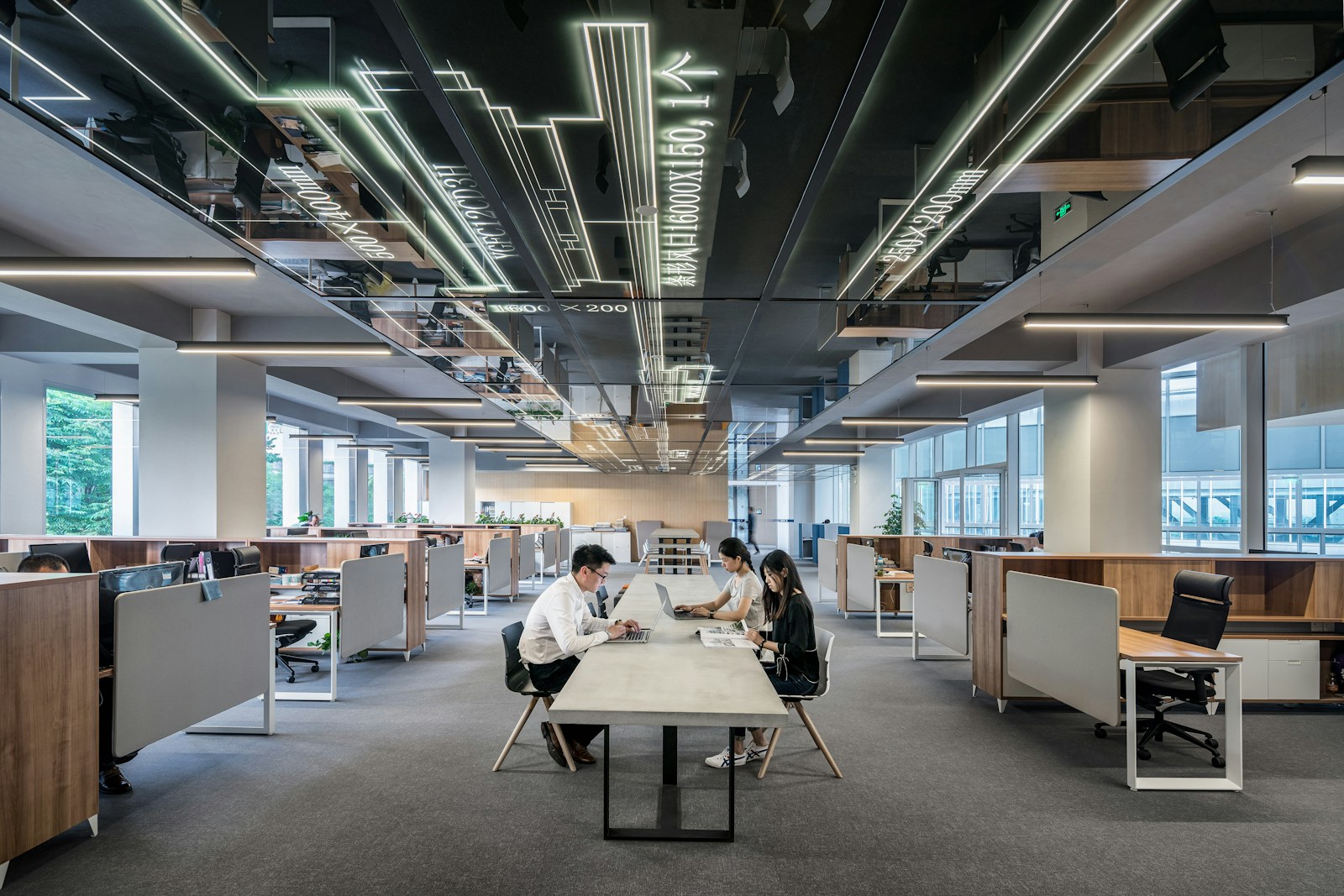
Image: LYCS Architecture / Unsplash
More Case Studies, Features & Industry Insight:
How a German city’s facelift was used to upgrade water management
From Adaptation to Resilience: Heatwave underscores need to rethink UK’s climate problem