














Generation C and Daikin are also involved in the project, which will significantly boost green skills in the UK’s second biggest urban area.
The collaborative effort will deliver curriculum-based climate education to schools across Greater Manchester, harnessing existing anxiety amongst pupils about the environmental crisis to encourage more uptake of subjects relevant to mitigation, resilience and adaptation.
Two pilot schools have already been selected — Butterstile Primary School in Prestwich and St Ambrose Barlow Secondary School in Swinton. A region-wide rollout will then begin in due course.
Unique learning resources will be developed, many based on Daikin’s real-world case studies which fit within the national education syllabuses for STEAM subjects. Energy efficient technologies, including air source heat pumps, will be a primary focus, with students learning how to pursue career paths in these nascent renewable and HVAC technologies.
‘As someone born and bred in Manchester, this is a special moment. Climate change and our transition as a society to a more sustainable way of living is a significant challenge, but education is crucial in unlocking effective solutions as it sparks curiosity, fosters innovation, and can energise the wider community,’ said Phil Wharton, co-founder of Generation C.
‘We need to empower the next generation, show them the positive impact they can have, and equip them with practical skills to look at suitable career roles,’ he continued. ‘Partnering with industry visionaries like Daikin, supported by the strategic insight of the GMCA, allows us to provide young people in Greater Manchester with genuine hope, purpose, and the tools to build a sustainable future.’
The announcement follows data from Reconomy showing substantial sustained growth in the green jobs market, with 690,000 full-time equivalent roles in relevant sectors as of 2023 – more than 34% higher than 2015. Renewable energy showed the second biggest growth — 153.9% — with only low carbon transport higher at 181%.
‘It is encouraging to see continued momentum in the UK’s transition to a greener economy, with employment across the sector expanding significantly,’ said Diane Crowe, Group Sustainability Director at Reconomy. ‘Notably, roles within the waste and recycling industry now account for just over half of all green employment, underlining the pivotal role of the circular economy in driving sustainable economic growth.’
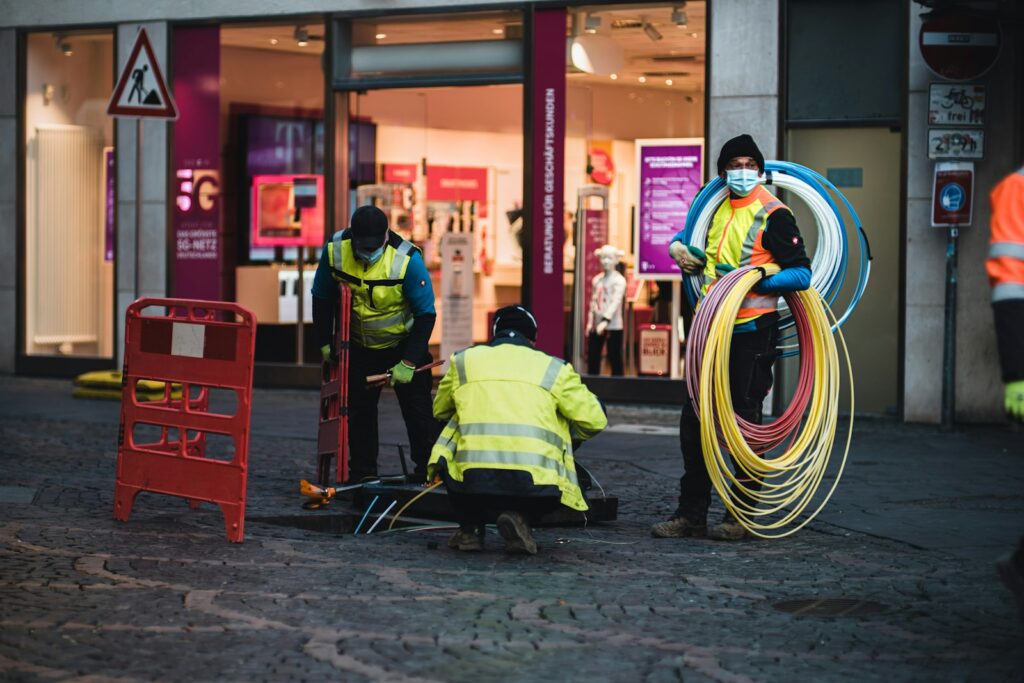
Image: Mylo Kaye / Unsplash
More on Energy and Net Zero:
8% emissions drop for mobile industry, but decarbonisation must double in speed
Peak Cluster gets £28m to store Staffordshire and Derbyshire cement emissions
Onshore Wind Taskforce Strategy aims to double sector’s energy generation