












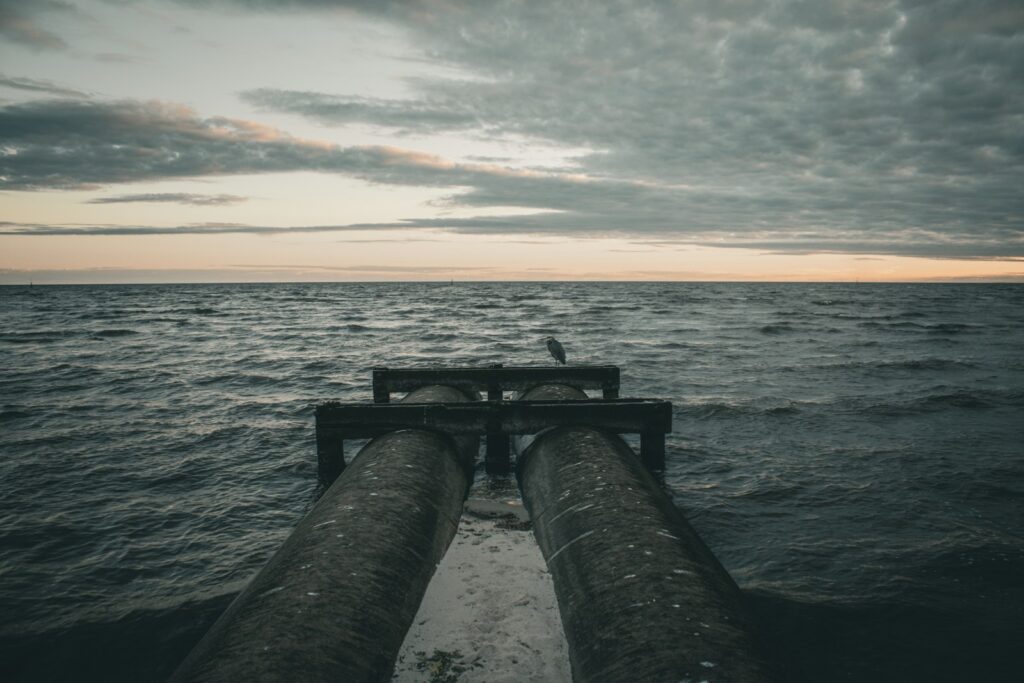



Some regions of Britain’s coastline experienced a 2C rise in temperature in a single year.
On average, the UK saw seas warm by 0.39C in 2023 compared with 2022.
The report from the University of Portsmouth and GB Row Challenge also found that some areas, including the Celtic and Irish Seas, and northern regions of the North Sea, experienced far more extreme heating. Temperatures rocketed by 2C compared with the previous 12 months due to a marine heatwave.
Data was gathered through samples taken by GB Row Challenge, an all-female rowing crew who set a new Guinness World Record for the fastest row around Great Britain during the project.
Scientists have already issued grave warnings about the threat posed by rising ocean temperatures and their devastating impact on aquatic ecosystems. This runs from coral bleaching to the spread of warm water species north and southward, migrating commercial fish stock, sea level rise, coastal flooding and erosion.
‘Whilst two years of data is not enough to make long term predictions, this rapid warming is something we really need to pay attention to,’ said Laura Fantuzzi, a PhD student at the University of Portsmouth.
‘The findings highlight the ongoing impact of climate change on marine environments, which has enormous implications for ecosystems, biodiversity and coastal communities,’ she continued. ‘It confirms that continued monitoring is essential.’
The project also involved taking environmental DNA and microplastic samples, alongside underwater noise data. The result is the most comprehensive baseline measurements on the health of British seas ever recorded. Among other things, a Bakelite particle was discovered near Clacton-On-Sea, close to the Thames Estuary. The substance, invented in 1907, was the world’s first fully synthetic plastic.
‘Despite being phased out of production decades ago, this possible century-old relic has persisted, highlighting how plastics can linger in ecosystems for generations,’ said Professor Fay Couceiro of the School of Civil Engineering and Surveying, a member of the Revolution Plastics Institute at the University of Portsmouth and GB Row Challenge lead scientist.
‘This longevity contributes to the accumulation of microplastics, which infiltrate our soils, waterways, and even the food chain, posing risks to both environmental and human health,’ they continued. ‘The finding serves as a reminder of the urgent need for sustainable materials and robust waste management practices to address the escalating global plastic crisis.’
Image: Hana Lundon / Unsplash
Vitrified clay pipes can deliver robust, environmentally friendly water systems
How National Trust is using geospatial tech to exceed conservation targets