
















While Europe’s forests may ostensibly look healthy, they are quietly losing their capacity to recover from drought, fire and pest outbreaks, according to a new policy brief from eLTER, the European research infrastructure for long-term ecosystem research.
The brief, Forests at Risk: Measuring and Building Resilience Against Extreme Climate Events, argues that resilience should become an explicit, measurable objective of European forest policy rather than something assessed only after damage occurs.
Across Europe, the rate at which forests are damaged by drought, storms, wildfire and insect outbreaks has more than doubled over the past three decades, with climate-driven damage already costing several billion euros a year. Compound events, such as drought followed by fire or pest outbreaks, magnify losses and slow recovery further.
Giorgio Vacchiano of the University of Milan, author of the brief, said: ‘Resilience is not simply whether a forest is still standing after a disturbance. The question is whether forests can maintain their functions, regenerate and adapt as conditions change. If we do not measure those processes, we cannot manage them.’
The stakes extend well beyond our access to timber. Extreme events threaten biodiversity and rural livelihoods, and increase the risk of floods and landslides. Europe’s forests absorb around 360 million tonnes of carbon dioxide annually, but that sink is weakening as harvesting intensifies and disturbances grow more frequent. Without adaptation, the brief warns, European climate targets become harder to meet.
Current monitoring focuses largely on forest area and biomass but these figures reveal little about whether a particular group of trees can resist a shock, recover or adapt. The brief calls for broader indicators, covering recovery capacity, regeneration, structural and functional diversity, landscape connectivity, and species’ ability to adapt or shift their range.
Satellite observation can provide early warnings, such as declines in photosynthetic activity signalling that recovery is slowing, while scenario-based models paired with long-term field observation can combine climate hazard, forest vulnerability and adaptive capacity to test ‘what-if’ futures.
The brief recommends five directions for action:
- Mainstream climate-smart planning using resilience indicators and scenario modelling.
- Introduce quantitative resilience targets into national forest, climate, adaptation and nature restoration strategies.
- Invest in long-term observation and research infrastructures such as eLTER.
- Support biodiversity-based and closer-to-nature management through payments for ecosystem services and well-designed nature credits.
- Align forest management more closely with natural disturbance regimes to sustain resilience and carbon uptake.
It highlights regional examples such as fire-prevention planning in Tuscany and Lombardy, where climate projections, vegetation dynamics and fire-behaviour models already prioritise intervention areas.
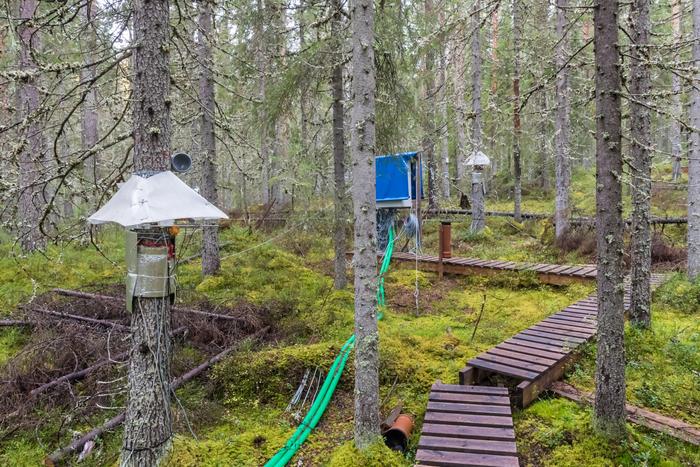
Long-term observation is described as the missing link. Through its distributed network of research sites, eLTER tracks tree growth and mortality, soil moisture, carbon pools and water balance across years and decades, providing the evidence needed to calibrate models and test whether management genuinely improves resistance and recovery.
Vacchiano said: ‘Summer 2026 has made the issue tangible: prolonged heat and drought have stressed forests across much of Europe, while by late August wildfires had burned more than 630,000 hectares in the EU, roughly twice the 20-year average for this point in the season. However, resilience is not simply whether a forest is still standing after a disturbance. The question is whether forests can maintain their functions, regenerate and adapt as conditions change. If we do not measure those processes, we cannot manage them.’
Photo: nbelokonskaya