















Joanna Seymour, the woman responsible for encouraging new talent to pursue careers in one of the most far-reaching and essential private and public sector specialisms, outlines new tactics to sustain and expand the workforce.
It has only been two weeks since the Local Government Association updated its Environmental Health Workforce Strategy. But already the revised document has been broadly welcomed by those in the field who understand only too well the perfect storm departments are up against.
Demand for professionals with specialist skills in housing, food safety, environmental protection and public health is growing. But the workforce has remained relatively stagnant, suffering years of recruitment and retention challenges.
It’s something Joanna Seymour is now working hard to tackle. Appointed head of the Environmental Health Workforce Programme at the Chartered Institute of Environmental Health (CIEH) late last year, our conversation starts with what a quick recap on the last few months.
‘It’s a new role and I’ve only been in it since November. There’s so much complexity within the environmental health workforce, so a lot of time has been spent working out the best way to navigate that,’ she tells us. ‘A lot of people see the workforce as a local authority thing, that’s where environmental health sits. But actually it’s much broader and the function is everywhere — NHS, military, manufacturing firms.
‘So my job is bringing all that together, establishing a really clear picture of what’s going on at ground level, so-to-speak. That will allow us to understand exactly how many people we have in all positions,’ she continues. ‘[And] where we have gaps. So, is it just from a training perspective? Is it linked to career progression?’
For Seymour, image is another major challenge. You can improve data on skills shortages, perpetual and consistent vacancies. You can glean in-depth insight into how private sector firms are overcoming their own recruitment obstacles. But you’ll still need to make it clear what environmental health actually does.
‘I think a lot of the work goes under the radar,’ she says. ‘Nobody really sees what environmental health does until something goes wrong. A big part of public awareness is the role we play from a regulatory perspective, not preventative… actually the job covers both.

Jo Seymour (C) CIEH
‘If a restaurant gets closed and environmental health is called in, people know what’s going on because that situation means something hasn’t worked and wound up as a crisis,’ Seymour continues. ‘The preventative part is less visible and is a result of doing so many inspections. It’s because you’ve actually done well that something bad has been stopped from happening — a food poisoning outbreak or someone becoming ill because their house is too cold and damp.’
Proving the monetary value of preventative work isn’t easy, and Seymour is determined to address this blindspot. At a time when local authorities have never been more up against it in terms of budgets, any steps that can reduce the financial burden on public services is both welcome and essential. Ultimately, drawing lines between dots comes down to effective messaging
‘From a housing perspective, there is clear evidence that if you live in a cold damp home it will impact your health and wellbeing. The longer you’re at that property, the more likelihood there is that your health will deteriorate,’ she explains. ‘You’ll then need to go to a GP, be prescribed medication, and potentially wind up in a hospital. If there’s a way of shining a light on environmental health’s preventative work, and its savings to the NHS, we need to do it.’
For Seymour, ‘environmental health is at the forefront of public health’, and in many cases teams should be brought in on a case earlier, before it escalates to crisis point. Emphasising these points as part of relationships with recruitment sources and partner organisations is a big part of the ensuing battle to bolster the workforce on all sides.
‘[We also need] to look at things from a local level, I want to do roadshows or roundtables, ‘ Seymour continues, citing Birmingham City Council and Wiltshire as authorities that have taken similarly hands-on approaches to nurturing talent. ‘One size will not fit all because there are going to be different challenges [in different areas].
‘But we need to try and make sure we’re linking organisations together through place — like local authorities and regional providers — so that we are able to explore ways of bringing people through via different pathways into the sector,’ she continues. ‘There’s a lot of really good work happening out there. So it’s about connecting the dots really. And I’m hoping that through all these conversations we will be able to put new, more effective processes into practice.’
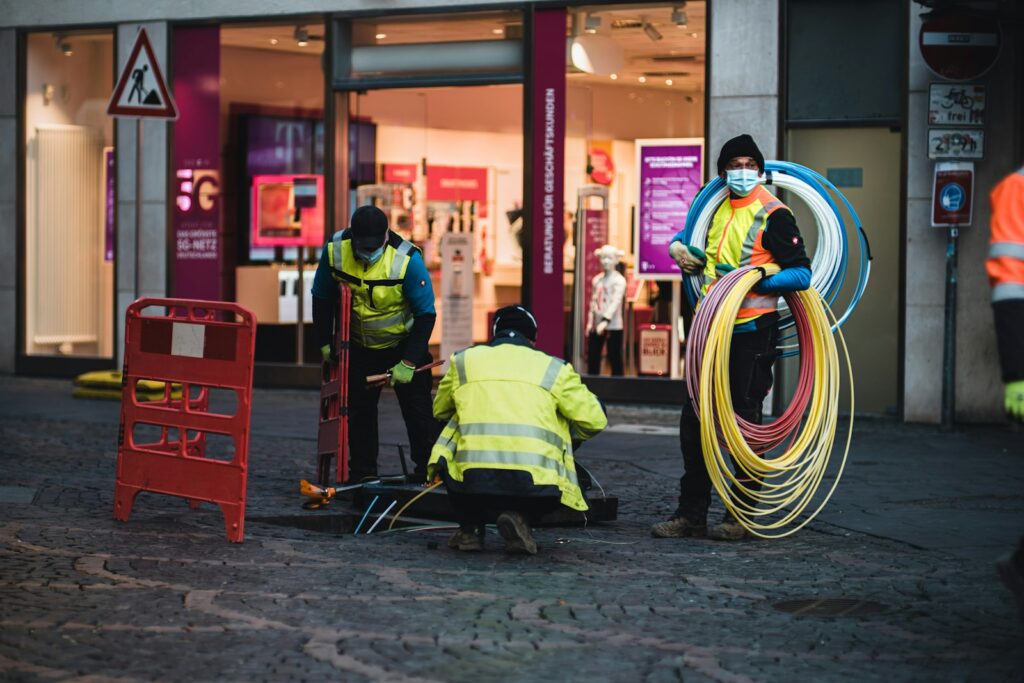
Image: Al Elmes / Unsplash
More Case Studies, Features & Industry Insight:
Why scaling back ESG rules will not solve the sustainability data challenge
Environmental fallout from Iran war will be felt globally for decades