New research into the long-term, year-round impact of the invasive species could be vital to conservation organisations, local authorities and regulators.
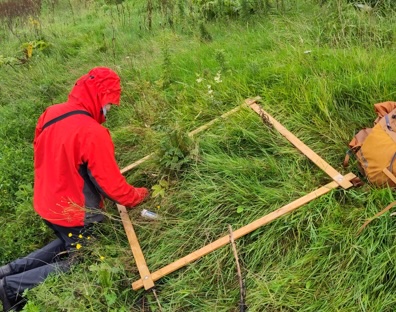
Conducted over three years by the University of Stirling, Scotland, in partnership with Newcastle University, the study has laid bare the far-reaching consequences of Himalayan balsam on river ecosystems. This includes a ‘significant weakening’ of banks during winter months.
First introduced to Britain in 1839 as an ornamental garden plant, the invasive species was initially planted in landmark gardens such as Kew. However, it soon escaped its confines and began to spread rapidly in the wild, favouring wetlands and riversides.
Easily outcompeting many native plants before dying back each year, Himalayan balsam is responsible for increased erosion, altering the shapes and structure of rivers themselves, and has a significant negative impact on wildlife. Water quality, biodiversity, and the benefits of healthy rivers decline over time as a result.
“Our study reveals a previously overlooked seasonal process that illustrates how this plant weakens riverbanks,’ explained Dr James Hardwick, Lecturer in Earth Sciences at the University of Stirling’s Faculty of Natural Sciences. ‘Himalayan balsam is often assumed to increase riverbank erosion simply because it dies-back leaving riverbanks bare over winter, but very little research has tested this relationship.’
In a bid to right this wrong, those involved in the work used Piecewise Structural Equation Modelling. This statistical method breaks down complex cause-effect links into smaller models. Thanks to this, they were able to determine how the balsam and native vegetation interact throughout the year, and what this means for the long-term sustainability of ecosystems.
Produced with support from Tees Rivers Trust and Forth Rivers Trust, you can read the full report
here. It is now hoped that river managers and conservation organisations, alongside local authorities and regulators, can make more informed decisions about intervention and restoration strategies.
‘Our work provides the first evidence that the impact of Himalayan balsam on the riverbank is not just about dieback,’ he continued. ‘It’s about the way it suppresses native vegetation during summer, creating a loop that weakens riverbanks in winter. This seasonal mechanism has important implications for both river restoration and the management of invasive species.’
Image: University of Stirling