

















Following Labour’s plan for a major investment in upgrading houses, Ordnance Survey has analysed 23.6 million residential properties to reveal where priorities should be.
More than 600 million individual features and attributes were included in the assessment, which used the OS National Geographic Database. From this, physical characteristics of homes could be compared using a heat index, revealing the most vulnerable properties.
In particular, the OS investigation considered:
- Connected homes – Properties with shared walls, such as terraced or semi‑detached properties, retain heat better than detached houses.
- Period of construction (age of building) – Older properties built before 1960 are less likely to have cavity walls, insulation or double glazing.
- Construction material – Homes built with insulating materials lose heat more slowly.
Based on the initial results, coastal and remote areas had a greater tendency for heat loss, while buildings in denser urbanised locations fared better. It is believed this is linked to the urban heat island effect, which is well documented in terms of problems keeping town and city centres cool during the height of summer.
Northern Scotland and Wales local authority districts had the highest average heat loss scores, with Na h-Eileanan an Iar, in the Western Isles coming out worst, with the highest average score of 1.30. Stevenage, Hertfordshire came out bottom, at just 0.26. Most council areas fell between 0.8 and 0.95, and only 6% ranked at 1 or higher.
Building materials and type also made a big difference. So Cornwall’s traditional granite-built houses were found to present challenges in terms of installing insulation, while Scotland’s Highlands, where many houses are made from old stone, presented issues, too. Beyond this, detached homes were more likely to loose heat – and account for 25% of English, 29% of Welsh and 32% of Scottish stock.
‘Understanding which homes are hardest to heat is critical for improving energy efficiency. Ordnance Survey data provides detailed insights into building age, construction materials, and location, enabling us to model heat-loss risk at scale,’ said Isabelle Chatel de Brancion, Land and Property Lead at Ordnance Survey.
‘This data-driven approach helps pinpoint areas most vulnerable to heat loss and identify where energy-efficiency improvements would have the greatest impact,’ she continued. ‘Beyond highlighting national patterns, OS data can also shed light on viable solutions such as identifying rooftops suitable for solar panels, informing town planning, and helping utility companies optimise renewable energy plans. These insights could support local authorities and homeowners in making informed decisions to keep homes warmer this winter and reduce costs.’
To identify ‘hard to heat homes’, a risk index was created by giving each residential building a score based on certain physical characteristics. There are many factors which can impact a property’s ability to warm up and retain heat. Here, we focus on three building characteristics, listed below, due to the following reasoning:
- Connectivity – standalone properties are less likely to retain heat compared to properties that share walls with adjacent buildings.
- Building Age Period – the time period of building construction. Older properties are less likely to have good insulation compared to newer properties, making them harder to heat.
- Construction Material – properties built with more insulating material will likely retain heat more effectivity.
A score was given for each of the three building characteristics, based their attribute values. If a property had a building attribute that was considered harder to heat a score of 1 was given, otherwise a score of 0 was assigned. Once assigned, the scores across the three attributes were totalled for each property resulting in an overall score. The lower the score, the easier the property it is to heat. The scores were then grouped and averaged by each Local Authority District.
| Attribute | Attribute Value | Score |
| Building Connectivity | Standalone (not including block of flats) | 1 |
| Block of Flats with more than 4 floors | 0 | |
| All other buildings | 0 | |
| Building Age Period | Before 1960 | 1 |
| After 1960 | 0 | |
| Construction Material | Mixed (Plaster And Timber), Static Caravan Or Mobile Home, Timber Or Wood | 1 |
| All other materials | 0 |
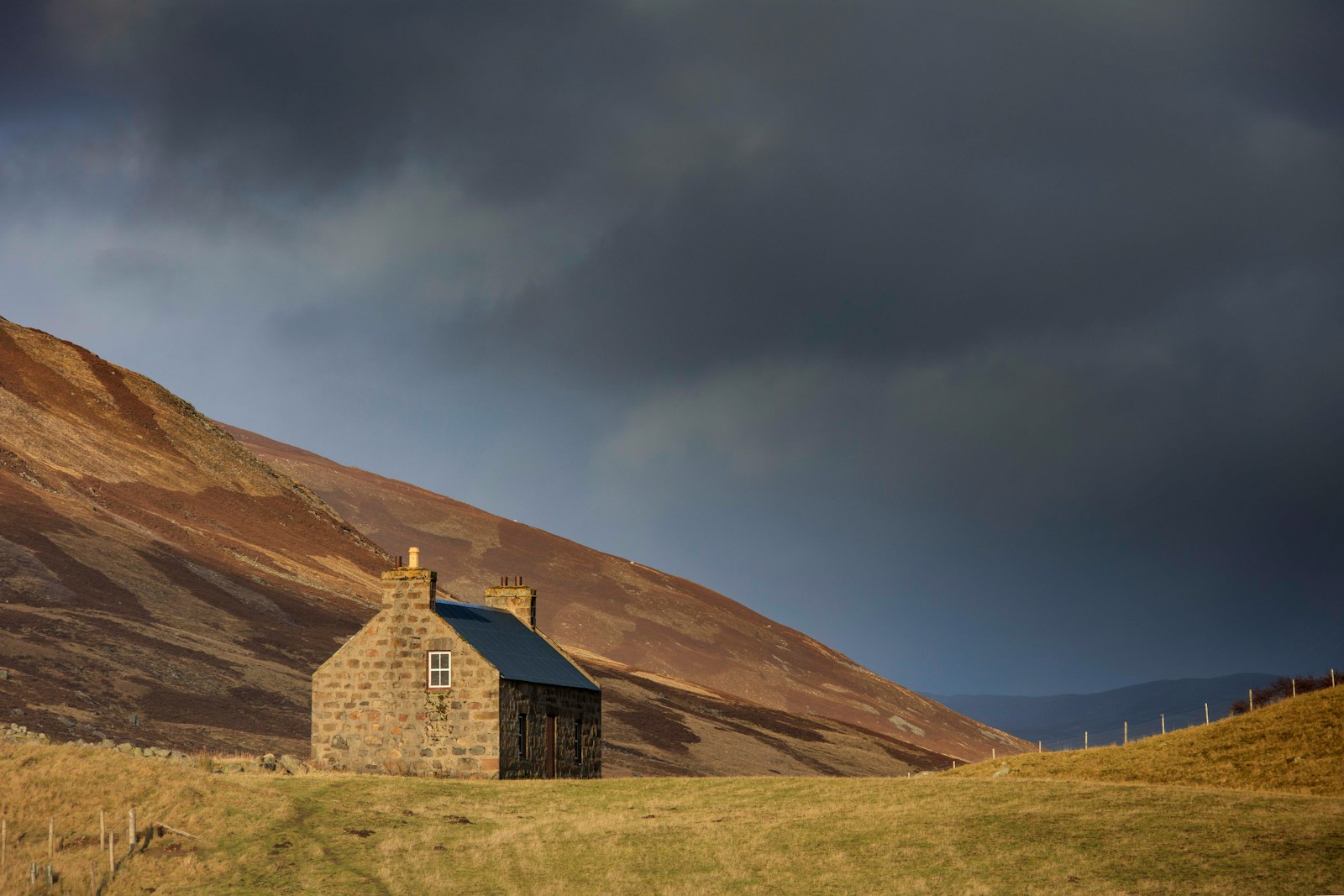
Image: Martin bennie / Unsplash
More on Energy & Net Zero: