














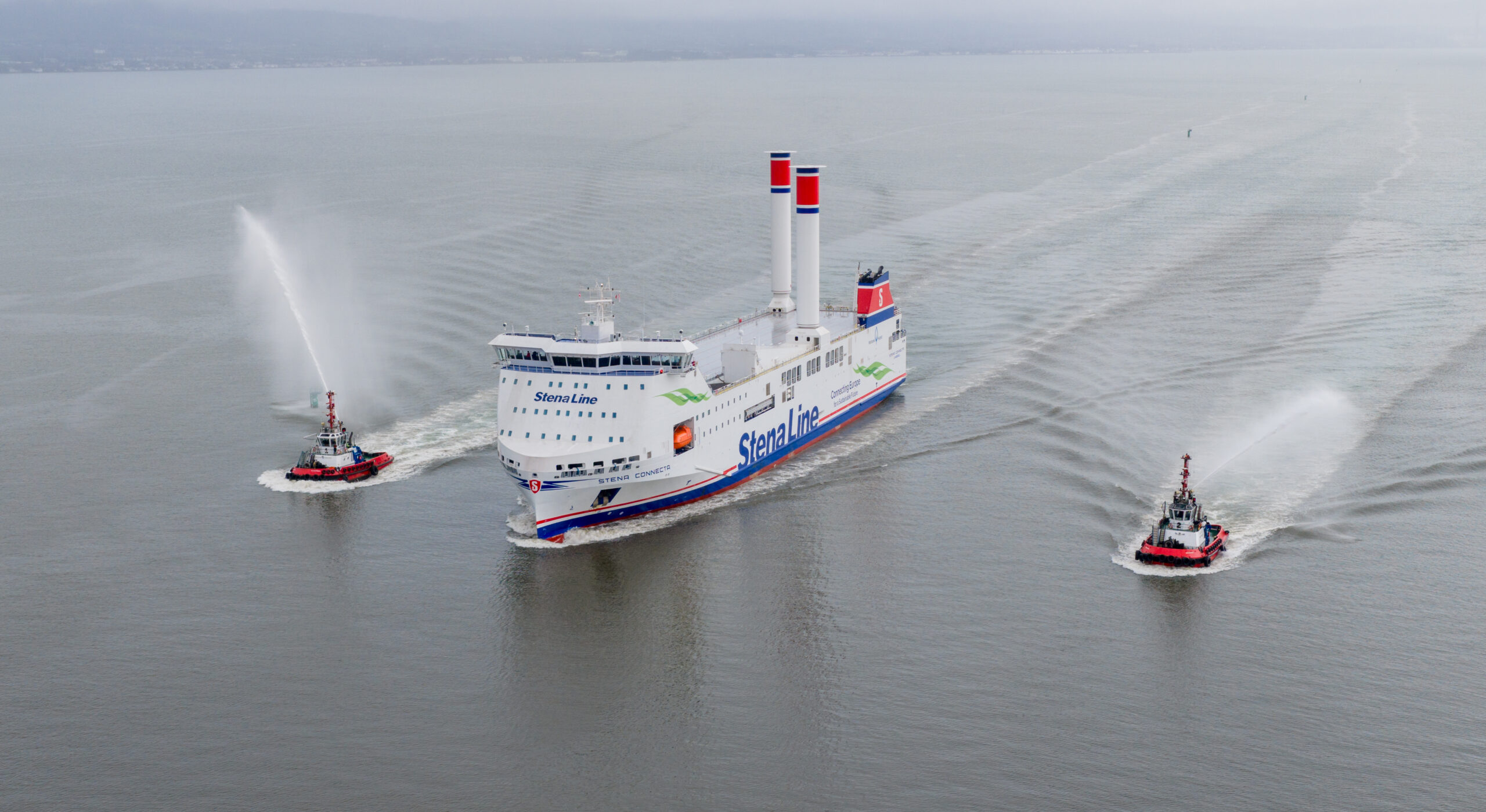
Designed for maximum freight efficiency, the vessel is the second in its fleet to run on rotor sails.
Stena Connect arrived at Belfast Harbour on Wednesday 21st January in preparation for its maiden voyage, departing for Heysham, Lancashire on Friday 23rd January.
Powered through a combination of biofuel, batteries, and methanol, the ship offers 2,848 lane metres and measures 147 metres from bow to stern. It is the second vessel of its type in the company’s fleet, following the introduction of Stena Futura.
The Horsepower Rotor Sails also allow emission-free wind power to be harnessed for propulsion, cutting fuel consumption down by 9% on Irish Sea routes. This technology – and other wind-assisted shipping solutions – is increasingly considered the future of maritime transport and logistics.
Heikki Pöntynen, CEO of Norsepower, said: ‘Stena Connecta is a strong example of how forward-looking vessel design can combine operational efficiency with tangible emissions reductions. By integrating Norsepower Rotor Sails™ alongside hybrid propulsion and alternative fuel readiness, Stena Line is demonstrating a practical, data-driven approach to decarbonising short-sea shipping.’
‘Our significant investment in Stena Connecta and Stena Futura, more than £100m, demonstrates our strong confidence in the continued growth of the Irish Sea region and our commitment to strengthening trade and connectivity links,’ added Paul Grant, Stena Line Irish Sea North Trade Director. ‘These vessels were commissioned as a direct response to customer demand for increased freight capacity on the Belfast-Heysham route. Customer feedback on the recent introduction of Stena Futura has been extremely positive, and I have no doubt Stena Connecta will be equally well received across our customer base.’
Image: Stena / Norsepower
More Transport, Infrastructure & Planning:
Suffolk County Council begins major EV infrastructure rollout
Definitely not HS2: new Manchester-Birmingham rail route proposed, again